Table of Contents
This updated guide examines What Do You Know About the 'Catalysts' of Happiness? and organizes the essential facts, background, and practical takeaways in clear American English.
First of all, we have to affirm that emotions and feelings of the body are not naturally generated or lost, but much based on real effects. Take a simple example: The energy in the body declines making animals feel hungry and this urges them to go searching for food to ease that unpleasant feeling. Or they look for warm places to reduce the bad feeling of cold. And the chemicals that create feelings of happiness begin to be created in the brain as soon as the animal finds food or a warm place.
The same is true of humans. Happy chemicals will be activated in your brain when you find a way to meet your immediate needs at the time such as food, safety or support and help from others.. However, this process in humans will be more complicated than in animals due to differences in our cortical structure - creating a long chain of links.
The feeling we call 'happiness' is created from four special brain chemicals: dopamine, endorphins, oxytocin and serotonin. These happy chemicals are activated when your brain sees something that is beneficial to your situation at the time, especially those that affect survival.
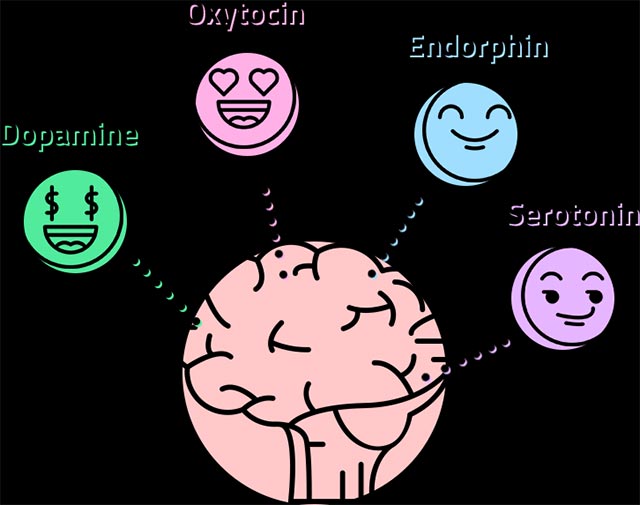
However, each type of chemical triggers a different feeling of happiness, as follows:
Dopamine brings you excitement and energy when you find things that meet your needs. However dopamine will immediately deactivate once the need has been met, which means you have to look for new ways to pursue what is important to you, based on past dopamine increases..
Endorphins create feelings of euphoria, which can help reduce stress and increase feelings of satisfaction in a short time. Basically, endorphins are mainly released when we are engaged in sports activities, or using certain foods such as chocolate, peppers and ginseng.
Oxytocin creates a sense of security for others, helps you connect and trust them, so this is also known as 'Love Hormone'. When Oxytocin is released, you are filled with feelings of attachment, trust, and empathy. However, when this chemical is absent, you will immediately feel lonely, empty, hopeless and lose faith.
Serotonin creates feelings of respect and pride, as well as cravings and a number of other functions. This chemical is mainly found in the brain, intestines and blood. Serotonin deficiency can cause feelings of depression, anxiety disorders.
Happiness will be at hand if you always have these wonderful catalysts.
FAQ
What is What Do You Know About the 'Catalysts' of Happiness about?
It provides a structured overview of happy hormones, explains the main context, and highlights practical takeaways for readers.
Why does this topic matter?
Understanding the main concepts helps readers evaluate the issue, avoid common mistakes, and make better-informed decisions.
How should readers use this information?
Use the guidance as a practical starting point, confirm details that may have changed, and follow current product, safety, or security recommendations.
Related Articles
 Science of Happiness: Happiness Doesn't Just Come Naturally Like10 minutes read
 True Happiness Is Not in Others but in Ourselves6 minutes read
 Pursuing Happiness Will Not Make You Feel Happy6 minutes read
 New Research Shows: Money Can Really Buy Happiness6 minutes read
 Zodiac Happiness Ranking 2026: Explained6 minutes read
 Lessons About Happiness I Learned in the Most Difficult Circumstances Explained10 minutes read
Reader Comments 0
Sign in with email or Google to join the discussion.