Table of Contents
A subagent is a delegated AI worker with its own context and a bounded assignment. The main agent gives it a task—such as exploring a codebase, running tests, or reviewing a change—then receives a summary or result. This keeps noisy intermediate work out of the main conversation and can run independent tasks in parallel.
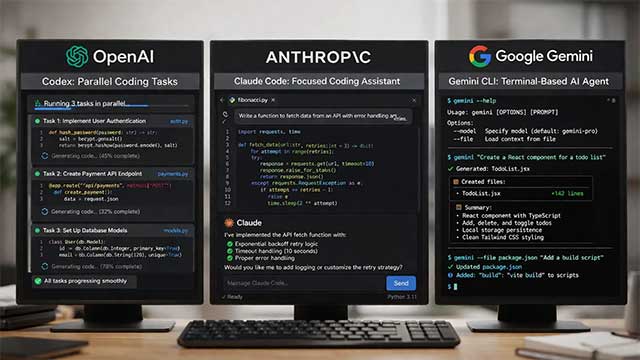
Subagent, agent team, and tool: the difference
- Subagent: works on a specific delegated task in a separate context and reports to the main agent.
- Agent team: uses multiple independent agents that may communicate or coordinate through a shared task system.
- Tool or MCP server: gives an agent a capability, such as reading a database or running a browser; it is not automatically another agent.
Product terminology matters. Calling every tool-using process a “subagent” obscures differences in context, permissions, communication, and cost.
Why subagents help
Large coding tasks generate search results, logs, stack traces, test output, and file contents. If all of that stays in one thread, the important requirements can become difficult to track. A subagent can process the noisy material separately and return only the evidence and conclusions the main agent needs.
Parallelism also helps when tasks are truly independent—for example, one agent can inspect authentication while another runs the test suite. It is less suitable when several agents must edit the same files, because merge conflicts and duplicated work can outweigh the time saved.
Codex, Claude Code, and Gemini CLI compared
| Tool | Documented approach | Best description |
|---|---|---|
| OpenAI Codex | Subagent workflows with delegated agent threads; parallel agents can return distilled results | Direct, built-in subagent model |
| Claude Code | Custom subagents within a session, plus separate agent teams for communicating peers | Supports both subagents and a distinct team model |
| Gemini CLI | Terminal agent with tools, extensions, MCP servers, and some extension-specific subagent capabilities | Extensible terminal agent; do not assume feature parity with general subagent orchestration |
OpenAI Codex subagents
Codex uses the term subagent workflow for work in which delegated agents handle specific tasks and return their findings to the main thread. Supported clients let users inspect the agent threads. OpenAI recommends subagents for bounded, read-heavy work such as exploration, testing, triage, and summarization.
In most configurations, ask explicitly for subagents or parallel agent work. Each subagent consumes its own model and tool resources, so parallel work can use more tokens than a single-agent run. OpenAI's Codex subagents guide documents the current behavior and limitations.
Claude Code subagents and agent teams
Claude Code also explicitly supports custom subagents. Each can have its own system prompt, context window, tool access, permissions, and model. It reports results back to the main session. This is useful for repeatable roles such as a security reviewer or test investigator.
Anthropic separates subagents from agent teams. Team members are independent Claude Code sessions that can communicate with each other and coordinate through shared work. Teams have more coordination overhead and are intended for problems that benefit from peer discussion. See Anthropic's subagent documentation for the distinction.
Gemini CLI's extensible approach
Gemini CLI is an open-source terminal agent that can read and edit files, run commands, and call built-in or external tools. It supports extensions and MCP servers, and Google has described subagent functionality in particular extensions such as BigQuery. However, that does not mean every Gemini CLI workflow exposes the same general subagent controls as Codex or Claude Code.
For an accurate comparison, evaluate the specific Gemini CLI version and extension you plan to use. A reason-and-act loop, multiple tools, or an MCP connection is not by itself proof that several autonomous agents are running.
When to use subagents
Good assignments are independent, bounded, and have a clear return format:
- “Inspect the authentication flow and return the five files that control token refresh.”
- “Run the unit tests for this package and summarize failures by likely root cause.”
- “Review this diff for SQL injection risks; cite file and line for every finding.”
- “Compare two implementation options without modifying files.”
Keep the main agent responsible for shared requirements, architecture, conflicting findings, and the final integration.
When not to parallelize
- The next task depends on the result of the previous one.
- Several workers would modify the same small set of files.
- The task is simple enough that coordination costs more than execution.
- Permissions or sensitive data should be restricted to one controlled context.
- No one is assigned to verify and integrate the results.
A fair evaluation checklist
When comparing coding agents, look beyond the word “multi-agent.” Check how they isolate context, restrict tools, display progress, handle approvals, manage concurrent edits, summarize results, and calculate usage. Also test how easily a human can inspect the work and stop an unsafe action.
For related browser automation capabilities, see how Codex works with Google Chrome. Subagents are valuable when they create a clear division of labor—not simply because more agents sound more capable.
Related Articles
 Is the Codex or Claude Code Better for AI in Programming: Explained10 minutes read
 Codex vs Claude Code: Which Coding Agent Should You Use?12 minutes read
 OpenAI Launches GPT-5-Codex: Upgrading Codex with Dynamic4 minutes read
 Reasons Why the Claude Code Should Be Replaced by the Codex8 minutes read
 OpenAI Codex User Guide with 3 Real-World Examples10 minutes read
 Claude Code vs Codex vs Antigravity: ESP32 Test12 minutes read
Reader Comments 0
Sign in with email or Google to join the discussion.