Table of Contents
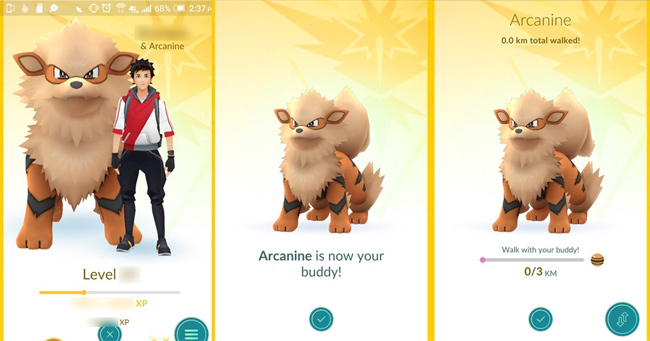
Buddy Pokémon earn one species Candy after you complete the distance shown on the Buddy page. Common distance groups include 1 km, 3 km, 5 km, and 20 km per Candy. The correct value depends on the species, so the in-game Buddy screen is the authoritative place to check before starting a long walk.
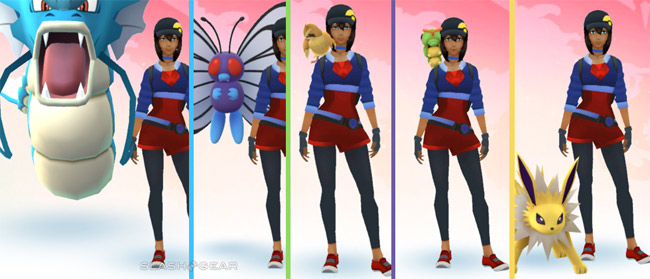
What the Buddy distance means
The displayed distance is the amount of eligible walking needed for the next Candy. Progress carries on the Buddy page as you move, and the counter resets toward the next Candy after a reward is earned.
Buddy distance is not the same as the Candy cost to evolve. For example, Magikarp traditionally requires 400 Magikarp Candy to evolve, but its Buddy distance is much shorter than 400 km per Candy. Walking supplies Candy gradually; it does not replace the evolution cost.
The main distance groups
| Distance per Candy | Typical pattern | Planning impact |
|---|---|---|
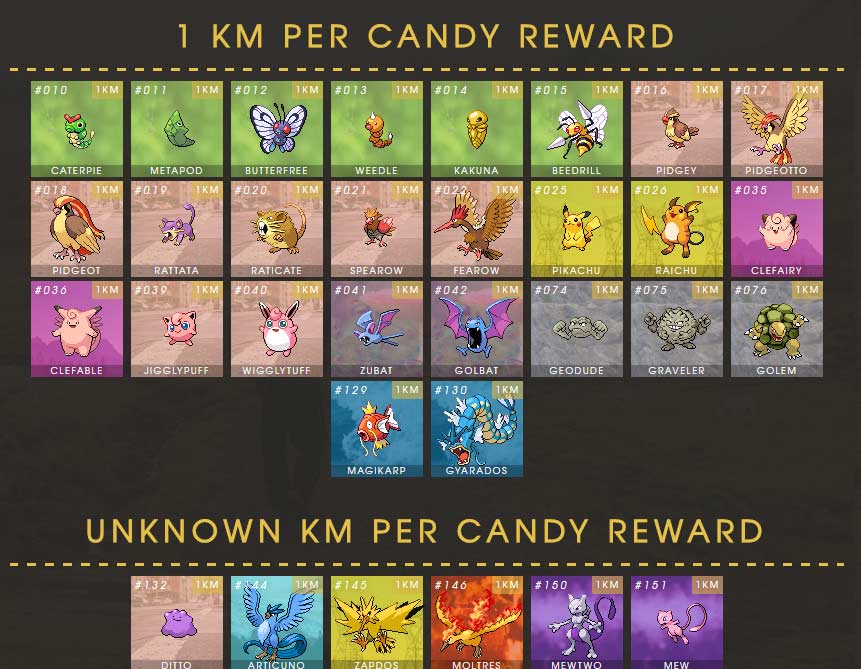
| 1 km | Several common or early-route species, including Magikarp | Fastest group for building ordinary Candy while walking |
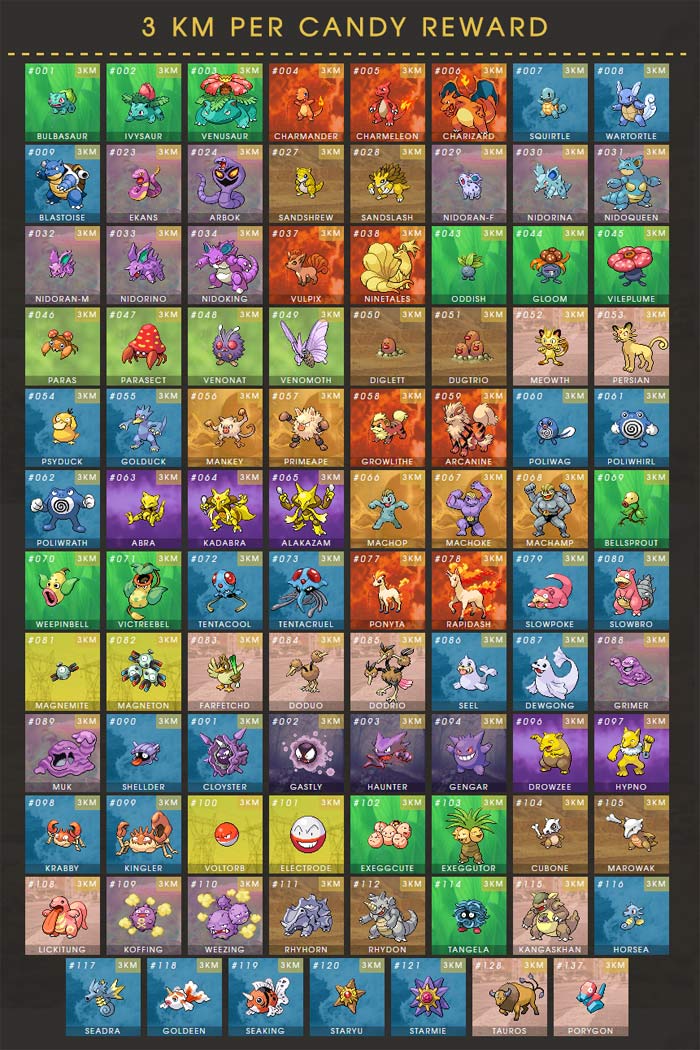
| 3 km | Many commonly used evolution families and starter species | Reasonable for regular walks and medium-term evolution goals |
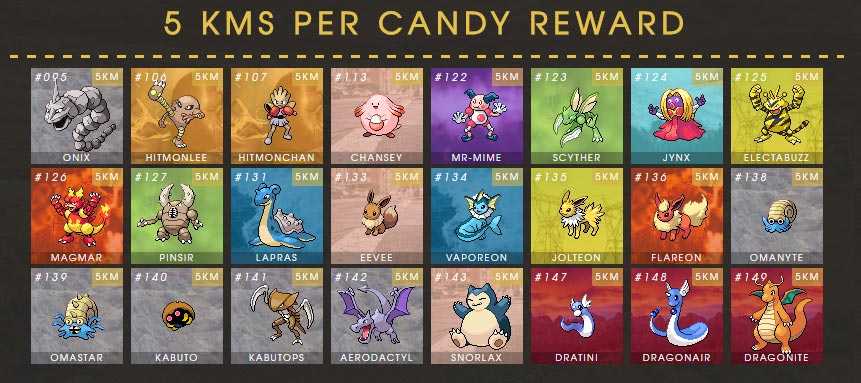
| 5 km | Many rarer species and families such as Eevee | Requires more deliberate walking for each Candy |
| 20 km | Many Legendary and Mythical Pokémon | Slow Candy generation; Rare Candy may be more efficient for urgent goals |
These groups are a guide rather than a complete species list. Forms and newly released Pokémon can follow different rules.
1 km Buddy Pokémon
A 1 km buddy is useful when you need a large amount of Candy for an evolution or power-up and the species is not spawning often. Magikarp is a classic example because its evolution requires substantial Candy but each Buddy Candy can be earned over a relatively short distance.
3 km Buddy Pokémon
The 3 km group includes many familiar species families. These buddies balance walking effort with practical Candy generation, making them suitable when you are working toward an evolution over several days.
5 km Buddy Pokémon
Five-kilometer buddies require more time per reward. Choose one when the species is difficult to find, the Candy supports an important evolution, or the same Pokémon also needs Buddy activity for an evolution requirement.
20 km Buddy Pokémon
Many Legendary and Mythical species use a 20 km distance. Walking can still help, but it is slow. For an urgent power-up, compare the walking time with other legitimate Candy sources such as raids, research, and Rare Candy.
How excitement changes the distance
An excited Buddy can earn Candy at half the normal walking distance while the excited state remains active. You can build mood through Buddy interactions over time or use an eligible in-game item. Check the Buddy page for the reduced requirement rather than assuming the bonus is still active.
Other rewards connected to walking
Depending on the Pokémon and current game rules, Buddy walking can also contribute to:
- a chance to obtain Candy XL when eligible;
- Mega Energy after you have previously Mega Evolved a Pokémon from that family;
- hearts for walking together while the buddy is adventuring on the map;
- specific evolution requirements that track Buddy distance or activities.
These rewards have their own conditions. Ordinary Candy progress alone does not prove that an evolution requirement or heart activity is complete.
How to choose the best Buddy
- Set a specific goal: evolution, power-up, Candy XL, Mega Energy, research, or Buddy level.
- Check the exact distance on the Buddy page.
- Estimate how many Candies you need and the total walking required.
- Compare walking with other available Candy sources.
- If an evolution has a Buddy condition, keep that exact Pokémon assigned until the evolution button confirms the result.
A short-distance Buddy is not automatically the best choice. Walk the species whose Candy or Buddy progress solves your most important current goal, and verify the displayed requirement whenever you switch.
Related Articles
 Walking with Pokémon with Buddy Pokémon Feature5 minutes read
 Learn About Pokémon Buddy in Pokemon GO - Walk Your Pet and Earn19 minutes read
 Things to Know to Upgrade Pokémon in Pokémon GO6 minutes read
 How to Own the 'Pokémon' in Pokémon GO?6 minutes read
 What Will You Do When There Are Multiple Pokémon in Pokémon GO?5 minutes read
 26 Types of Poké Balls Explained: Part 18 minutes read
Reader Comments 0
Sign in with email or Google to join the discussion.