Table of Contents
Good camouflage in MECCHA CHAMELEON is not just an accurate paint color. A convincing hiding place combines four things: the surrounding palette, your pose, the silhouette you create, and the spot where you stop. Choose the location first, then paint for that location.
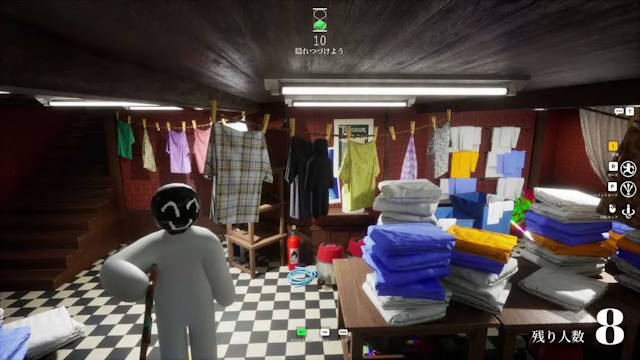
Use the right order: spot, color, pose, stillness
- Scan the room. Look for clutter, corners, wall decorations, and groups of objects that can hide part of your outline.
- Choose the spot. Decide where your body will sit before selecting colors.
- Match the area. Copy the dominant lightness and color family around the hiding place rather than one tiny object.
- Adjust the pose. Make the body's outline resemble the shapes already in the scene.
- Stop moving. Make only corrections that materially improve the disguise.
This order prevents a common failure: painting an impressive color first and then forcing it into a location where it does not belong.
Match brightness before chasing a perfect hue
Seekers notice high contrast quickly. A character that is much brighter or darker than the surface behind it will stand out even when the hue is close. First match whether the area is light, medium, or dark; then refine the color.
- Against a pale wall, an overly dark color sharpens the entire silhouette.
- On a dark floor, a bright patch attracts attention from across the room.
- In a multicolored object cluster, one exact color may still look artificial if the rest of the body is too uniform.
If time is short, a slightly imperfect neutral tone with low contrast is often more useful than a vivid color that matches only one nearby detail.
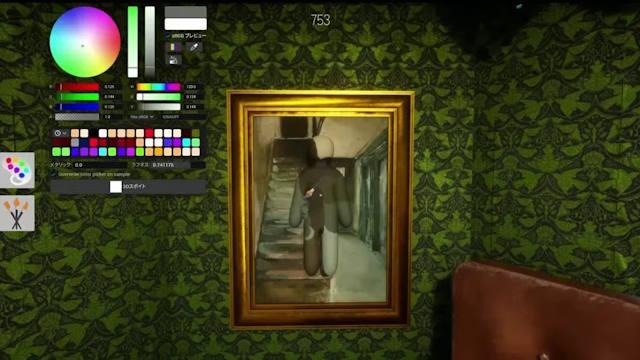
Paint for the surface you are using
| Hiding surface | Painting approach | Main risk |
|---|---|---|
| Open floor | Match the floor's overall brightness and keep the body low or compact. | Your full outline is exposed from several angles. |
| Wall with decorations | Use the wall's main color and pose as if you belong to the mounted objects. | A human-shaped silhouette still looks unusual. |
| Cluster of objects | Match the cluster's shared palette and let nearby objects hide part of the body. | Copying one small object can make the rest of the paint look out of place. |
| Edge between two colors | Favor the larger surface or divide the paint only if you can align the boundary convincingly. | A misplaced color boundary becomes a strong visual line. |
| Shadowed corner | Match the shadowed value rather than the object's color under full light. | Going too dark creates a solid, unnatural shape. |
Break up the character's outline
A seeker can recognize a familiar body shape without consciously comparing colors. Use the pose to hide obvious features and align limbs with shelves, pipes, frames, or other lines in the environment. Whenever possible, place part of the character behind an existing object or at the edge of the seeker's likely view.
Do not judge the disguise only from very close range. Consider how it reads from the room entrance and from common search routes. A hiding spot that looks excellent from one angle may reveal an obvious silhouette from another.
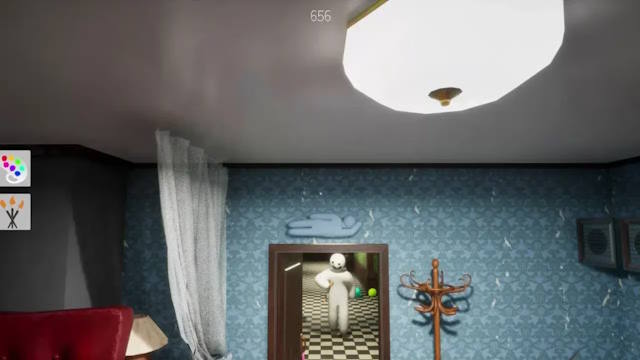
Know when to stop painting
More detail is not always better. Each extra correction takes time and may draw attention if the hiding phase allows other players to observe movement. Stop when the disguise has low contrast, a plausible outline, and no glaring unpainted area.
A useful final check is:
- Is any part much brighter or darker than the background?
- Does the pose create a recognizable head, arm, or leg shape?
- Does a painted boundary line up with the environment?
- Am I exposed from the side?
Fix the reason you were found
After a round, identify one likely cause instead of changing everything at once:
- Seen immediately from far away: reduce brightness contrast.
- Found after the seeker entered the area: improve the pose or hide more of the outline.
- Spotted at a surface boundary: align the color transition more carefully.
- Noticed while adjusting: finish sooner and remain still.
- Only one body part gave you away: inspect the disguise for an unpainted or mismatched patch.
Practice one variable per round—brightness, position, pose, or color transition—so you can tell which change actually makes the disguise harder to notice.
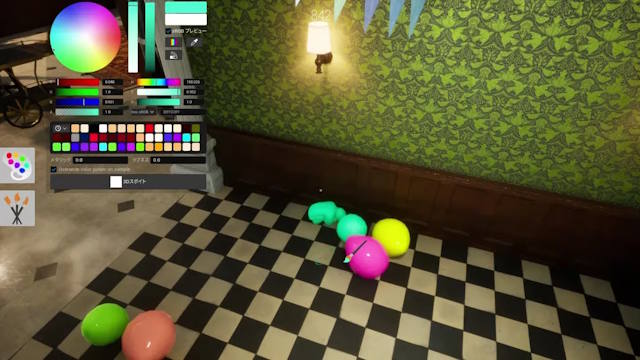
Related Articles
 Meccha Chameleon Hider Guide: Camouflage Tips7 minutes read
 Meccha Chameleon Hide-and-Seek Game Tips for Beginners - Meccha Chameleon Tips7 minutes read
 MECCHA CHAMELEON Beginner's Guide: How to Win14 minutes read
 MECCHA CHAMELEON: PC Control and Shortcut Guide6 minutes read
 TOP games similar to Meccha Chameleon - Games like Meccha8 minutes read
 Meccha Chameleon Seeker Guide: How to Find Hiders8 minutes read
Reader Comments 0
Sign in with email or Google to join the discussion.