Table of Contents
This practical guide walks through how to turn On/off Firewall on Windows Computer. It organizes the required steps, settings, and checks so you can complete the task with fewer mistakes.
Microsoft has included firewall features in its operating systems such as Windows XP, Vista, Windows 7 and Windows 8.
How to Turn on Firewall in Windows 10
To turn the firewall on or off on Windows, you need to log in to the computer with Admin rights.
Note: Windows Firewall is enabled by default in Windows 10. You should not turn off Windows Firewall unless you have installed and enabled a third-party firewall. Turning off Windows Firewall can make your computer (and network, if applicable) vulnerable to unauthorized access.
1. Turn On/off Firewall in Control Panel
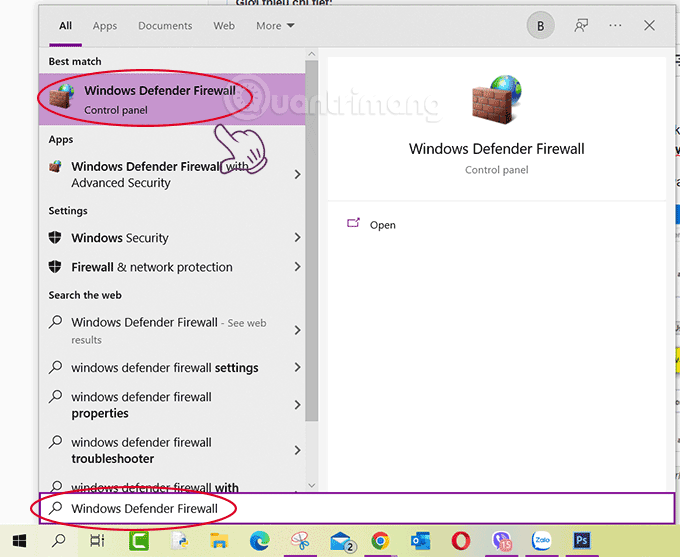
Step 1: Enter Windows Defender Firewall In the search box > select the result that appears with the Control Panel line below. Or Open Control Panel > Windows Defender Firewall
Step 2: Select Turn Windows Firewall on or off On the left panel:

Step 3: Check the Turn on Windows Defender Firewall Option to turn on or Turn off Windows Defender Firewall to turn off the firewall for Private and Public networks respectively, then choose OK.

2. Turn on the Firewall in Security and Maintenance
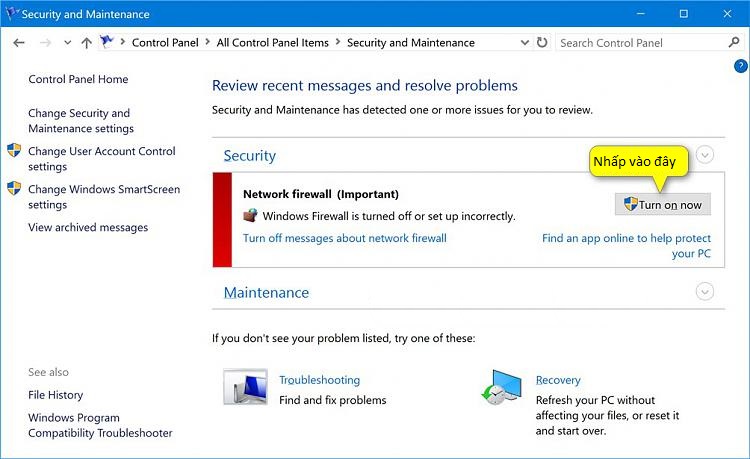
- Open Control Panel > Security and Maintenance
- In the Security Tab, under Network firewall , select Turn on now .
3. Turn On/off Firewall in Command Prompt
Please review the detailed instructions in the article: Instructions for activating/disabling Windows Firewall using Command Prompt
4. Turn On/off Windows 10 Firewall in Windows Defender Security
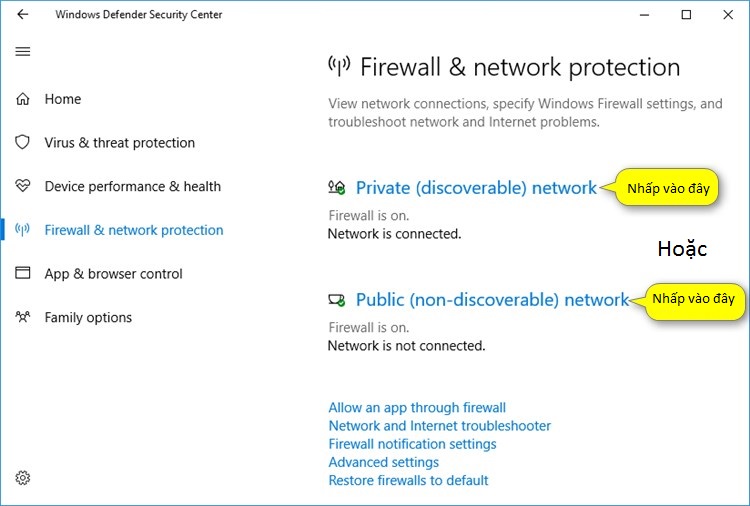
Open Windows Defender Security Center > Firewall & network protection > select Private (discoverable) network Or Public (non-discoverable) network , depending on which network's firewall you want to turn off or on, then just switch to On or Off below. Windows Firewall section is fine. To be more careful, you can select to block/unblock incoming connections in the Incoming connections Section.
5. Turn on Firewall from Notification
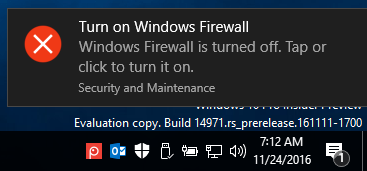
Select the notification (if available) from Windows Firewall to enable Windows Firewall for all network profiles.
Turn On/off Firewall in Windows 7
Next, we walks you through configuring a firewall in Windows 7:
Step 1:
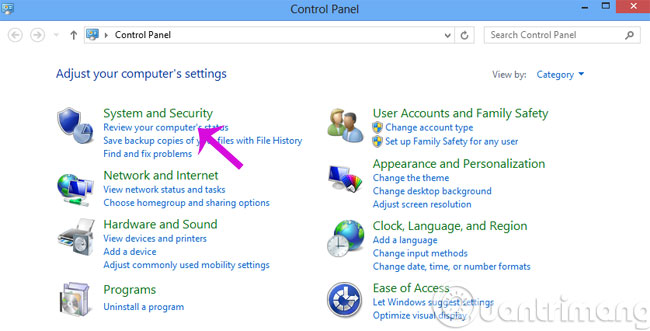
You must log in to the computer with administrative rights, access the path Start > Control Panel > System and Security .
Step 2:
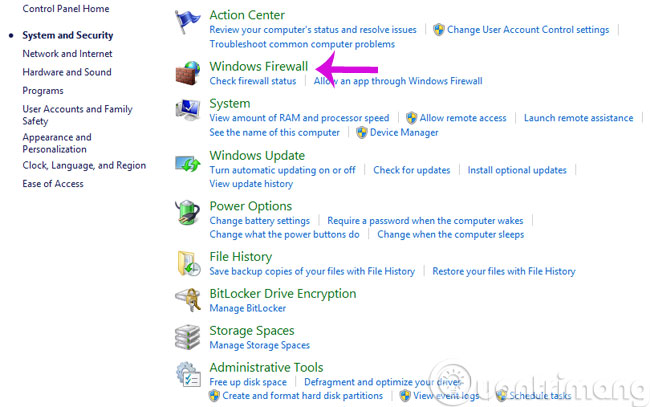
In the System and Security Window, select Windows Firewall .
Step 3:
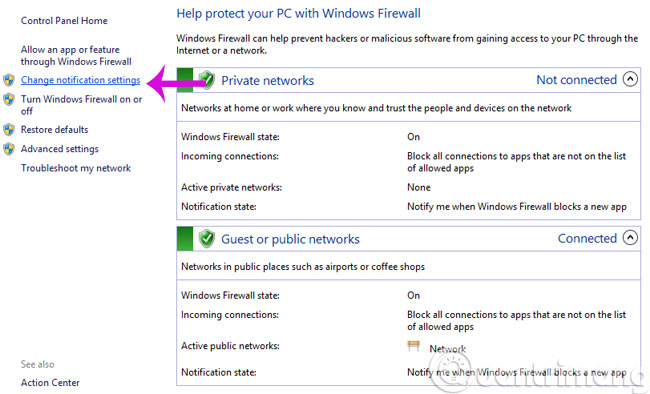
In the left column of the interface, select Change notification settings To adjust the firewall settings.
Step 4:
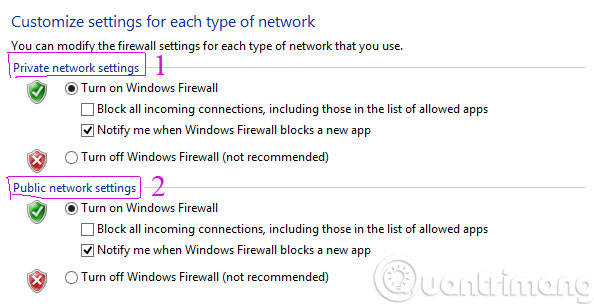
Here, you can optionally adjust Firewall on or off for both Private And Public network modes
 Step 5:
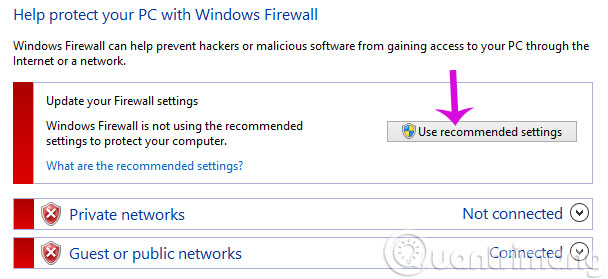
To install under Windows' recommended settings, you can select Use recommended settings .
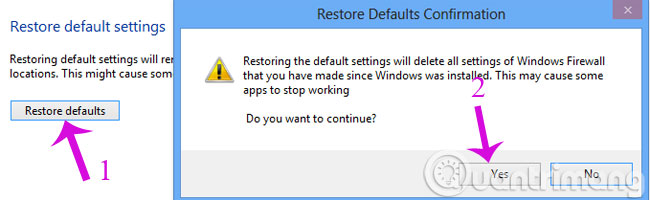
Or to return to the original default, select Restore default And select Yes When the confirmation message appears
Step 6:
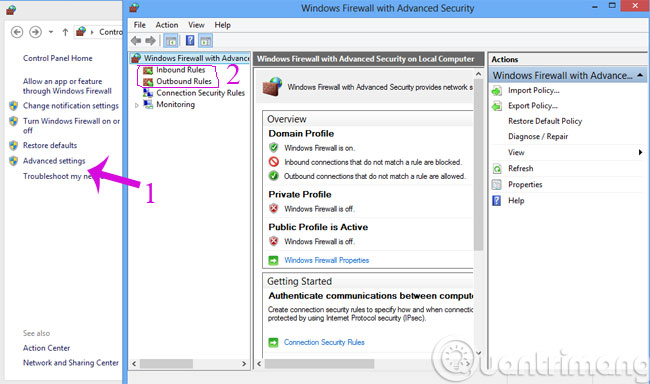
If you are an expert, you can use Advance Setting To configure the firewall for inbound and outbound information flows depending on your needs.
Step 7:
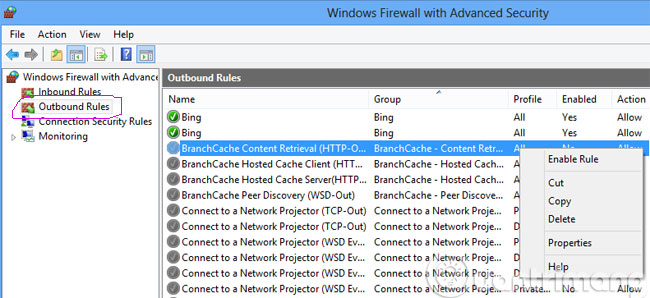
When you select Inbound Rules On the left, you will see a list of Inbound Rules Displayed. You can enable or disable any connection you want by right-clicking and selecting Enable Rule / Disable Rule
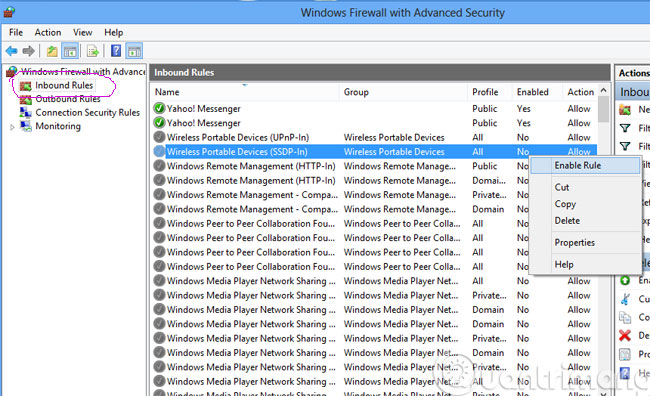
Do the same for Outbound Rules For outgoing information flows.
Turn On/off Firewall in Windows 8/8.1
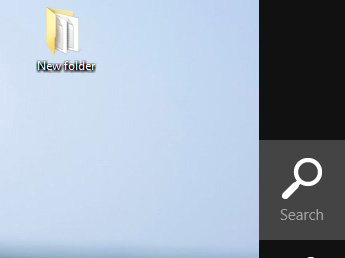
Select Control Panel In the window, if not there, move the mouse to the upper right corner until the magnifying glass icon appears as shown:
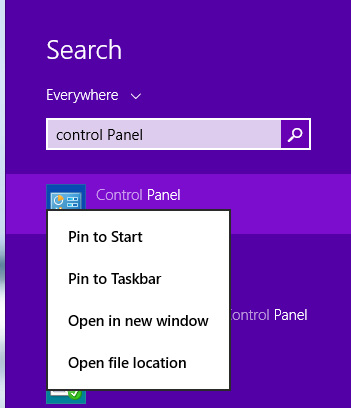
Enter Control Panel and select the icon that appears below to open Control Panel. If you want to pin it to the Start menu or Taskbar, right-select the Control Panel icon and select the corresponding option.
In the Control Panel, open and select Windows Firewall, the Windows Firewall window appears with the same options as on Windows 7 (picture in step 3 above), you can follow the instructions in the wall toggle section. Firewall on Windows 7 to turn firewall on and off in Windows 8, as well as change related firewall settings.
FAQ
What do I need before I turn On/off Firewall on Windows Computer?
Prepare the required device, software, account access, and any files mentioned in the steps. Back up important data before changing system settings.
Why does the process look different on my device?
Menus and options can vary by operating system, app version, device model, or region. Use the closest matching setting and check the official documentation when needed.
What should I do if a step does not work?
Restart the app or device, confirm permissions and connectivity, update the software, and repeat the step carefully. Avoid unofficial downloads or tools.
Related Articles
 Turn Off Windows 10 Firewall: Complete Guide6 minutes read
 Turn Off the Windows Firewall 11: Complete Guide6 minutes read
 How to Turn Firewall (Firewall) on Win 72 minutes read
 How to Turn on // Off Windows Firewall in Windows 7, 8 // 8.1 and7 minutes read
 How to Turn Firewall on and Off in Windows 103 minutes read
 Firewall Windows 10: How to Use a Firewall in Windows 1011 minutes read
Reader Comments 0
Sign in with email or Google to join the discussion.