Table of Contents
QuillBot can suggest different wording, but it cannot make borrowed ideas your own or guarantee a particular Turnitin result. The useful goal is accurate, properly attributed writing—not a lower score obtained by disguising the source.
Similarity, plagiarism, and AI detection are different
A similarity report identifies text matching material in a tool's database. A match may be a quotation, a reference, standard terminology, or copied wording that needs attention. A high percentage does not automatically establish plagiarism, and a low percentage does not prove originality.
Plagiarism concerns using another person's words or ideas without appropriate acknowledgment. Paraphrasing can still be plagiarism if the source is not credited.
AI-writing detection is a separate assessment. Turnitin states that its AI model can misidentify text and should not be the sole basis for adverse action against a student. It also describes detection of some AI-paraphrased text, so claims that a particular editing routine is reliably undetectable are not justified.
See Turnitin's guidance on similarity and plagiarism and interpreting AI-writing reports.
Where QuillBot can help
A paraphraser can offer alternative sentence structures, point out awkward phrasing, or help a language learner compare expressions. Review suggestions for meaning and terminology rather than accepting every synonym.
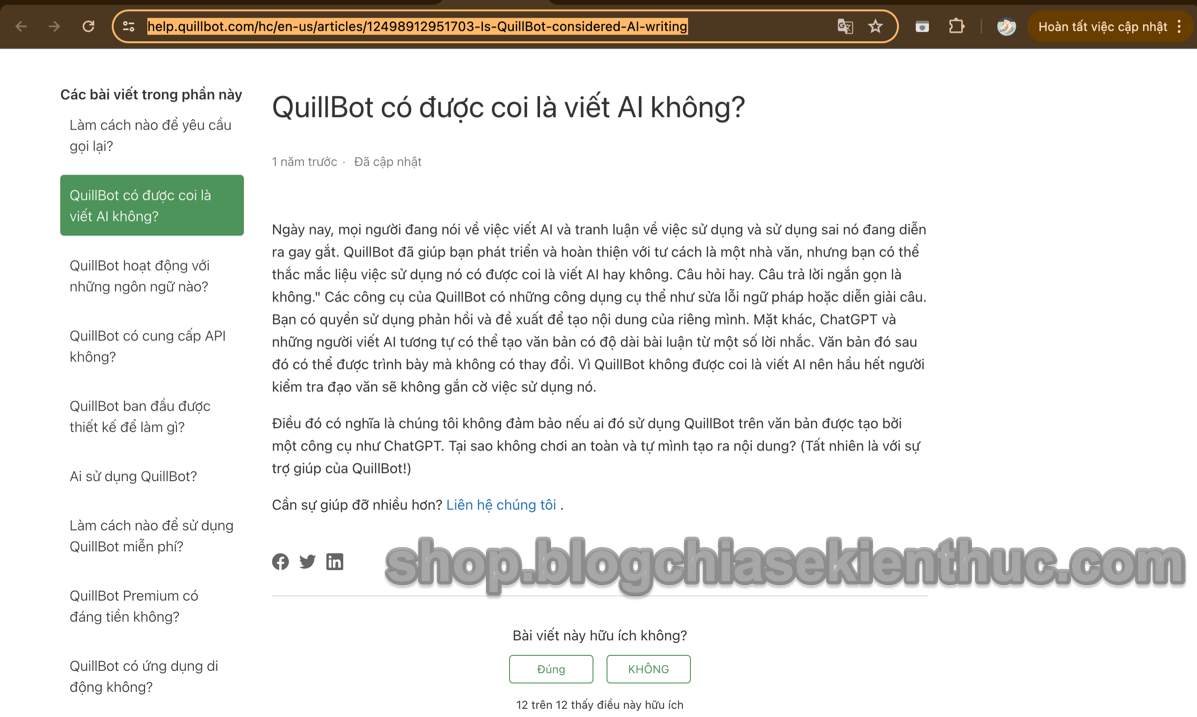
Historical screenshot from the original article. A product statement or example output does not establish that text will pass an authorship or similarity check.
Do not assume that changing vocabulary removes the need for a citation, that a polished sentence is factually correct, or that a tool's output meets your institution's rules.
Revise a source-based passage properly
- Read the source in full context. Identify the claim, evidence, and limitations before using an isolated sentence.
- Write your understanding without copying the source's structure. Explain why the information matters to your argument, rather than substituting words one by one.
- Compare for accuracy. Check names, quantities, qualifications, and whether the paraphrase overstates the finding.
- Add attribution. Cite the source of the idea. Use quotation marks and a citation when retaining distinctive wording.
- Review optional tool suggestions. If your rules allow QuillBot, use it for clarity after you have written the substance. Reject changes that distort meaning or obscure responsibility.
- Keep your research trail. Save notes, source details, and draft history so you can explain how you developed the work.
Use a report to investigate passages
Review each relevant match rather than trying to reach an arbitrary universal percentage. Check whether it needs a citation, quotation marks, a more independent explanation, or removal because it does not contribute to your argument.
If an AI flag seems wrong, discuss it through your institution's review process and provide drafts or notes when requested. Repeatedly rewriting text to chase a detector score does not establish authorship.
Choose the tool for the writing task
For document editing, see QuillBot in Microsoft Word and the comparison of Word writing-assistance tools. Check your course or workplace policy before submitting assisted work, and disclose assistance when required.
Before submission, confirm that you understand every claim, can locate the supporting sources, and have not presented generated or borrowed analysis as your own.



Reader Comments 0
Sign in with email or Google to join the discussion.