Table of Contents
This guide explains how to backup Raspberry Pi, with clear steps, practical tips, and important checks before you begin.
The first thing to do is to safely disable the Pi (how you do this will depend on the Supported operating systems you're running - for Raspbian, now just type sudo shutdown now in the command line) and remove the tag microSD out. Then, place the card in the card reader of the computer.
How to backup Raspberry Pi SD card on Windows
Step 1: Open Win32 Disk Imager
If not, you can download Win32 Disk Imager here.
Step 2: Set the drive and destination folder
In Win32 Disk Imager, use the drop-down menu labeled Device to select the drive corresponding to the SD card. Then, click the folder icon and choose the folder where you want to place your backup - but don't press Open yet .
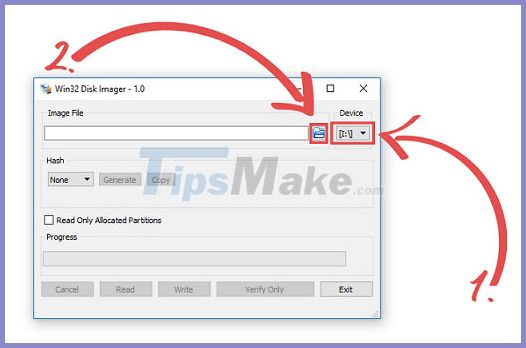
Set the drive and the destination folder
Enter a new file name in the File name: box (this will be the file name of the backup). The file type will be. img by default, which is fine, since that's what you want. Now, you can go ahead and click Open.

Enter a new file name in the File name box:
Step 3: Write the file
Now, just press the Read button . Your job here is done! Win32 Disk Imager will do the rest. Pull out the SD card when all is done.
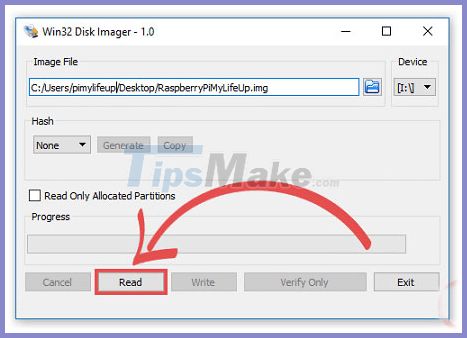
Click the Read button
Restore Raspberry Pi on Windows
If the date when you have to use this backup comes, you will find the process looks very familiar. Again, you must insert the SD card and select the appropriate drive from the drop-down window. Next, you will need to select your. img file.
Since the file already exists, you will find that the Write button is a viable option. Of course, that's exactly what you should do and after you hit the Write button, Win32 Disk Imager will replace whatever is on the SD card with a backup disk image. So easy!

After you press the Write button, Win32 Disk Imager will replace whatever is on the SD card with the backup disk image.
FAQ
What should I know about Backup Raspberry Pi?
Focus on the key features, requirements, limitations, and practical use cases explained in this guide.
How do I get the best results with Backup Raspberry Pi?
Follow the recommended steps, use current software or information, confirm compatibility, and review settings before major changes.
Are there any risks or limitations?
Potential limitations depend on compatibility, data quality, cost, privacy, support, and how the product or method is used.
Related Articles
 How to Send Backup Copies of Raspberry Pi Files to Email5 minutes read
 How to Add an ADC to Raspberry Pi: What You Need to Know: Clear Instructions11 minutes read
 Raspberry Pi Zero vs Model a and B, How Are They Different?11 minutes read
 How to Boot Raspberry Pi 4 from USB or Over the Network9 minutes read
 What Is the Raspberry Pi and How Is the Raspberry Pi Used?7 minutes read
 How to Start Raspberry Pi 3 from USB9 minutes read
Reader Comments 0
Sign in with email or Google to join the discussion.