Table of Contents
This updated guide examines How to Adjust Virtual Memory and organizes the essential facts, background, and practical takeaways in clear American English.
Method 1
Adjusting Microsoft Windows OS (XP, Vista and 7)
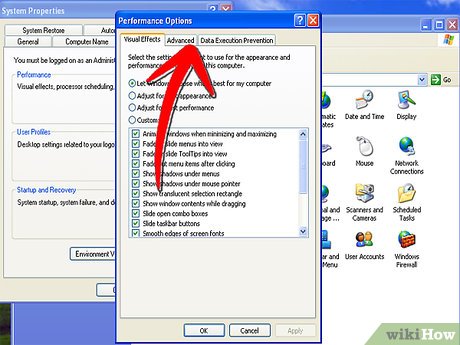 Click on the Start Menu in Windows XP. Select Control Panel. Select System from the Control Panel. Click the Performance button in the System menu.
 Choose the Advanced settings tab. Click the Change button in the Virtual Memory section.
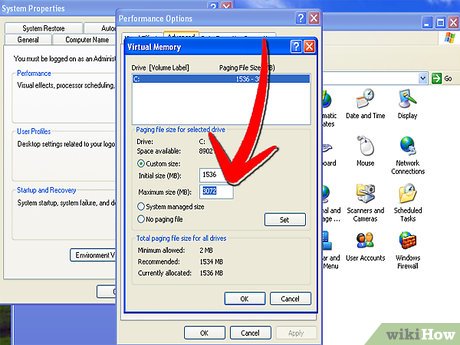 Decide the amount of disk space you would like to allocate to the paging file. Windows XP recommends that you allocate 1.5 times your physical RAM. So, if you have 2 GB of RAM, your maximum paging file should be 3,000 MBs.
 Click the Start Menu in Windows Vista. Go to the Control Panel and select System Maintenance. From there, select System.
 Select Advanced System Settings in the left navigation panel. Choose the Advanced Tab. Click the Change button in the Virtual Memory section.
- Select whether you want the system to control the paging file size, or you can choose to customize your settings. Windows' recommended settings for your system will appear at the bottom of the dialog window.

- Select whether you want the system to control the paging file size, or you can choose to customize your settings. Windows' recommended settings for your system will appear at the bottom of the dialog window.
 Click the Start Menu button in Windows 7. Right-click on Computer and choose Properties. Click on Advanced System Settings in the left menu.
 Click the Settings button in the Performance section of the System Properties dialog window. Click the Advanced tab in the Performance Options dialog window. Click on the Change button in the Virtual Memory section.
- Choose whether you want the system to automatically manage the paging file size or if you want to customize the settings yourself. The Windows recommended settings will appear at the bottom of this dialog window.

- Choose whether you want the system to automatically manage the paging file size or if you want to customize the settings yourself. The Windows recommended settings will appear at the bottom of this dialog window.
Method 2
Adjusting Mac OS X
 Open the Terminal program. You'll find it in the Utilities folder under the Applications folder.
 To turn off the swap file, type this command into the Terminal window: sudo launchctl unload -w /System/Library/LaunchDaemons/com.apple.dynamic_pager.plist
 To re-activate the swap, Type this command in the terminal window: sudo launchctl load -w /System/Library/LaunchDaemons/com.apple.dynamic_pager.plistChoose the hard drive that will serve your virtual memory file. Up and down arrows will appear that will allow you to adjust the amount of virtual memory as either more or less.
Method 3
Adjusting Linux OS
 Backup any data that you want to keep-resizing partitions can cause data losss/corruption. Boot from live cd-it needs to have gparted on it. It should detect that you have linux installed and will use the swap space.
 Open gparted and click on your swap partition (right click) press swap off. This dismounts swap so you can increase the size of it.
 Shrink a partition next to it by the same size that you want to increase your swap partition by. So let's assume you have 4gb ram and 4gb swap. You need an 8gb swap. So you should reduce the partition next to swap by 4gb. The unallocated (greyed out) space should be next to the partition. (This may be done by booting through CD ROM and un-mounting the partitions). Now click on the partition (the bar at the top of gparted) and select resize. Include your unallocated space. click swapon-restart.
 Enjoy having more swap.
FAQ
What is How to Adjust Virtual Memory about?
It provides a structured overview of click, explains the main context, and highlights practical takeaways for readers.
Why does this topic matter?
Understanding the main concepts helps readers evaluate the issue, avoid common mistakes, and make better-informed decisions.
How should readers use this information?
Use the guidance as a practical starting point, confirm details that may have changed, and follow current product, safety, or security recommendations.
Related Articles
 Here's How to Increase Virtual Memory Capacity on Windows4 minutes read
 What Is Virtual Memory? How to Set Virtual Memory for6 minutes read
 How to Handle a Computer Error Message Your Computer Is Low on11 minutes read
 Top Best Virtual RAM Creation Software on Today's Computer4 minutes read
 The Truth About Virtual RAM on Android4 minutes read
 Monitor Hyper-v with the Command Line (Part 4)6 minutes read
Reader Comments 0
Sign in with email or Google to join the discussion.