Table of Contents
Git Lifecycle: Git Life Cycle is easier to understand when the core ideas are paired with practical examples. The sections below explain the topic clearly, highlight useful steps, and point out details that can prevent common errors.
In this chapter, we will discuss Git's life cycle. And in the following chapter, we learn through Git commands for each activity.
The general work process is as follows:
You clone Git repository as a working copy.
You edit the working copy by adding / editing files.
If necessary, you can update your working copy by making changes to other developers.
You review the changes before committing.
You commit the changes. If everything is good, then you push these changes to the repository.
After committing, if you realize something is wrong, then you can correct those commits and push these changes to the repository.
Below is a picture of the work progress:
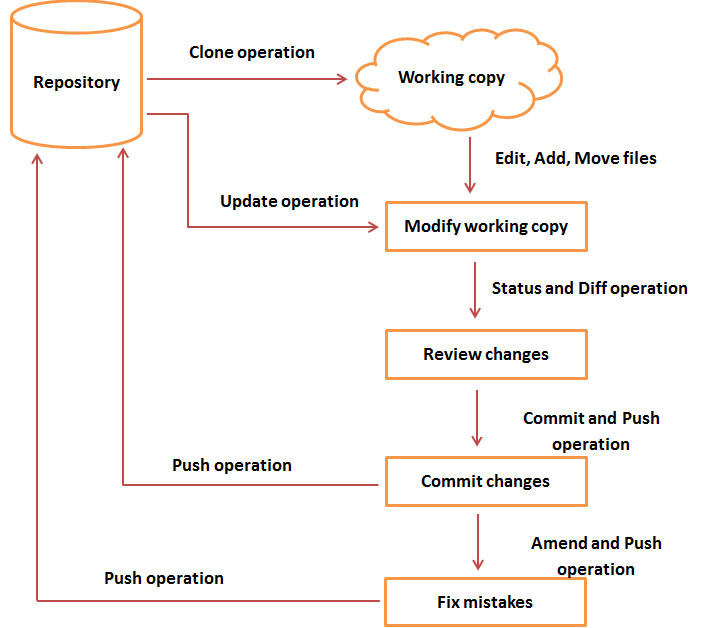
According to Tutorialspoint
Last lesson: Git environment installation
Next lesson: Create activity in Git
FAQ
What is Git Lifecycle: Git Life Cycle?
In this chapter, we will discuss Git's life cycle.
Why is Git Lifecycle: Git Life Cycle important?
A clear understanding of Git Lifecycle: Git Life Cycle helps you make informed decisions, avoid common mistakes, and use the relevant tools or techniques more effectively.
How should beginners approach Git Lifecycle: Git Life Cycle?
Start with the fundamental concepts, follow the examples step by step, and test each change in a safe environment before applying it to important systems or data.
Related Articles
 British Scientist Uses Radar to Track Bee's Lifelong Route5 minutes read
 How to Check Cycle Count of iPhone / iPad Battery4 minutes read
 How Long Does One Day on the Solar System Planets Last5 minutes read
 Smartphone: People Tend to Use a Phone for How Long?6 minutes read
 Steps to Check Your Macbook's Battery Charge Cycle3 minutes read
 Tomorrow, Global GPS Will End Its Operation Cycle, 'Y2K Incident' Can Happen Again4 minutes read
Reader Comments 0
Sign in with email or Google to join the discussion.