Table of Contents
China's chipmaking capabilities are advancing rapidly. A domestic company recently developed the country's first commercial electron beam lithography (EBL) device.
New photolithography machine uses electron beam, but speed is limited
China has long been considered a laggard in semiconductor lithography due to its lack of access to ASML's cutting-edge equipment, which is considered the 'last resort' for advanced chip manufacturing. While efforts have been made to develop EUV technology on its own, it is a long-term story.
According to the South China Morning Post, researchers at Zhejiang University (Hangzhou) have announced an important milestone: the development of the first electron beam lithography machine, named Xizhi .
Advantages and disadvantages of Xizhi:
- Accuracy: reaches 0.6nm – close to ASML's High-NA EUV technology.
- Limitations: extremely slow processing speed, due to the 'dot-by-dot' mechanism which can take hours to create a wafer.
In practical terms, Xizhi is suitable for research and development (R&D), helping China narrow the technology gap with the West, but not feasible for mass production.
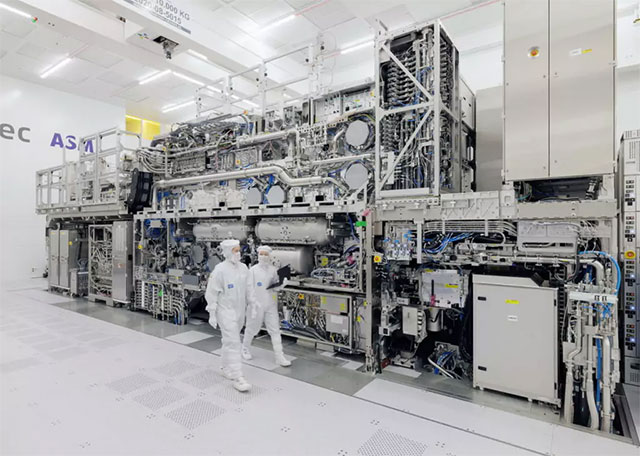
Currently, China still relies mainly on DUV machines to produce general-purpose chips. The emergence of EBL technology could become a springboard for the prototyping of advanced chip lines, paving the way for the future of domestic semiconductors.
While still years behind the US in manufacturing capacity, the gap is narrowing, and EBL could become a key piece in China's semiconductor ambitions.
Final Thoughts
The development covered in this article is worth following, but specifications, dates, and feature details may change until the relevant company or organization publishes an official confirmation.
FAQ
What is the main development covered in this article?
China's chipmaking capabilities are advancing rapidly. A domestic company recently developed the country's first commercial electron beam lithography (EBL) device.
What should you know about the key details?
China has long been considered a laggard in semiconductor lithography due to its lack of access to ASML's cutting-edge equipment, which is considered the 'last resort' for advanced chip manufacturing.
Is every reported detail officially confirmed?
Not necessarily. Product leaks, preview builds, research reports, and early announcements can change. Confirm important specifications, dates, and availability through an official source before making a decision.
Related Articles
 Close-up of the $ 150 Million Machine That Dominates the4 minutes read
 Dell Precision 7540 Review: High-end Laptop Workstation10 minutes read
 Dell Announces the 'Massive' Configuration of Dual Workstations5 minutes read
 China Launches K Visa to Attract Young Global Tech Talent: What to Know4 minutes read
 CNC Turned: Complete Guide9 minutes read
 Comparing AirTag 2 and AirTag 1: What Upgrades Has Apple Made After 4 Years7 minutes read
Reader Comments 0
Sign in with email or Google to join the discussion.