- The octagonal sword in the ancient tomb is shiny after 3,000 years

A group of archaeologists from Germany unearthed a sword more than 3,000 years old in a tomb containing the remains of three people from the Bronze Age, late 14th century BC.
- How is the ball touch 'speedometer' at Euro 2024 designed?
Connected ball technology designed with a motion sensor microchip with the ability to track every touch at a speed of 500 times per second was first put into use at Euro 2024.
- 11 mysterious places are blurred on Google Maps, what is being hidden?
There are some secret locations that are obscured or blacked out on Google Maps. Even if you zoom in all the way, you can't see it, so you can only curiously predict.
- The house can be 'invisible' according to the landscape and weather in the Alps
Mirage Gstaad, a house created by American artist Doug Aitken, reflects the changes of nature through the seasons in the Alps.
- Why is it rare to see pilots with beards?
It's a fact that we rarely see pilots with beards, especially when they are on duty. The reason behind contains important factors related to flight safety and health.
- What is red tide? Is it dangerous?
Red tide, also known as algal bloom, is a phenomenon in which algae reproduce in large quantities in water in estuaries, seas or freshwater.
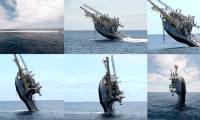
- The ship can stand up at a 90 degree angle in the middle of the sea
The ship has the ability to change position from horizontal to vertical at a 90-degree angle in the middle of the sea thanks to an impressive water pumping mechanism.
- 5 animals that can survive a global disaster
5 animals have a high chance of survival in the event of a global disaster such as an asteroid impact or a serious pandemic outbreak that could wipe out the majority of animal
- Dragon Bamboo, the tallest bamboo species in the world
The giant bamboo species Dendrocalamus giganteus is recognized as the tallest bamboo species in the world on the Guinness World Records website Guinnessworldrecords.com.
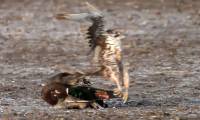
- A steppe kestrel kills a mallard with a 'shadowless' dive at a speed of 90km/h
The video records the scene of a Drake duck (Mareca americana) lying calmly resting when suddenly its head is ripped off by a 'supernatural force', then it falls to the ground.
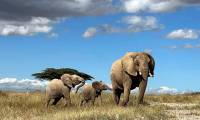
- To their surprise, the elephants also called each other by name
Besides humans, elephants are the first animals to use names that do not involve imitation.
- The world's longest straight road of 240km, without a single curve
The title of longest straight road in the world belongs to the nearly 240km long highway section through the vast Rub-al-Khali desert in Saudi Arabia because there are no bends or
- Is fire a solid, liquid, gas or plasma?
Fire is actually not physical at all but is the human sensory experience of a chemical reaction called combustion.
- New research on butterflies suggests insects may be smarter than we think
When it comes to insects, we often think of small animals, diverse in morphology, and sometimes causing discomfort or fear...
- Astronomer James Webb finds the most distant galaxy ever observed
The newly discovered galaxy is called JADES-GS-z14-0.
- 5 deepest lakes in the world
Topping the list of the world's deepest lakes is Lake Baikal, with a depth of 1,642m, containing 1/5 of the planet's unfrozen freshwater reserves.
- Successful test launch of the world's most powerful rocket
Starship, the most powerful launch vehicle ever built, successfully launched in a test at SpaceX's Starbase facility in Boca Chica, Texas, at 7:50 p.m. on June 6, Hanoi time.
- Desert Rain Frog - A strange chubby frog that makes a 'horrifying' screaming sound
Desert rain frogs have a special defense. When in danger, they emit extremely terrifying screaming sounds to threaten their enemies.
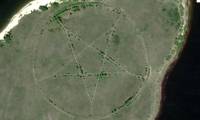
- 15 mysterious and strange places appearing on Google Earth surprise people
The vast earth has many mysterious lands that humans do not know and have not yet set foot on. Nowadays, thanks to the Google Earth tool, anyone can search and explore strange and
- When did the first rain appear on Earth?
New research by a team of researchers from Australia and China shows that the first rain appeared on Earth about 4 billion years ago, 500 million years earlier than previous
 Home
Home
 Wifi Tips
 Fix Computer
 Windows 10
 Windows 11
 Artificial Intelligence
 Space Science
 Strange story
 Scientific invention
 Science Story
 Science photo
 Science and technology
 Medicine
 Health Care
 Fun science
 Environment
 Discover science
 Discover nature
 Archeology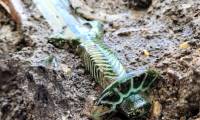














 System
 Mac OS X
 Hardware
 Game
Game Tech info
 Technology
 Science
 Life
Life Application
 Electric
 Program
 Mobile