Table of Contents
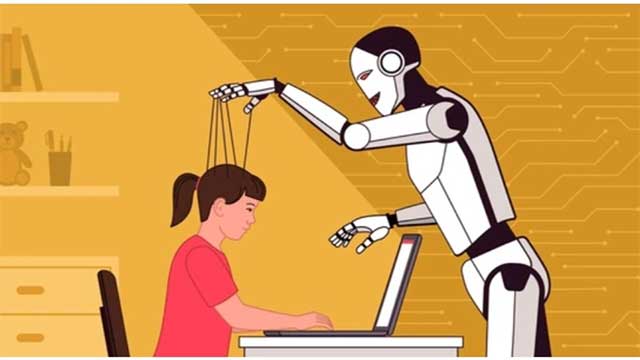
Generative AI can influence language in two directions. People teach language models through the text used to build and improve them, while repeated exposure to AI output can introduce particular words and sentence patterns into human writing and speech.
That does not mean everyone who says “delve” used a chatbot, or that concise workplace instructions are inherently robotic. It means writers and speakers now have another powerful source of linguistic imitation—one that can produce the same polished patterns at enormous scale.
What the research actually shows
A research team led by Hiromu Yakura analyzed about 280,000 English-language videos from more than 20,000 academic YouTube channels. The researchers looked for changes after ChatGPT's release in words that the model used distinctively, and reported a significant shift in the trend of those words. Their paper describes this as evidence that human spoken language is increasingly imitating large language models.
The research paper is useful evidence of a population-level pattern, but it does not diagnose any individual speaker. Word frequency can change for several reasons, and observational data cannot by itself reveal exactly how a word entered a person's vocabulary.
Florida State University researchers reported a related pattern in podcast language: several AI-associated words increased after ChatGPT appeared while comparison synonyms changed much less. Importantly, the university's own summary of the work says the results are correlational and that it is premature to claim causation.
How AI style spreads
Language naturally spreads through imitation. We borrow phrases from coworkers, media, books, and online communities. AI adds several high-frequency pathways:
- Accepted suggestions: people keep wording proposed by chatbots, autocomplete, or smart replies.
- Editing habits: repeatedly asking a model to “make this professional” can normalize its preferred vocabulary and rhythm.
- Exposure: readers encounter AI-assisted posts, scripts, emails, and presentations without knowing how they were produced.
- Prompt habits: terse instructions that work well with software may carry over into messages to colleagues.
None of these mechanisms makes communication automatically worse. A model can help a person translate an idea, organize a difficult explanation, or write more confidently in a second language. The problem arises when convenience removes the speaker's intent, context, or recognizable voice.
Signs that a draft has lost its human context
- The opening is polished but does not answer the reader's actual question.
- Abstract words such as “landscape,” “realm,” or “transformative” replace concrete details.
- Every paragraph has the same length and cadence.
- The text claims enthusiasm or empathy without showing what prompted it.
- Instructions arrive as commands with no owner, reason, priority, or deadline.
- The writer cannot explain or defend a sentence in their own words.
A single word or punctuation mark is not reliable proof of AI use. Look at whether the message contains specific knowledge, appropriate judgment, and a voice that fits the situation.
Why uniform language can matter
Communication does more than transfer information. Word choice and timing can show care, uncertainty, humor, identity, and membership in a community. When many people accept the same default phrasing, those signals may become harder to read.
At work, a highly compressed command can also hide essential information. “Replace this section” leaves the recipient to guess why it is wrong, what outcome is wanted, and who will approve the change. The issue is not a lack of greetings; it is missing context.
How to use AI without losing your voice
Draft the meaning first
Write the claim, evidence, audience, and desired action in your own words before asking AI to edit. Even rough notes give the model something specific to preserve.
Request limited edits
Instead of “rewrite this professionally,” ask for a narrower operation: shorten repetition, identify unclear transitions, or offer three alternatives for one sentence. Review each change rather than accepting a complete rewrite by default.
Give voice constraints
Tell the tool to preserve contractions, sentence-length variation, specialist vocabulary, humor, or regional phrasing where appropriate. Add examples from your own approved writing; do not imitate a living writer or colleague without permission.
Replace abstractions with observations
Change “This innovative solution transforms collaboration” to the actual behavior: who can do what, in which tool, and with what result. Specific writing is usually both more human and more useful.
Read it aloud
Spoken review reveals unnatural rhythm, repeated transitions, and phrases you would never normally say. If a sentence feels uncomfortable in your mouth, rewrite it.
Restore the relationship in workplace messages
Efficient communication can still be considerate. Include the reason, constraint, and invitation to clarify:
Could you remove the second section? It repeats the introduction, and we need the draft under 800 words. Let me know if that creates a gap elsewhere.
A practical editing test
Before sending an AI-assisted message, ask:
- Does it say something specific that I actually mean?
- Can the recipient tell what action is needed and why?
- Would I use these words in a real conversation with this audience?
- Have I checked facts, names, and implied promises?
- Does the tone respect the relationship?
For a repeatable review process, use TipsMake's writing quality check.
AI is likely one contributor to current language change, not the sole cause of it. The sensible response is not to ban certain words or deliberately make writing messy. Use AI for structure and alternatives, then take responsibility for the meaning, evidence, and voice of the final message.
Related Articles
 Everyday Robots: Complete Guide3 minutes read
 Close-up of the Screen Coordinates to the Charm2 minutes read
 Admire Anymal Robots That Can Use Elevators Like People3 minutes read
 Are Humans Ready to Live with Robots and AI?7 minutes read
 Attack of Security Robots, a Man Is 'Wanted'6 minutes read
 Can People and Robots Give Birth Together in 100 Years3 minutes read
Reader Comments 0
Sign in with email or Google to join the discussion.