Table of Contents
AI is turning cars into 'mobile computers' with intelligent voice assistants, autonomous driving, fault prediction, and driver tracking.
Remember the time when cars were simply… cars? You turned the key, the engine started, the wheels rolled, and everything operated in a very 'mechanical' way. Simple, yet fascinating.
Things are changing rapidly now.
The automotive industry is currently racing to transform cars into what are called 'software-defined vehicles' — simply put, a giant computer that you sit inside.
Beyond simply having a better infotainment screen or smoother Spotify playback, new car models will be equipped with powerful processors, cloud connectivity, and AI to completely transform how vehicles operate.
It sounds a bit worrying, especially for those concerned about security. But admittedly, it's… quite interesting. Here are some AI features that will soon become standard in cars.
For more context before choosing a tool, compare Claude and ChatGPT and review these practical AI tools for students.
Smarter, more understanding voice assistants.
To be honest, current in-car voice recognition systems are still very poor. You give one command, and the car understands something else — sometimes even calling the wrong person instead of adjusting the temperature.
But with the development of generative AI, this is changing rapidly. IBM says Mercedes-Benz has integrated ChatGPT into more than 900,000 vehicles in a pilot program.
In the near future, you won't need to speak using 'machine syntax' anymore. Instead of saying something like 'set the driver's seat temperature to 22 degrees,' you can simply complain 'it's too cold,' and the AI will automatically understand who's speaking and where they're sitting to adjust the temperature and seat heating accordingly.
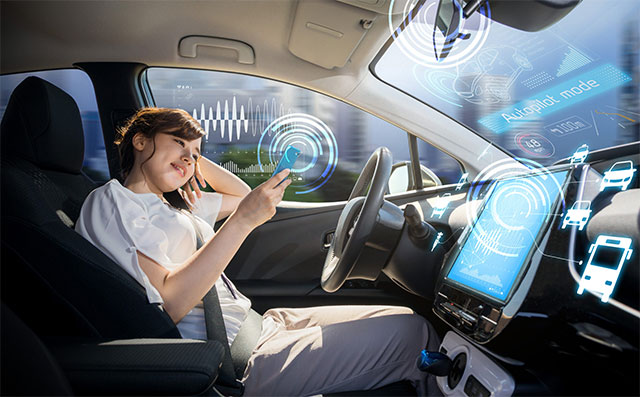
The car truly 'knows how to drive', it doesn't just provide assistance.
Current driver assistance systems, such as lane-keeping, are still quite limited, sometimes making the car feel unnatural.
The next generation will shift to end-to-end neural networks, allowing vehicles to process data directly from cameras and make steering or braking decisions like humans.
According to EV Magazine, systems like Tesla's Full Self-Driving operate in this way, rather than relying on rigid programmed rules.
Furthermore, AI is also equipped with the ability to 'see in the dark'. New vision systems can use thermal sensors to detect pedestrians in low-light conditions, or predict the movement of bicycles even when temporarily obscured.
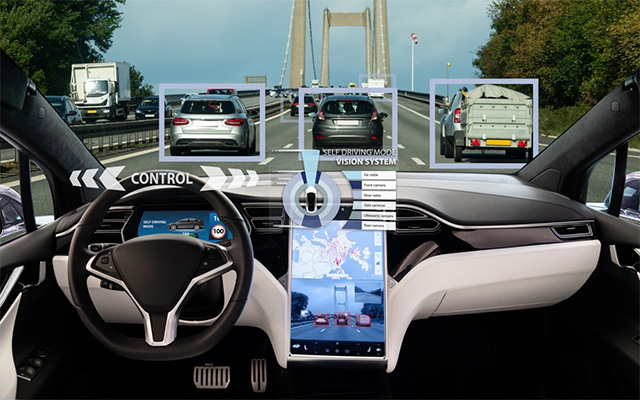
The 'check engine' light is no longer a cause for alarm.
Few things cause drivers more anxiety than a vague 'check engine' warning light. It could be just a minor fault… or it could be a sign of a serious problem.
AI will completely change this.
Predictive maintenance platforms like iMaintain use data from hundreds of sensors to predict failures before they occur.
Instead of waiting for your car to break down in the middle of the road, you can receive early notifications like: 'The left rear brake pad is showing signs of wear. I've ordered the part from the nearest dealership. Would you like to schedule a repair for Tuesday?'
In other words, the car will 'know it's about to get sick' before any symptoms appear.
Reduce worries about running out of battery on electric vehicles.
If you drive an electric vehicle, you're probably familiar with that feeling of anxiety about the remaining range — even though the car indicates full battery, you still can't feel completely at ease.
New AI algorithms are helping to solve this problem.
According to electric vehicle data companies like Intangles, machine learning systems can calculate distances with up to 96% accuracy, by combining data on weather, traffic, and driving habits.
Furthermore, when the vehicle knows you're heading to a charging station, it can proactively adjust the battery temperature to reach optimal levels before charging. According to Midtronics, this helps speed up charging as soon as you plug it in.
A vehicle tracks you — to ensure your safety.
This is probably the most 'science fiction' feature.
New car models will be equipped with cameras pointed inside the cabin to monitor the driver's state. While this may be considered sensitive regarding privacy, the goal is to ensure safety.
According to Affectiva, the system can analyze eye movements, posture, and voice to detect distraction or drowsiness.
If you show signs of drowsiness while driving long distances, the system will not only warn you with an audible alert but may also automatically lower the temperature, increase the music volume, or tighten your seatbelt to help you stay more alert.
Simply put, this is an 'assistant' that constantly monitors you to ensure you don't have an accident just because you're… too sleepy.
Related Articles
 How to Use Cars 4D + Automotive Screenings and 4D Car Kits6 minutes read
 The EU Aims to Bring Speed Limiting Technology to All Cars in the Near Future8 minutes read
 In the Future, Cars May Be Equipped with Safety Airbags Outside the Car12 minutes read
 Startled with the Future Changing Technologies Will Be Popular3 minutes read
 Sony Is Producing Cars, with 33 Sensors, This Will Be the 'Most4 minutes read
 7 Evidence That the Netherlands Is a Country of the Future4 minutes read
Reader Comments 0
Sign in with email or Google to join the discussion.