Table of Contents
This guide provides a clear, practical overview of what connection ports do projectors usually have?, with useful context, important details, and straightforward takeaways for everyday readers.
HDMI, DVI-D & VGA
HDMI
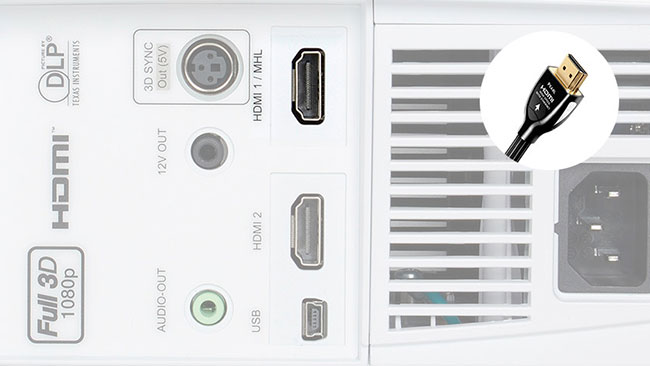
The HDMI input is the most used connection for projectors. With an HDMI connection, you send digital audio and video signals from your laptop, Blu-ray or gaming computer to the projector. To save space, mini projectors often have a micro HDMI input. This means you need an HDMI-to-micro-HDMI cable.
DVI-EASY

Projectors with a DVI-D input receive digital video signals from a computer. The connector has small screws for secure mounting. This allows you to fasten the cable in the projector.
VGA

With a VGA connection, you send an analog image signal to the projector. The connection has 15 pins and is available on most laptops or computers. You screw the connector with screws into the projector, so that the cable is securely attached.
Component, composite & S-video-
Component video
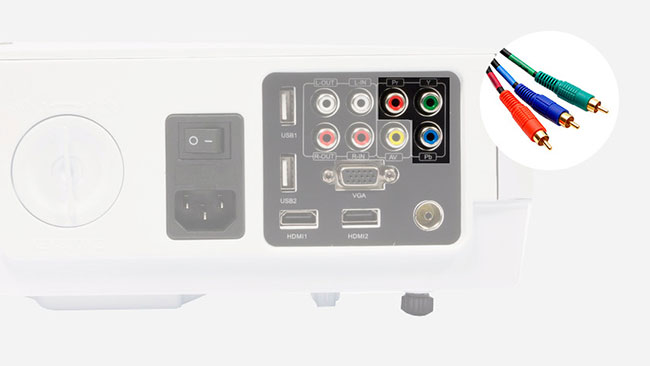
You need this input to connect things like the Nintendo Wii. The cable transmits analog video signals and includes a red, green, and blue connector. If the green connector is partially or completely yellow, it also acts as a composite connection.
Composite video
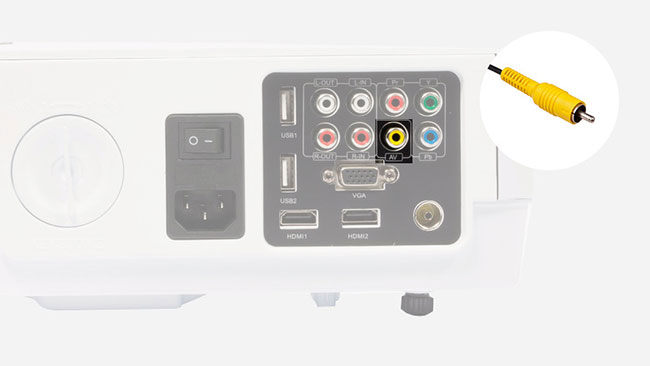
This input is especially important To connect older video cameras. You recognize it by the yellow connector. Since all information such as image and clarity flows through one cable, this connection offers lower quality than a component connection.
S-videos
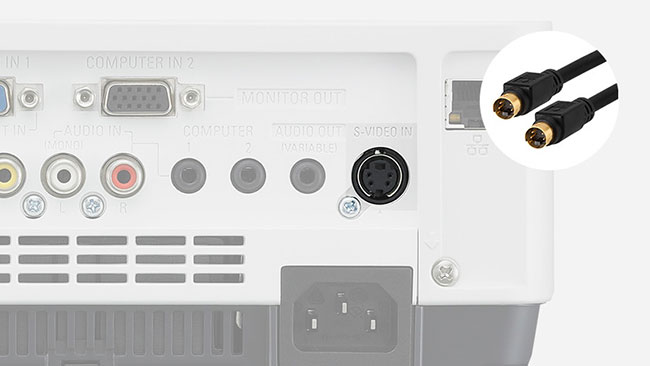
Just like with component and composite connections, you will send analog video signals with the S-video connection. S-video cables are sensitive to noise. Therefore, the connection is only available on older computers.
RCA, 3.5mm input and optical
RCA
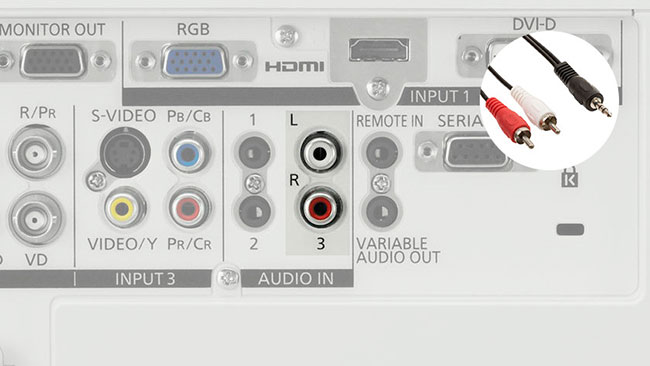
With most connections, the projector only receives the image signal. To listen to audio, you need a separate audio connection. In addition to component or composite inputs, there is always an RCA connection. This input has red and white connectors.
3.5mm . input
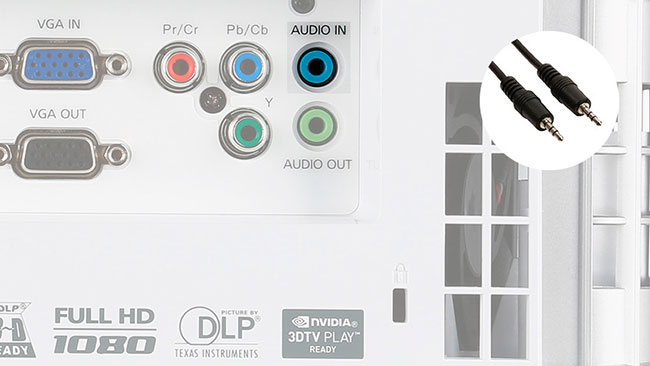
This connection is also known as the aux input. You send audio from a device like a laptop to the projector via a 3.5 cable. In terms of sound quality, you hear a slight difference between the RCA and 3.5mm connections.
Optical port
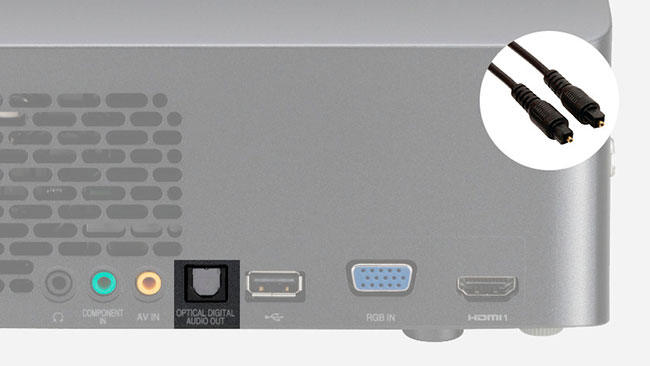
Compared to RCA or 3.5 mm, the optical connection does not provide analog audio transmission, but digital. This results in a higher quality sound. Most receivers and some laptops have this connection.
3.5mm, RS-232 and network output
Output 3.5mm
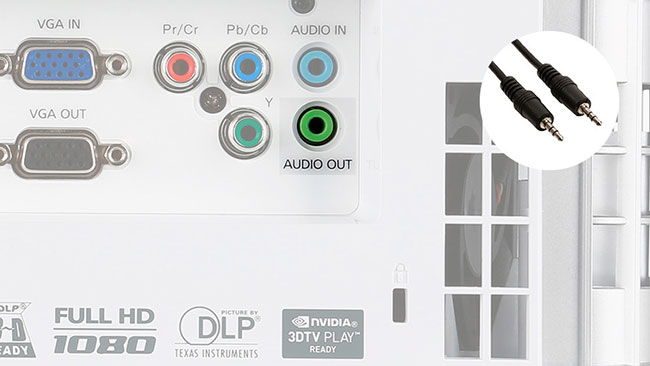
Projectors often have no or moderate speakers. In this case, the 3.5mm output is a useful connector. This connects the projector to external speakers.
RS-232
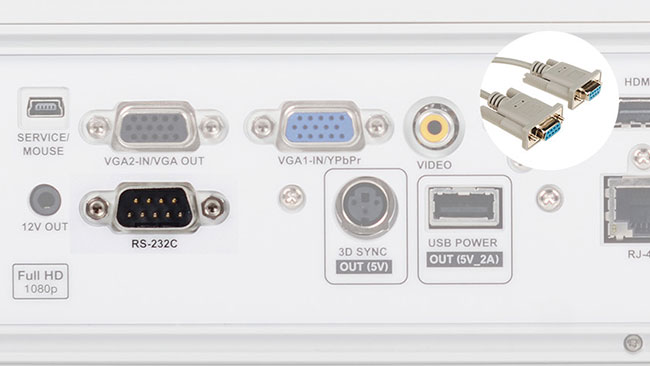
With an RS-232 connection, you send control signals from your computer to the projector. This way you turn the device on or off remotely. This connector also exists a circular version, called RS-232C.
Network port
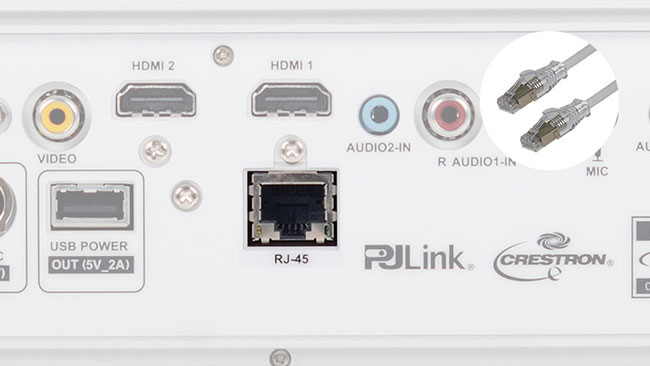
You connect this input to your computer via a UTP cable. In this way, you will send a control signal to the projector. Sometimes projectors also receive images and sound through this input, but the quality will be higher when you use an HDMI or VGA cable.
12V trigger & USB
12V trigger
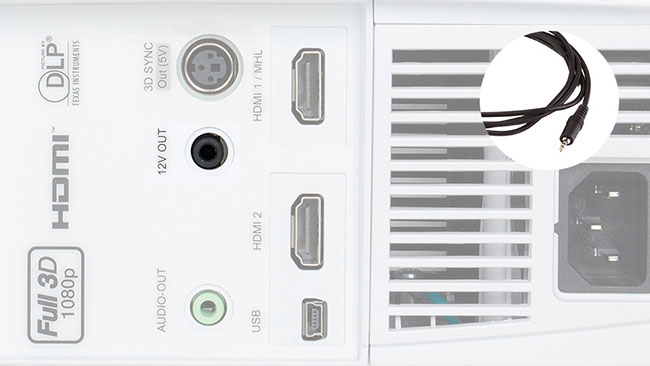
12V trigger is suitable for screens with the same connection. Thanks to this connection, the display will receive the signal as soon as you turn the projector on or off.
USB port

The USB connector can have many different functions. Many projectors can play files stored from a USB or external hard drive. In other cases, the USB input provides power to a smartphone or WiFi adapter.
Key Takeaways
Use the information above as a practical reference for what connection ports do projectors usually have?. Review each step carefully, confirm any requirements, and choose the option that best fits your situation.
FAQ
What does this guide explain about What Connection Ports Do Projectors Usually Have?
It explains the main concepts, practical considerations, and useful steps related to what connection ports do projectors usually have without requiring advanced knowledge.
Who can benefit from learning about What Connection Ports Do Projectors Usually Have?
This information is useful for readers who want a clear overview, practical guidance, and reliable steps related to what connection ports do projectors usually have.
What should I check before applying this information?
Review the requirements, confirm that your device, software, or situation matches the instructions, and back up important data before making major changes.
Related Articles
 Compare Advantages and Disadvantages of LCD and DLP Projectors7 minutes read
 16 Connection Ports Are Commonly Found on Computers and Their Functions20 minutes read
 What Is 4K Projector: 4k Projector Features7 minutes read
 Top 8 Best Projectors of 20198 minutes read
 How to Use the Connection Ports of HDTV6 minutes read
 6 Common Connection Ports on Laptops and Computers7 minutes read
Reader Comments 0
Sign in with email or Google to join the discussion.