Table of Contents
A new study from the University of Cambridge suggests that AI-powered toys for young children may struggle to understand children's emotions and may not be truly supportive of developmental play activities. This finding has prompted many parents to be more cautious about allowing their children to use such devices.
In a report on the impact of AI on children during early development, researchers observed a chatbot-equipped toy interacting with children. They found that the device often failed to accurately recognize social and emotional cues, raising concerns about how young children might react to or become dependent on such interactions.
The research team suggests that clear regulations are needed for AI toys for children, including transparent labeling of product capabilities and data privacy policies. Additionally, parents are advised to place these devices in shared living spaces where adults can easily supervise children while they play.
Results of research and practical testing.
The study was conducted on a relatively small scale but involved several different phases. Scientists conducted an online survey with 39 parents of young children, organized a discussion group of 9 experts working with children, and held an in-person workshop with 19 representatives from organizations supporting children in their early years.
The research team then conducted supervised play sessions with 14 children and 11 parents or guardians, using Gabbo – a chatbot toy developed by Curio Interactive.
Some findings suggest that this device can support learning, particularly in language and communication skills. However, researchers have also noted many instances where the toy misinterprets speech or responds inappropriately to a child's emotions.
For example, when a child says "I love you," the toy responds mechanically: "Please note that interactions must follow the provided instructions. Let me know how you would like to proceed." This response is considered inappropriate for the emotional context.
Jenny Gibson, professor of neurodiversity and developmental psychology in the Department of Education at the University of Cambridge, said many parents may be excited about new educational technologies for children. However, she stressed that many issues still need to be considered.
She questioned the motivations of tech companies: whether they truly prioritize children's best interests over profit.
According to Gibson, while scientists are still researching the potential benefits of AI toys, parents should seriously consider the risks at this point.
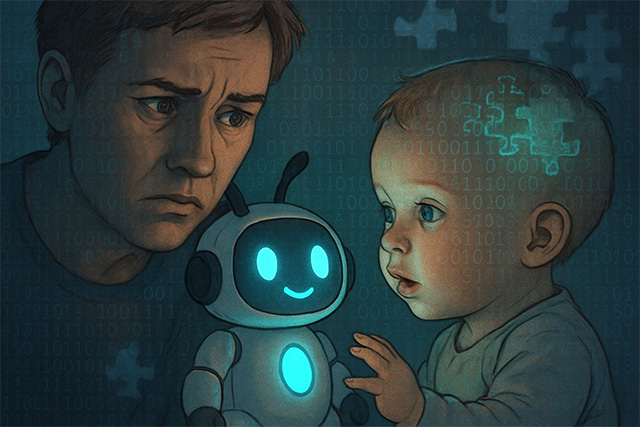
The future of AI toys
As more and more toys become connected to the internet and integrate AI, experts warn that they could become a significant safety risk for children, especially if these devices replace human interaction or are left unsupervised by adults.
Simultaneously, young people are increasingly using chatbots like ChatGPT. Several recent lawsuits have alleged that AI assistants or companion chatbots can negatively impact the mental health of young people, even in some cases suggesting they have encouraged self-harm or caused self-image degradation.
In response to these concerns, major AI companies like OpenAI and Google have begun implementing additional controls and limitations to mitigate the risks associated with using chatbots.
Gibson said she was quite surprised that some parents were enthusiastic about AI toys. At the same time, she was concerned because there is still very little research on the impact of AI on young children.
According to her, product development companies should collaborate more closely with children, parents, and child development professionals to ensure that technology is designed to meet children's real needs.
Feedback from the manufacturer
Curio Interactive, the company that develops the Gabbo toy, says they always prioritize safety in their product design process, ensuring the toys are not dangerous and meet high quality standards.
The company also asserts that its products comply with the Children's Online Privacy Protection Act (COPPA) and numerous other regulations regarding children's data privacy. In addition, Curio Interactive partners with KidSAFE, an organization that assesses compliance with digital standards for technology used by children.
According to the company representative, user data is protected by encryption technology, and parents can manage or delete their children's data through the accompanying app.
Related Articles
 8 Dangerous Toys Can Harm Children and Make the Right Choice7 minutes read
 Archeology Finds 4000 Year Old Bear Head Clay Toys3 minutes read
 8 Fun, Simple Crafts for Babies This Summer: Children4 minutes read
 10 Common Diseases in Children in the Fall, Symptoms and Prevention9 minutes read
 What Is the World in the Eyes of Young Children Under One Year Old1 minutes read
 How to Turn Sensitive Content Alerts on and Off on iPhone7 minutes read
Reader Comments 0
Sign in with email or Google to join the discussion.