Table of Contents
It is hard to doubt that urine, biological fluids in our bodies, are released every day, sometimes bringing light to mankind while treating waste and preventing harmful organisms. through the drainage network. This article explains the key facts and context behind urine generated electricity.

Key Facts About Urine Generated Electricity
The research team from the University of West of the United Kingdom has successfully studied the use of microorganisms in the urine to power and kill pathogens in the urine.
Urine generated electricity is a useful biological solution for humankind, especially in areas of disaster, natural disasters, refugee camps, where there is no light at night. Just building a urinal at a very low cost can provide enough electricity to help light up small apartments.
Microbial cells are capable of generating electricity. During growth, bacteria that eat organic substances in urine help them grow and their bodies produce a certain amount of electricity - urine electricity.
At the same time, this biotechnology also opens up a host of other potential applications for remote areas or for resource-scarce cities to clean up waste through the ability to kill harmful microorganisms. disease in waste water.

Why Urine Generated Electricity Matters
Microorganisms in urine also have a relatively good ability to disinfect because they produce Hydrogen peroxide (which can separate into water and atomic oxygen), which has a very good antiseptic effect.
This feature has given the West University team a new stream of ideas - applying this feature to clean up waste. They gave a dose of Salmonella - a common and dangerous intestinal bacterial strain capable of causing typhoid or food poisoning symptoms, through systems containing microorganisms in the urine. Results showed that Salmonella levels were significantly reduced.
Although bacteria cannot be completely removed from the source of water, it is certainly only a matter of time for scientists.
Researchers have created a stable ecosystem that can dispose of waste, generate electricity and prevent harmful organisms through the drainage network.
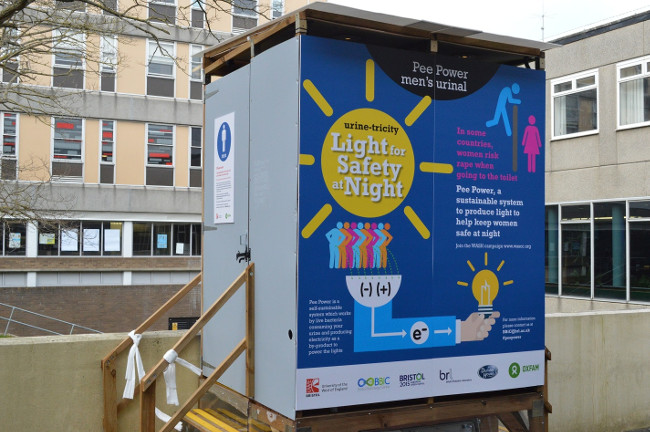
The "Urine Power" project, founded by the Bill & Melinda Gates Foundation, was launched in 2015. The research team integrated their technology into public birth houses and placed them at the Glastonbury music festival in the UK. National. Energy is generated from more than 1000 liters of urine in the restrooms used to power the set of 10 information boards.
This useful biotechnology is being researched and developed around the world. Hopefully, in the near future, you will no longer have a headache with your electricity bill because. your own urine!
FAQ
What is urine generated electricity?
It is hard to doubt that urine, biological fluids in our bodies, are released every day, sometimes bringing light to mankind while treating waste and preventing harmful organisms. through the drainage network.
What makes urine generated electricity notable?
This article explains the key facts and context behind urine generated electricity.
What are the key facts about urine generated electricity?
Key Facts About Urine Generated Electricity The research team from the University of West of the United Kingdom has successfully studied the use of microorganisms in the urine to power and kill pathogens in the urine.
Related Articles
 Ice Has a Super Power That Is Especially Useful in Our Lives4 minutes read
 Urine and 10 Wonderful Uses to Save All Humanity Surprise You5 minutes read
 NASA Recycles Urine and Sweat of Crew on ISS Space Station 98%3 minutes read
 Can You Get a Jerk, Even Death if You Pee the Power Line3 minutes read
 Spacesuits Filter Urine Into Drinking Water4 minutes read
 Turn Urine into Beer with Solar Energy4 minutes read
Reader Comments 0
Sign in with email or Google to join the discussion.