Table of Contents
The best AI agent builder depends on the job. Zapier Agents is strongest when an agent must act across many business apps. Botpress gives developers more control over conversational workflows. Voiceflow focuses on customer-facing chat and voice experiences. Intercom Fin is the most direct choice for support teams already using a help desk.
Quick comparison
| Platform | Best for | Pricing model to watch | Main tradeoff |
|---|---|---|---|
| Zapier Agents | Cross-app automation | Separate agent activity quota plus relevant Zapier usage | Complex runs can consume many activities |
| Botpress | Custom conversational agents | Conversation allowance and plan tier | Requires more design and technical setup |
| Voiceflow | Chat and voice customer experiences | Trial, usage-based agency billing, or business quote | Public fixed pricing is limited |
| Intercom Fin | Customer support resolution | Per outcome, plus Intercom seats if using its help desk | Costs scale with successful outcomes and team plan |
Prices and included usage change frequently. The figures below were checked against official pages, but use each vendor's calculator and contract terms before buying.
1. Zapier Agents: best for cross-app work
Zapier Agents can connect an agent to data and actions across more than 9,000 supported apps. A user describes the role, provides knowledge sources, selects tools, and monitors the agent's activity. This makes it a practical fit for lead research, expense classification, sales preparation, and internal operations.
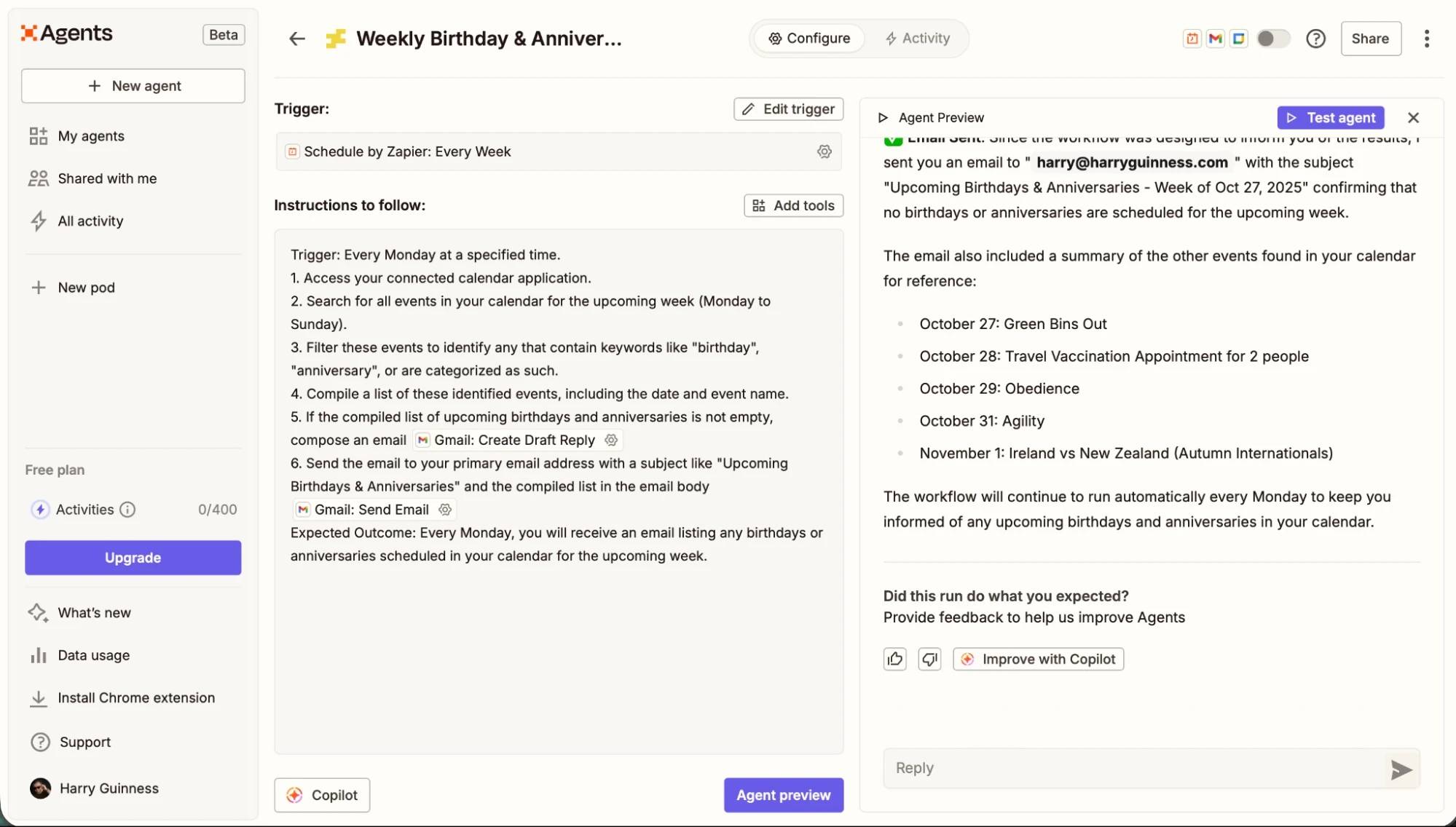
Agent usage is measured in activities, separate from ordinary Zap tasks. Actions, knowledge lookups, web visits, and searches can each consume an activity, and processing a list may multiply usage. Zapier says agents stop running when the monthly activity limit is reached. Review the current activity rules before automating a high-volume process.
Choose it when: the core requirement is acting across SaaS tools with minimal custom integration work.
Avoid it when: you need complete control over conversation state, deployment infrastructure, or a highly specialized interface.
2. Botpress: best for custom conversational logic
Botpress combines prompts, knowledge bases, variables, integrations, channels, and a visual workflow editor. Developers can create a web assistant or deploy to supported messaging channels while controlling how the conversation branches and when tools run.
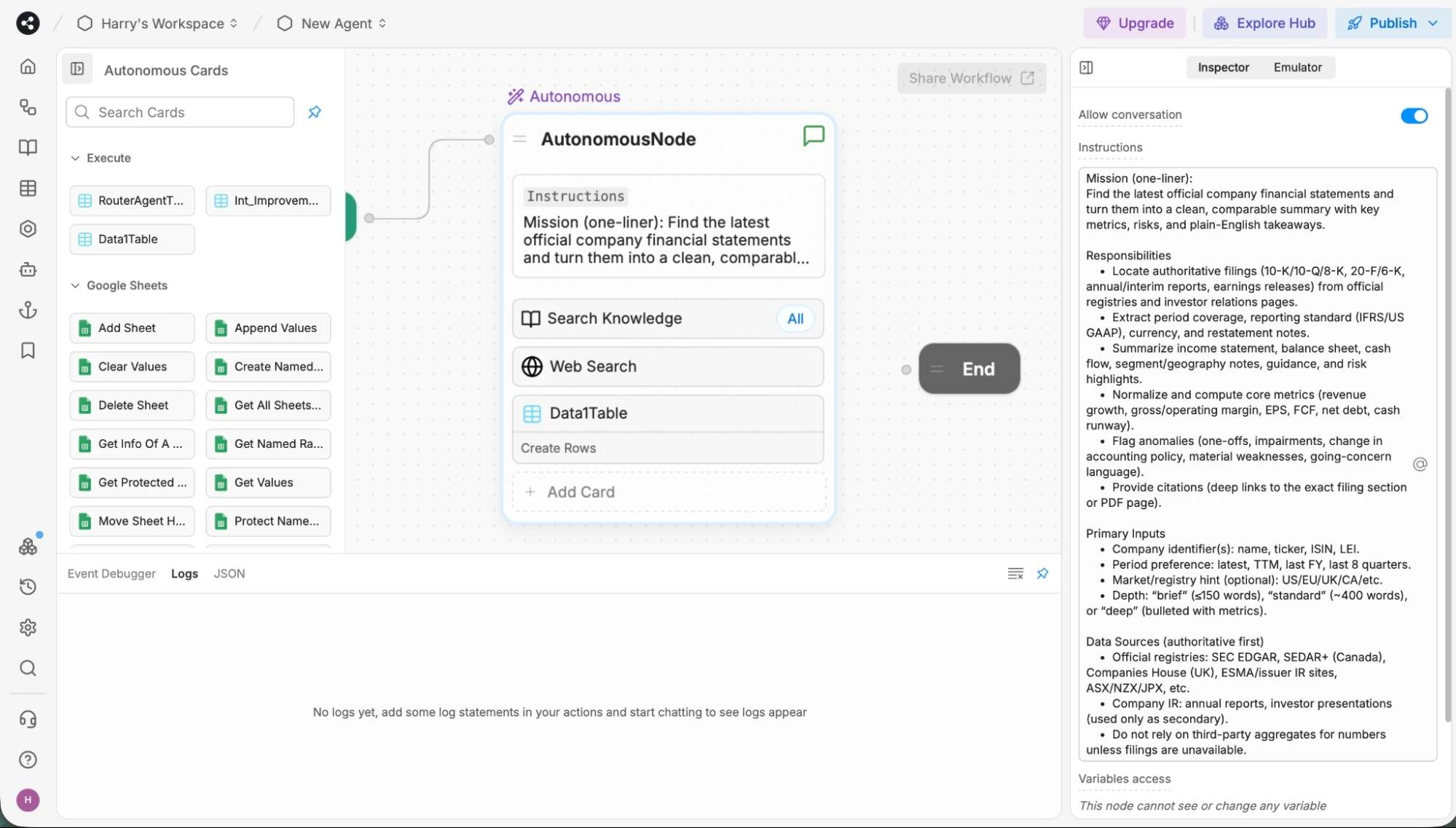
The official pricing page currently lists a free tier with 100 conversations and a Plus plan at $150 per month when billed annually, including 250 monthly conversations. Limits and definitions matter more than the headline price, so check overages, collaborators, storage, model costs, and production features on the Botpress pricing page.
Choose it when: the agent needs custom workflows, several model options, developer hooks, and channel deployment.
Avoid it when: the team wants a finished help desk rather than a platform it must design and operate.
3. Voiceflow: best for designing chat and voice experiences
Voiceflow provides a collaborative environment for building, testing, deploying, and observing customer-facing AI agents across chat and voice. It supports integrations, multiple model providers, development and production environments, and agency-oriented client management.
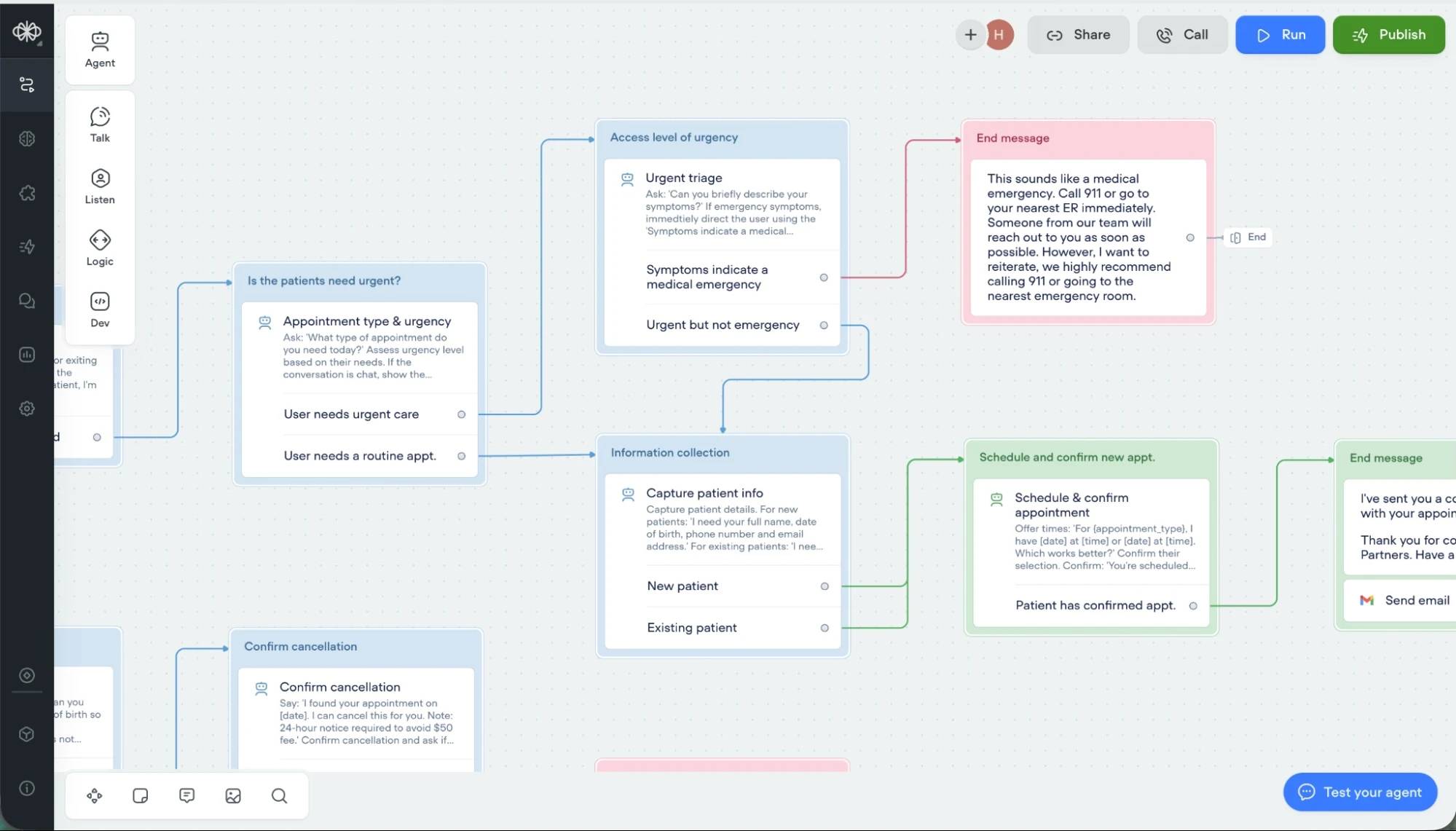
The original article incorrectly called this product “Voiceover.” The product is Voiceflow. Its current pricing page offers a no-card trial for agencies, usage-based billing, and custom quotes for businesses rather than the old fixed $60 plan described in the source.
Choose it when: designers and developers need to collaborate on a customer experience that spans text and phone calls.
Avoid it when: the main task is back-office automation rather than a conversation.
4. Intercom Fin: best for AI-first customer support
Fin is designed to answer support questions, take permitted actions, and hand conversations to human agents. It can run with Intercom's help desk or, in supported configurations, connect to another help desk.
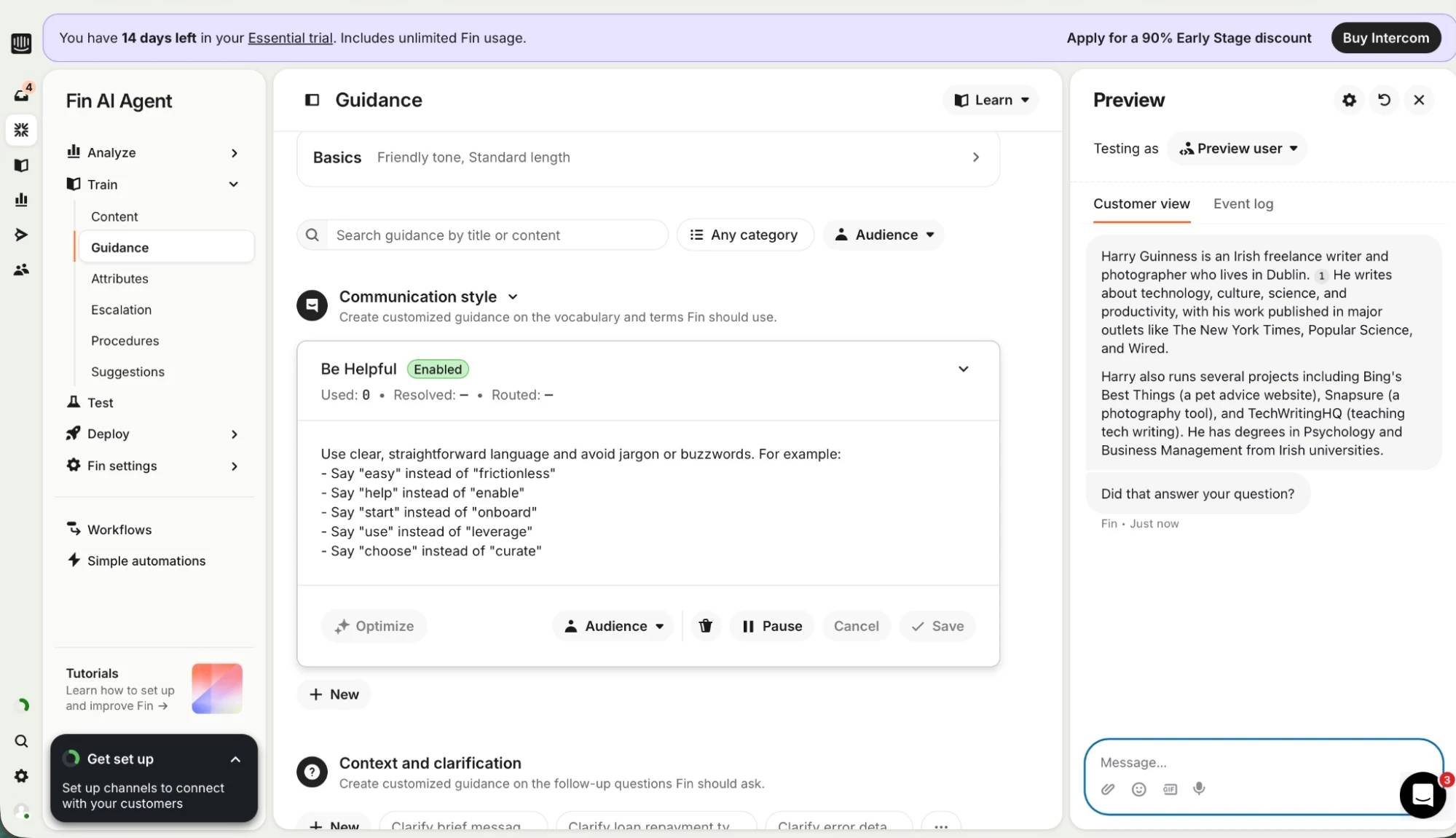
Intercom currently charges Fin from $0.99 per outcome. When using the Intercom help desk, annual-billing seat prices start at $29 per month for Essential, $85 for Advanced, and $132 for Expert. Fin with another help desk may have a minimum monthly outcome commitment. Review exactly what counts as an outcome on the official pricing page.
Choose it when: success means resolving customer issues within an existing support operation.
Avoid it when: you need a general-purpose internal agent or broad software-development framework.
How to choose an agent builder
- Define one task. Start with a bounded workflow such as answering return-policy questions, not “automate customer service.”
- List required systems. Check whether the platform has maintained integrations or whether you must build API calls.
- Calculate real usage. Model conversations, steps, outcomes, seats, telephony, storage, and model charges.
- Set authority. Decide which actions can run automatically and which require human approval.
- Test failure paths. Include missing data, prompt injection, angry users, ambiguous requests, and downtime.
- Measure quality. Track corrected answers, escalations, customer satisfaction, time saved, and cost per successful task.
A safer pilot plan
- Use a test workspace and non-sensitive sample data.
- Give the agent read-only access first.
- Require review before sending messages, issuing refunds, changing CRM records, or scheduling appointments.
- Log tool calls and preserve a way to reproduce a failed run.
- Define a human handoff and an off switch.
- Review privacy, retention, security, and compliance settings before production.
For a traditional workflow-first alternative, see this guide to building form workflows with n8n. You can also compare a wider range of AI productivity tools when a full agent is unnecessary.
An agent builder is worthwhile only when the task benefits from planning or tool choice. A simple deterministic automation is often cheaper, easier to audit, and more reliable.
Related Articles
 How to Build an AI Agent with Gemini 3 in 10 Minutes13 minutes read
 TOP best AI Agent building framework tools16 minutes read
 Building an AI Voice Agent10 minutes read
 Gemini AI Agent Builder User Guide13 minutes read
 Create a Custom Agent from the Agent Template4 minutes read
 How to Create an AI Agent with N8n in 202613 minutes read
Reader Comments 0
Sign in with email or Google to join the discussion.