Table of Contents
An AI agent framework provides the building blocks for an application that can choose tools, maintain state, hand work to another agent, and continue through several steps. The right framework depends less on which name is most popular and more on how much control, persistence, data retrieval, and operational tooling your application needs.
For a predictable business process, start with an explicit workflow and use an agent only where flexible reasoning is useful. Giving a model unlimited freedom usually makes a system harder to test, secure, and debug.
AI agent frameworks compared
| Framework | Best fit | Key approach |
|---|---|---|
| LangGraph | Long-running, stateful workflows | Low-level graph orchestration with checkpoints and human approval points |
| CrewAI | Role-based multi-agent automation | Collaborating Crews inside structured, event-driven Flows |
| OpenAI Agents SDK | Lightweight agent and handoff patterns | Agents, tools, handoffs, guardrails, sessions, and tracing |
| Microsoft Agent Framework | Python or .NET projects in the Microsoft ecosystem | Agents plus graph-based workflows and enterprise integration |
| Google ADK | Code-first, model-flexible agent applications | Single- and multi-agent composition, tools, sessions, evaluation, and deployment |
| LlamaIndex | Agents grounded in private or indexed data | Data connectors, retrieval, tools, and event-driven workflows |
| Haystack | Composable search, RAG, and agent pipelines | Typed components connected in explicit pipelines |
| Sintra AI | No-code business assistants | Hosted software rather than a developer orchestration framework |
How to choose a framework
Define the workflow before comparing libraries. The following questions expose the differences that matter in production:
- How deterministic must the process be? A graph or pipeline is easier to inspect when certain steps must always run in a known order. A free-form agent loop is better reserved for decisions that cannot be expressed with ordinary code.
- Does a run need to pause and resume? Long jobs, approval steps, and recovery after failure require durable state or checkpoints. Confirm what is built in and what you must store yourself.
- Will one agent be enough? Several named agents do not automatically improve a result. Add specialists only when their tools, permissions, instructions, or evaluation criteria genuinely differ.
- What data must the agent use? If retrieval over documents is central, a data-oriented framework such as LlamaIndex or Haystack may reduce integration work.
- How will tools be authorized? Review OAuth handling, secret storage, per-user permissions, timeouts, retries, and confirmation for consequential actions.
- How will you test it? You need traces of tool calls and state transitions, repeatable test cases, cost and latency measurements, and a way to evaluate task success rather than prose quality alone.
- Where will it run? Check supported languages, model providers, deployment options, license terms, and whether observability or hosting requires a separate paid service.
Sintra AI: a hosted assistant platform
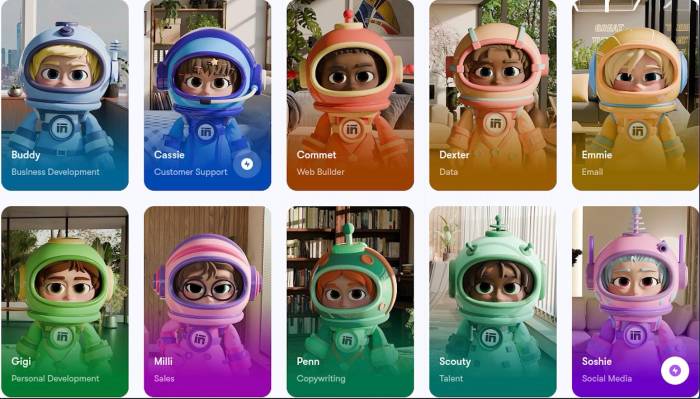
Sintra AI is better compared with no-code assistant products than with open-source development frameworks. It can suit teams that want packaged assistants for recurring business tasks without maintaining an agent runtime. Developers who need custom state machines, source-level control, or self-hosting should compare the SDKs below instead.
Before connecting any hosted assistant to company accounts, review the permissions it requests, the data it retains, and whether a human can approve external actions.
CrewAI: role-based collaboration and structured flows
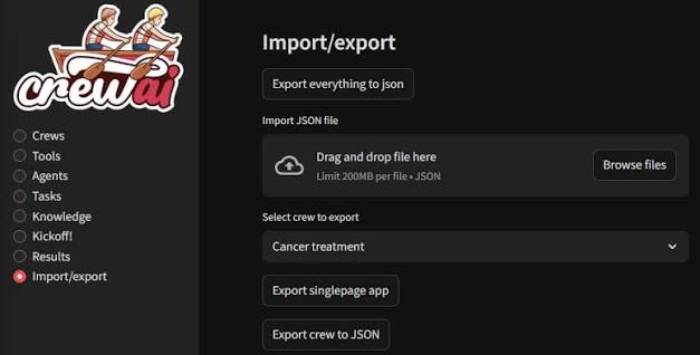
CrewAI organizes autonomous workers into Crews, with agents assigned roles and tasks. Its Flows provide event-driven control, state management, and routes between steps. That combination is useful when a process contains both explicit application logic and tasks delegated to specialized agents.
Choose CrewAI when the role metaphor matches the problem and the team wants a relatively high-level API. Test whether each extra agent contributes measurable value; multi-agent conversations can add latency, cost, and failure paths. The CrewAI documentation is the best place to check current installation and runtime features.
OpenAI Agents SDK, not the experimental Swarm project
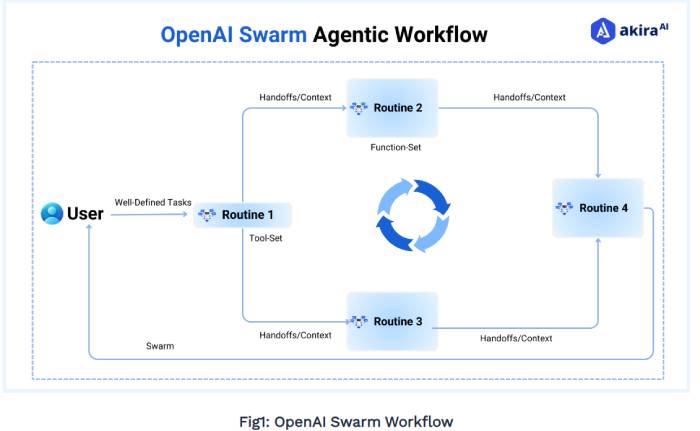
OpenAI Swarm was an experimental and educational project. OpenAI now directs production users to the OpenAI Agents SDK, which is its maintained evolution. The SDK deliberately uses a small set of concepts: agents with instructions and tools, handoffs or agents-as-tools, and guardrails. It also includes sessions and tracing.
This is a practical choice for developers who want a compact agent loop without designing a graph first. Handoffs are useful when specialists need different instructions or tools, but a normal function call is often simpler when the next step is already known. Guardrails also do not replace application-level authorization, output validation, or confirmation before a sensitive action.
Arcade: tools and authorization for agents
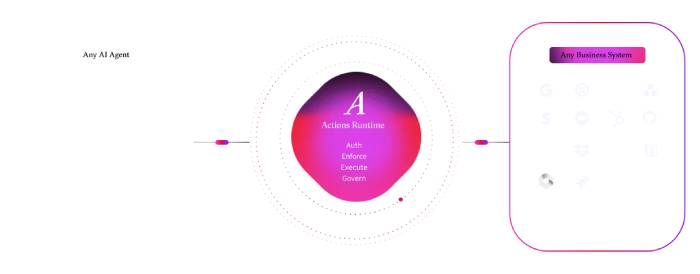
Arcade is not a general-purpose orchestration framework. It supplies tools, MCP gateways, and authorization infrastructure that let an agent act on connected services. Its authorization layer handles mechanisms such as OAuth scopes and user tokens, so it can complement CrewAI, LangGraph, or another agent runtime.
Use a service like Arcade when authenticated actions are the difficult part of the application. Still apply least-privilege scopes, show users what an action will do, and require confirmation for operations such as sending messages or modifying records. See the Arcade overview for its current architecture.
Microsoft Agent Framework and the AutoGen transition
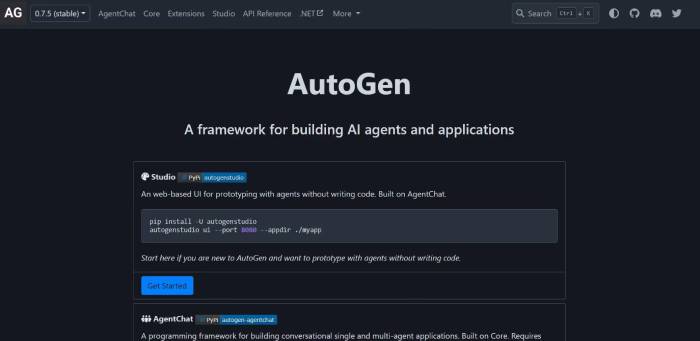
AutoGen introduced useful patterns for conversational and event-driven multi-agent systems, but it is no longer the clearest starting point for a new Microsoft-based project. Microsoft describes Microsoft Agent Framework as the direct successor to both AutoGen and Semantic Kernel's agent features. It combines agent abstractions with graph-based workflows, state management, middleware, telemetry, and Python and .NET support.
Existing AutoGen applications do not need an unplanned rewrite, but teams should read Microsoft's migration guidance before making a long-term decision. The older Microsoft Bot Framework focused on conversational bots and channels; it should not be treated as equivalent to a current LLM agent orchestrator for a greenfield project.
LangGraph: explicit control for stateful workflows
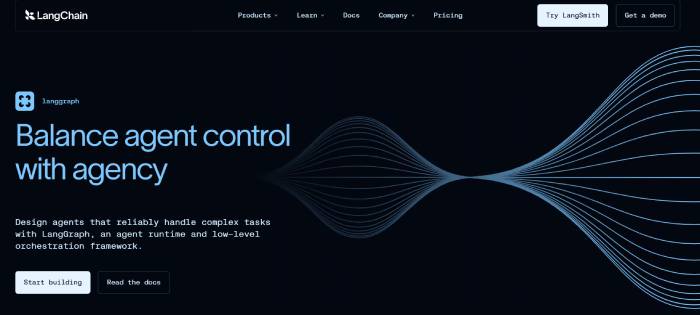
LangGraph is a low-level orchestration runtime built around nodes, edges, and shared state. It can mix deterministic code with model-driven steps in the same graph. Checkpoints support persistence, recovery, and human-in-the-loop pauses, which makes the framework a strong candidate for long-running or auditable processes.
The tradeoff is that developers must design the graph, state schema, and error behavior deliberately. For a basic tool-calling assistant, a higher-level agent API may require less code. LangGraph is most valuable when branching, resumption, approvals, or inspection of intermediate state are real requirements.
LlamaIndex: agents centered on your data
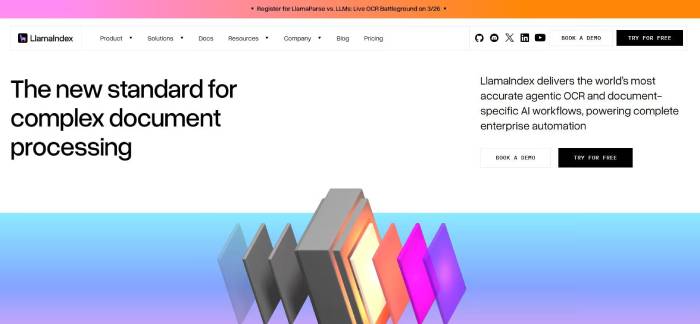
LlamaIndex is a natural fit when an agent must search, combine, and act on information from documents, databases, or other private sources. Its ecosystem covers ingestion, indexes, retrievers, query engines, tools, and event-driven workflows. This can shorten the path from a retrieval-augmented generation prototype to an agent that invokes several data tools.
Retrieval quality still depends on document preparation, metadata, permissions, and evaluation. Do not assume that adding an agent will fix poor search results. Start with a strong retrieval baseline, then add planning or tool selection only where it improves task completion. Consult the LlamaIndex developer documentation for supported integrations.
Haystack: pipelines for search, RAG, and agents
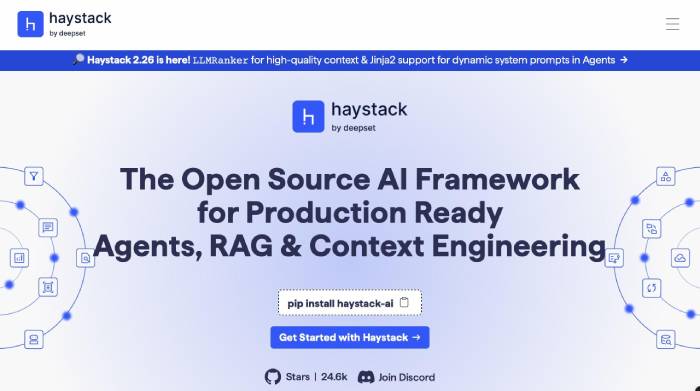
Haystack builds applications from components connected in pipelines. The same pipeline model can combine converters, retrievers, rankers, generators, tool invokers, and agents. It suits teams that want retrieval and generation steps to remain visible and independently testable.
Haystack is particularly useful when an application is primarily a search or RAG pipeline with an agentic step, rather than an open-ended society of agents. Its official documentation should be checked for current component compatibility and deployment guidance.
Google ADK: code-first agent composition
Google's Agent Development Kit is an open-source, code-first framework for building, evaluating, and deploying agents. It supports multiple languages and includes patterns for sequential, parallel, loop, and custom multi-agent workflows. ADK is worth considering when model flexibility, built-in evaluation concepts, and integration with Google's deployment ecosystem align with the project.
Where FIPA and JADE fit
FIPA specifications and the Java-based JADE platform come from an earlier generation of multi-agent systems. They remain relevant in academic work and systems built around standardized agent communication, but they are not direct substitutes for modern LLM tool-calling frameworks. Use them when interoperability with an existing FIPA/JADE environment is a stated requirement, not simply because the application contains several LLM agents.
A practical selection process
- Write one representative task as a sequence of inputs, decisions, tools, outputs, and approval points.
- Implement the simplest version with one agent or an ordinary workflow.
- Test successful cases and failures, including unavailable tools, malformed output, repeated calls, permission errors, and interrupted runs.
- Add persistence only for information that must survive a request or process restart.
- Add specialist agents only when separation improves permissions, prompts, ownership, or measurable results.
- Compare frameworks with the same tasks, model, tools, and evaluation criteria. Record success rate, latency, token use, and manual intervention.
For maximum control over long-running state, start with LangGraph. For role-oriented teams and higher-level flows, consider CrewAI. For a small set of agents and handoffs around OpenAI models, evaluate the OpenAI Agents SDK. Microsoft Agent Framework and Google ADK are strong ecosystem choices, while LlamaIndex and Haystack are especially compelling when retrieval and private data are central. The best choice is the smallest framework that meets the application's control, security, and operational requirements.
Related Articles
 Top 4 Best AI Agent Building Software5 minutes read
 How to Build an AI Agent with Gemini 3 in 10 Minutes13 minutes read
 Building an AI Voice Agent10 minutes read
 Memento-Skills: a New Framework That Helps AI Write Skills Automatically7 minutes read
 5 Things You Need to Know Before Using OpenClaw7 minutes read
 Enable .Net Framework 3.5 on Windows 83 minutes read
Reader Comments 0
Sign in with email or Google to join the discussion.