Table of Contents
A useful thank-you card does two things: it names what the recipient did and explains why it mattered. The design should support that message, not compete with it. Canva and similar editors can speed up layout, but a specific note will feel more personal than an elaborate template filled with generic text.
A simple thank-you message formula
- Address the person by name.
- Name the gift, help, purchase, or presence.
- Explain its effect. Mention a detail that only you and the recipient would recognize.
- Close in a tone appropriate to the relationship.
For example: “Thank you for helping us set up before the reception. Having you there early meant we could welcome everyone without rushing. We were lucky to celebrate with you.”
Choose a design that fits the occasion
| Occasion | Useful design direction | Tone |
|---|---|---|
| Wedding | Match one typeface or color from the invitations; leave room for a handwritten note. | Warm and personal |
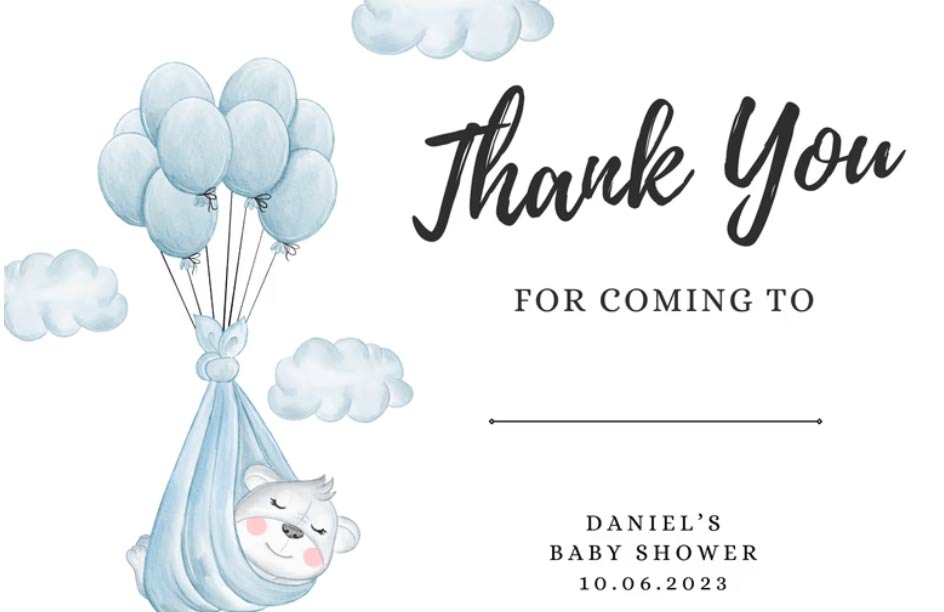
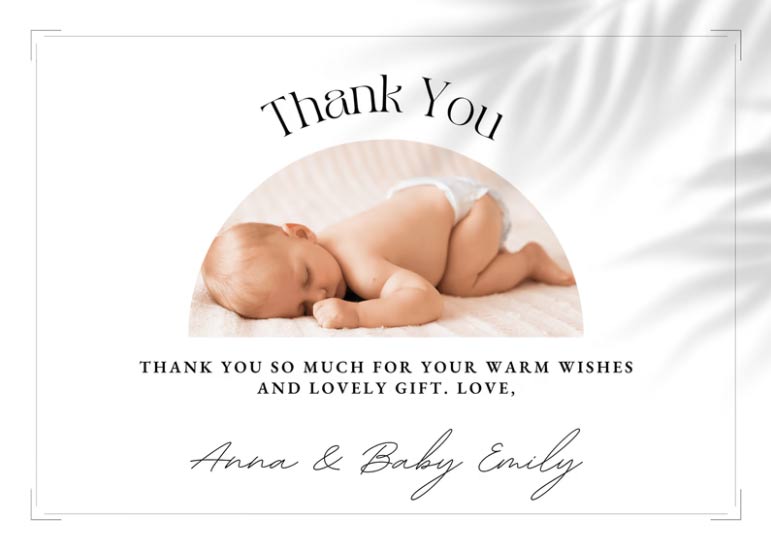
| New baby or one-month celebration | Use a clear photo or a simple illustrated motif with generous white space. | Joyful and appreciative |
| Graduation | Use school colors sparingly and give the graduate's message priority. | Confident and sincere |
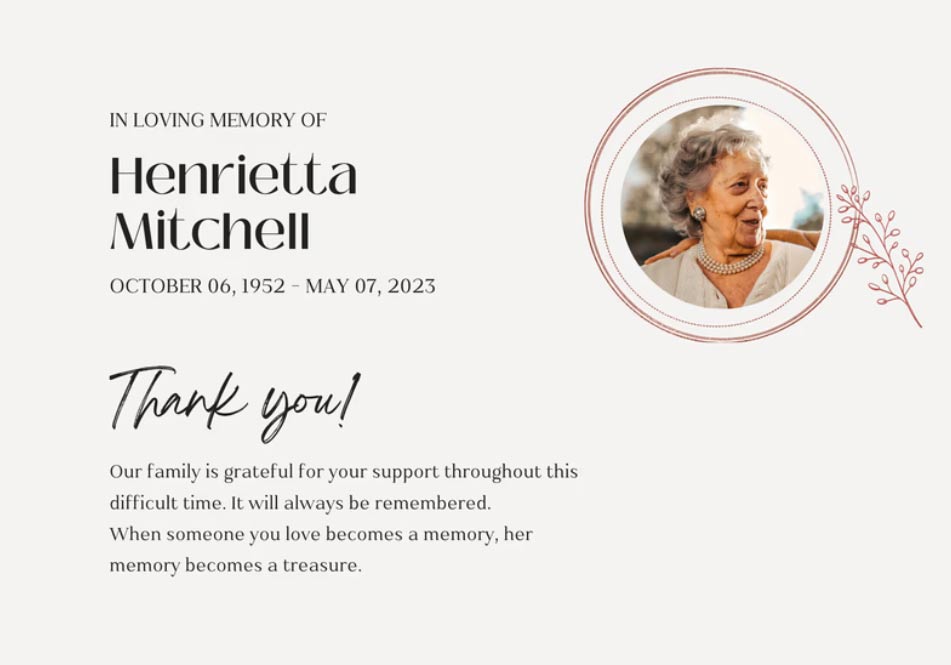
| Bereavement | Choose subdued typography and minimal decoration. | Brief and gentle |
| Customer appreciation | Use consistent brand colors and a readable signature area. | Professional and human |
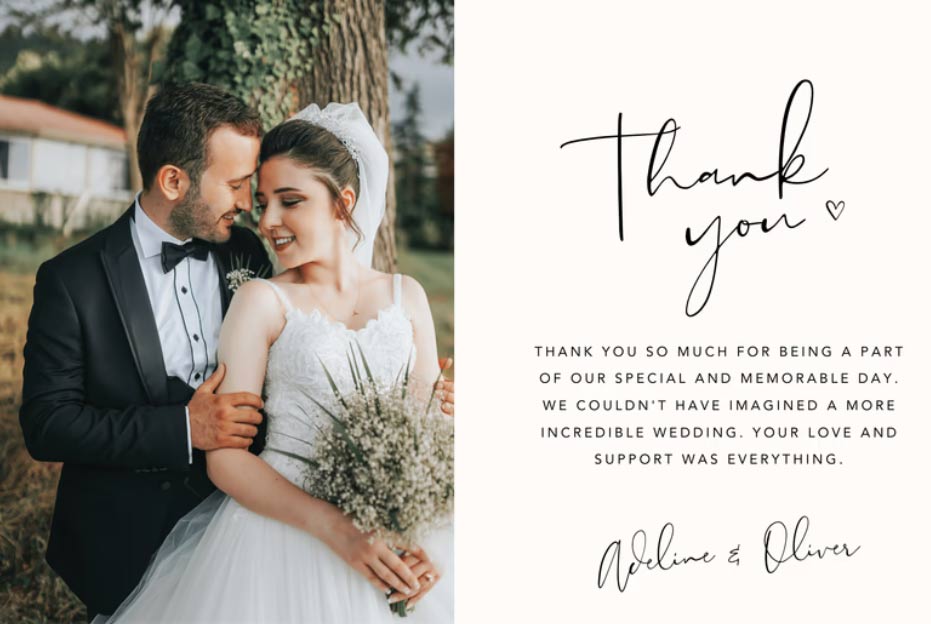
Wedding thank-you cards
Thank guests for attending, traveling, helping, or giving a specific gift. Avoid making the card look like another invitation: use the front for a photo or short “thank you,” then reserve the inside or back for the individual note.
Message example: “Thank you for celebrating with us and for the serving set. We used it at our first dinner in the new apartment and thought of you.”

New baby and one-month celebration cards
A card after a baby shower, naming ceremony, or one-month celebration can thank people for practical help as well as gifts. If you include a baby's photo, share it only with people you intend to receive it and avoid printing private details such as a home address.
Message example: “Thank you for welcoming Mai and for bringing dinner during our first week home. Your help gave us a quiet evening when we needed it most.”
Graduation thank-you cards
A graduate can thank relatives, teachers, mentors, and friends without using the same wording for everyone. Mention the advice, recommendation, gift, or practical support that helped you reach the milestone.
Message example: “Thank you for reviewing my applications and encouraging me when the process felt uncertain. Your advice helped me choose a program that fits my goals.”


Thank-you cards after a funeral or memorial
Grieving families are not obligated to send cards on a deadline. If and when it feels manageable, a short note can acknowledge flowers, meals, donations, attendance, or other support. It is acceptable for another family member to help address or sign the cards.
Message example: “Thank you for the meals and for sitting with us after the service. Your quiet support meant a great deal to our family.”

Customer thank-you cards
A business card should sound like it came from a person, not an automated campaign. Mention the purchase or project, provide useful next-step information when appropriate, and avoid exaggerated claims. Do not expose order details on a postcard or add a customer to marketing messages without the permissions required in your region.
Message example: “Thank you for choosing us for your first print run. We appreciated the clear artwork files and hope the finished cards serve your launch well. If you spot a production issue, reply to your order email so we can help.”


How to customize a Canva template
- Search for a thank-you card format that matches the intended printed or digital size.
- Replace every placeholder, including sample names, dates, logos, and stock contact details.
- Use one or two readable fonts and maintain strong contrast between text and background.
- Upload only photos you have permission to use. Check the crop at the final aspect ratio.
- Proofread names and personal details, then ask another person to check them.
- For print, review bleed, trim margins, image resolution, and the printer's required file settings. Print one test copy before ordering a batch.
- For digital sharing, export a file that remains legible on a phone and add alternative text when the platform supports it.
Before you send or print
- Is the recipient's name spelled correctly?
- Does the note identify a real action, gift, or form of support?
- Is the smallest text easy to read?
- Are photos, logos, and fonts licensed for this use?
- Have all template placeholders been removed?
- Does the card reveal any information the recipient would expect to remain private?
If you are assembling a physical gift, pair the card with a handmade paper gift bag. For additional presentation ideas, browse these simple ways to decorate gifts.
Related Articles
 Life Will Change When You Stop Waiting: Live Fast6 minutes read
 Which Card Is the Most Special Card in the West4 minutes read
 The Magic Card Table Like in Yu-Gi-Oh! Appeared in Real Life3 minutes read
 Things to Do to Prepare for a Perfect Wedding7 minutes read
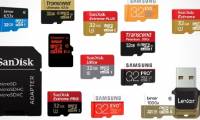 Buy Genuine Memory Cards, Cheap Where Hanoi && Ho Chi Minh City?7 minutes read
 How to Choose the Appropriate MicroSD Card for Nintendo Switch10 minutes read
Reader Comments 0
Sign in with email or Google to join the discussion.