Table of Contents
This guide provides a clear, practical overview of "Scientists Discover New Species of Flying Lizard in Japan for the". It organizes the most useful details, explains important considerations, and highlights the steps or choices that matter most.
This new species of ancient lizard, named Nipponopterus mifunensis , was identified from a partial neck vertebra first discovered in the 1990s in the Mifune Group geological formation, Kumamoto Prefecture on Kyushu Island (southern Japan).
After a detailed evaluation using advanced CT scanning technology at Kumamoto University and subsequent phylogenetic analysis, the team determined that the specimen belonged to a new genus and species in the family Azhdarchidae – the family that includes the largest flying creatures in history. The fossil is now on display at the Mifune Dinosaur Museum (Kumamoto Prefecture), offering the public a rare opportunity to see Japan's ancient prehistoric creature.
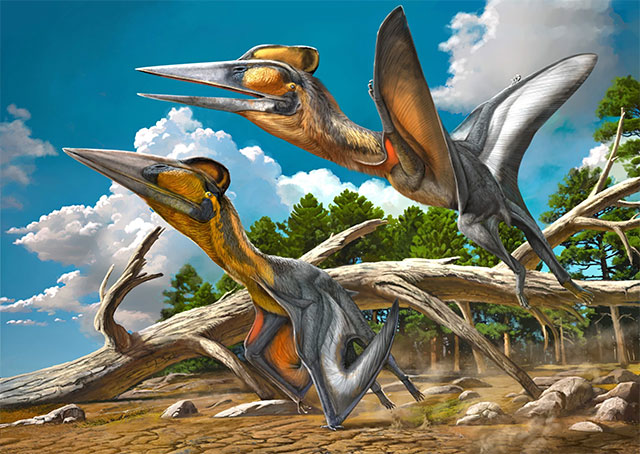
Great significance for Japanese paleontology
" This is a major step forward for Japanese paleontology, " said Dr. Naoki Ikegami from the Mifune Dinosaur Museum. " Until now, no pterosaur species had been formally named from skeletal specimens found in Japan. This discovery provides important information about the diversity and evolution of pterosaurs in East Asia ."
Notably, Nipponopterus may have had a wingspan of around 3 to 3.5 metres and lived during the Turonian to Coniacian stages of the Late Cretaceous, making it one of the earliest known members of the evolutionary lineage of this group.
Unique anatomical features
The newly identified sixth cervical vertebra (C6) of Nipponopterus mifunensis reveals a series of striking features not previously seen in any species. Most striking is the presence of a prominent dorsal keel running along the back of the bone—extending not only over the epipophysis but also over the entire postexapophyseal peduncle. Other distinctive features include a long groove running along the underside (ventral sulcus), a subtriangular-shaped condyle, and unusually positioned, laterally projecting postexapophyses.
These features distinguish Nipponopterus mifunensis from all other known azhdarchid pterosaurs. Phylogenetic analysis places it in the subfamily Quetzalcoatlinae, which has been identified as a close relative of both the mysterious azhdarchid "Burkhant" from Mongolia and the giant Quetzalcoatlus from North America.
The study, published in the prestigious scientific journal Cretaceous Research , is the result of an international collaboration between scientists from Shihezi University (China), the Zoological Museum of the University of São Paulo (Brazil), and a team in Japan consisting of the Mifune Dinosaur Museum, Kumamoto University, and Hokkaido University. The researchers worked closely together, combining expertise in fossil analysis, imaging technology, analytical modeling, and evolutionary studies.
" This is a wonderful example of how science transcends borders ," said Professor Toshifumi Mukunoki from the Faculty of Advanced Science and Technology, Kumamoto University.
FAQ
What should you know about great significance for Japanese paleontology?
" This is a major step forward for Japanese paleontology, " said Dr. Naoki Ikegami from the Mifune Dinosaur Museum. " Until now, no pterosaur species had been formally named from skeletal specimens found in Japan. This discovery provides important information about the diversity and evolution of pterosaurs in East Asia."
What should you know about unique anatomical features?
The newly identified sixth cervical vertebra (C6) of Nipponopterus mifunensis reveals a series of striking features not previously seen in any species. Most striking is the presence of a prominent dorsal keel running along the back of the bone—extending not only over the epipophysis but also over the entire postexapophyseal.
What does this guide cover?
This guide explains scientists discover new species of flying lizard in japan for the, including the main steps, important details, and practical considerations.
Related Articles
 Wingless Animals That Can Fly Like Birds6 minutes read
 Lizard Venom Can Bring Breakthroughs in Coagulation Treatment3 minutes read
 Why Do Lizards Spit Blood from Their Eyes?3 minutes read
 Unique New Species of Squid, Super Small 1cm, Hunts by Sitting Still Explained3 minutes read
 How Long Does a Dinosaur Egg Take to Hatch?4 minutes read
 New Snake Species in Con Dao2 minutes read
Reader Comments 0
Sign in with email or Google to join the discussion.