Table of Contents
This article provides a clear overview of Samsung Began Mass-producing the World's 'Fastest Memory', with the main facts, useful context, and practical details organized for easy reading.
More specifically, according to Samsung calculations, eUFS 3.1 storage chip owns a sequential write speed of over 1,200MB / s. Its random performance is up to 60% faster than the UFS 3.0 storage chip used in today's top smartphone models. Another advantage of the eUFS 3.1 memory chip lies in its ability to transfer data faster to smartphones than solid-state drives (SSDs) or MicroSD memory cards, with sequential write speeds up to 2 times faster than SATA hard drives (540MB / s) and 10 times more than UHS-I memory cards (90MB / s), along with random read / write speeds are 100,000 IOPS and 70,000 IOPS respectively.
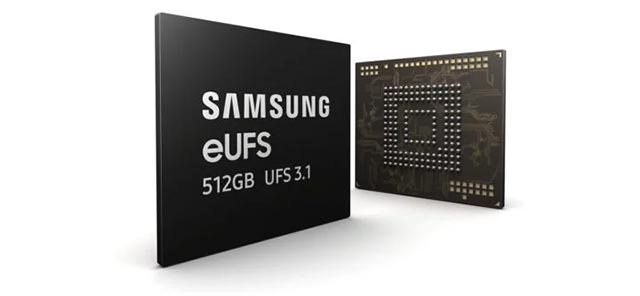
With all these advantages, Samsung confidently asserts that smartphones with eUFS 3.1 chip can transmit 100GB of data in about 1.5 minutes, while with UFS 3.0 chip will need more than 4 minutes for data volume. equivalent. The fast speed and large capacity make eUFS 3.1 the first choice with 8k camcorder smartphones expected to gradually become popular in the future, whose flagship product is the Galaxy S20.
In addition to the 512GB version, Samsung's eUFS 3.1 will also have 256GB and 128GB variants, which are expected to launch later this year.
FAQ
What is the main focus of Samsung Began Mass-producing the World's 'Fastest Memory'?
The article explains the most important facts, context, and practical details related to Samsung Began Mass-producing the World's 'Fastest Memory'.
Who may find this information useful?
It is useful for readers who want a clear overview, practical context, and a better understanding of the subject.
What should readers verify before taking action?
Check current product versions, official requirements, regional availability, and any details that may have changed since the original publication.
Related Articles
 Samsung Will Launch a 1TB Memory Chip for Smartphones, Will It Appear on Galaxy S10?5 minutes read
 Samsung Begins Mass Production of 'Most Advanced' 12nm DDR53 minutes read
 Samsung Began Manufacturing 20nm DRAM 6gb Chips for Mobile Devices3 minutes read
 Samsung Started Manufacturing Aquabolt: 2.4G Gb DRM Speed 8GB 2.4Mb/sec3 minutes read
 Future Smartphones May Have Less RAM Due to AI and Soaring Memory Prices5 minutes read
 Samsung Mass Produced GDDR6 Memory for Next Generation GPUs3 minutes read
Reader Comments 0
Sign in with email or Google to join the discussion.