Table of Contents
Perplexity and ChatGPT overlap, but they start from different jobs. Perplexity is an answer engine built around web search and visible citations. ChatGPT is a broader assistant for conversation, files, data analysis, writing, images, coding, research, and agent tasks. Choose Perplexity when source discovery is the center of the workflow; choose ChatGPT when the work continues well beyond finding sources.
Perplexity vs. ChatGPT at a glance
| Need | Perplexity | ChatGPT |
|---|---|---|
| Quick web research | Search-first interface with citations on most answers | Search can be used for current, source-backed answers |
| Deep research | Research mode and domain/source controls; paid tiers add higher limits and advanced sources | Creates a research plan, can use selected sites, files, and enabled apps, then returns a cited report |
| Writing and editing | Good for source-grounded drafts and reports | Broader document editing, projects, canvas-style work, and reusable assistants |
| Data and code | Can analyze files and create reports, files, apps, and dashboards on eligible plans | Code execution, spreadsheet analysis, charts, coding workflows, and app-building tools |
| Model choice | Paid plans may offer Perplexity and third-party models; the available list changes | Uses OpenAI models, with selection and limits depending on the plan and interface |
| Agent work | Computer and Comet can perform multi-step tasks | Agent features can browse, research, use apps, and complete multi-step tasks |
ChatGPT is the broader general-purpose workspace
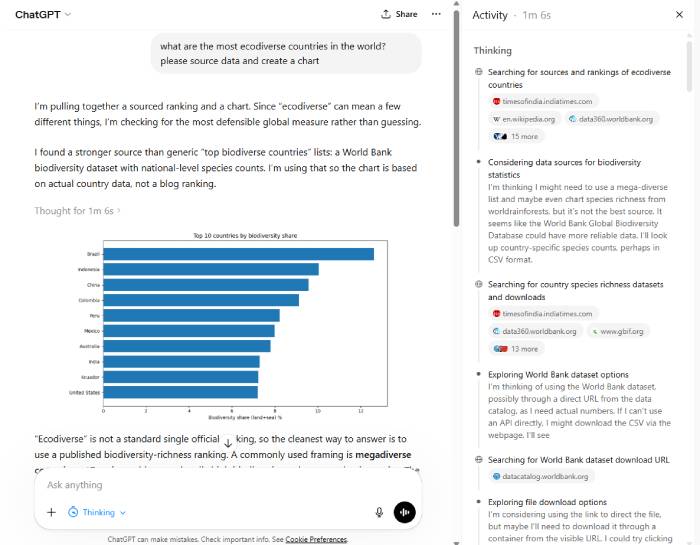
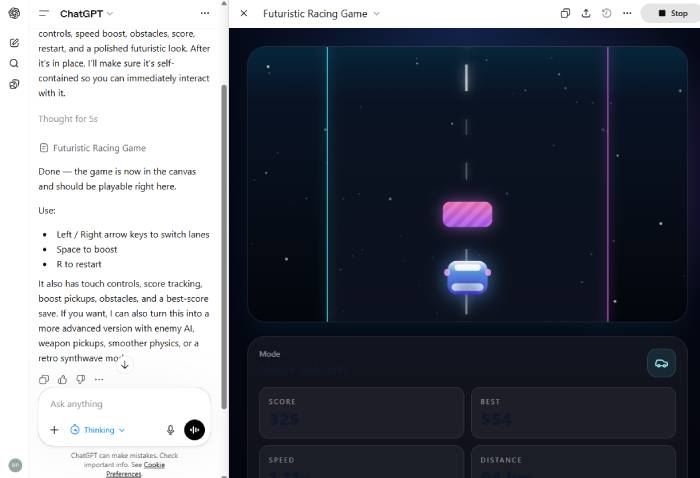
ChatGPT can search the web, analyze uploaded documents and images, run code for data analysis, create charts, generate and edit images, and work with projects or connected apps. These capabilities make it useful when a task moves from research to a finished spreadsheet, draft, prototype, or visual.
Its deep research mode can propose a plan, use the public web or selected sites, incorporate uploaded files and enabled apps, and produce a structured report with citations. That narrows the old gap between a chatbot and a research tool.
ChatGPT is not automatically the better search engine. The search results and citations still need inspection, and plan access varies. Use it when the value comes from reasoning over sources and producing a deliverable, not merely listing links.
Perplexity keeps search and sources in the foreground
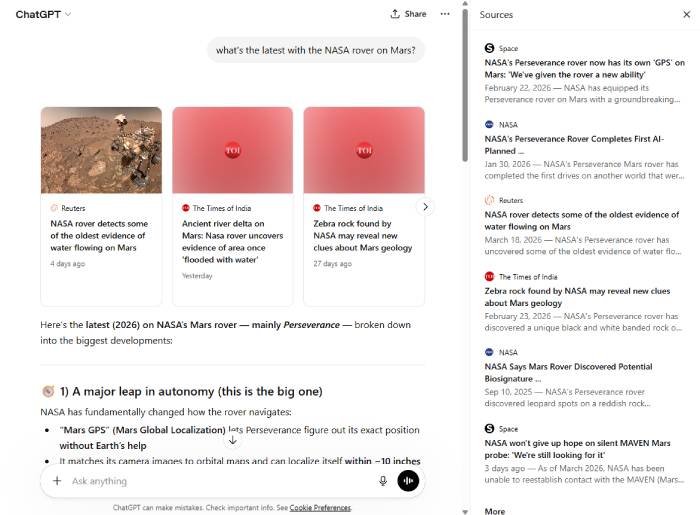
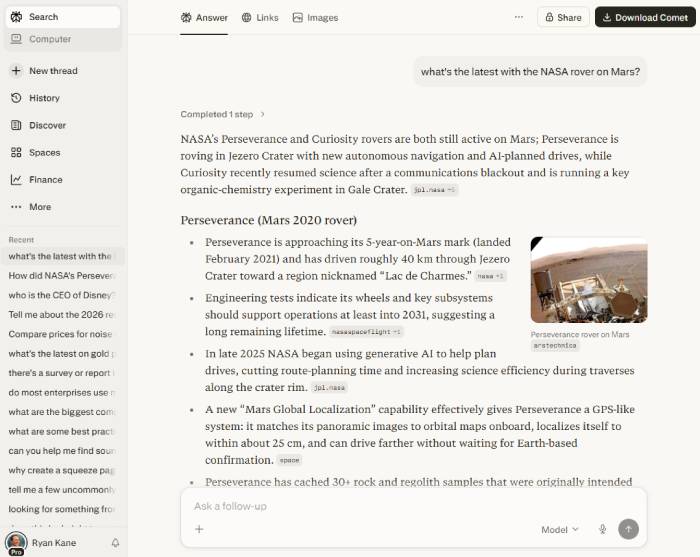
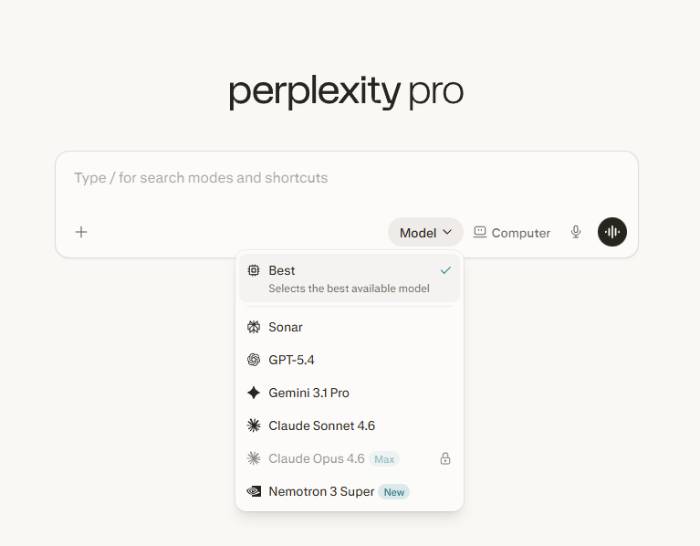
Perplexity normally searches as part of the answer and places citations beside individual claims. Follow-up prompts stay in the same research thread, which makes it efficient for exploring a current topic, finding primary sources, and narrowing a question.
Its source controls and research modes are particularly useful when the user wants academic papers, financial material, patents, or a constrained set of websites. Paid plans can provide higher search limits, more file uploads, advanced models, media generation, and access to specialized sources.
A citation is not proof that a sentence is correct. Open each source and confirm that it supports the exact claim. Perplexity can cite a relevant page that does not establish the conclusion, combine sources incorrectly, or overlook a newer primary source.
Projects, files, and reusable context
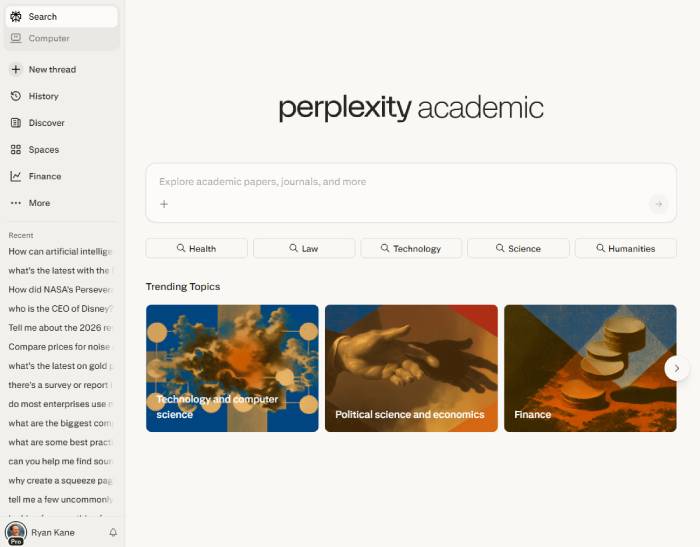

Perplexity’s Projects (formerly called Spaces) organize research, files, instructions, and collaboration. ChatGPT Projects likewise group chats, uploaded files, and instructions for ongoing work. The better choice depends on whether the project is mainly a searchable research collection or a workspace for creating many kinds of outputs.
For confidential material, compare the plan’s retention, training, connector, and sharing controls before uploading files. A personal subscription may not provide the governance options required by an employer.
Agents: useful, but not hands-off
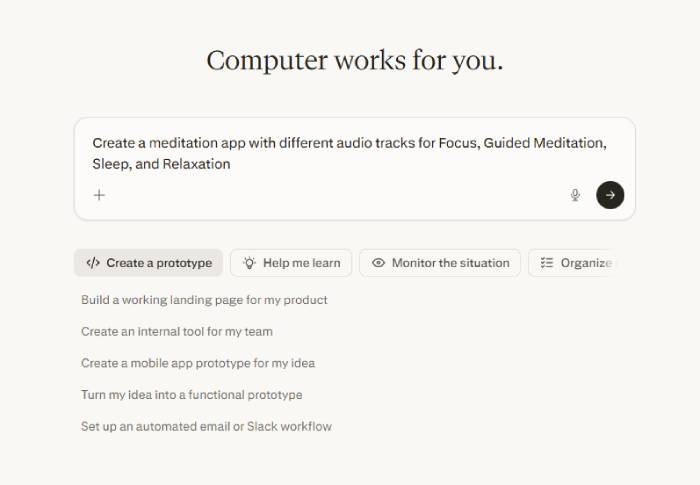
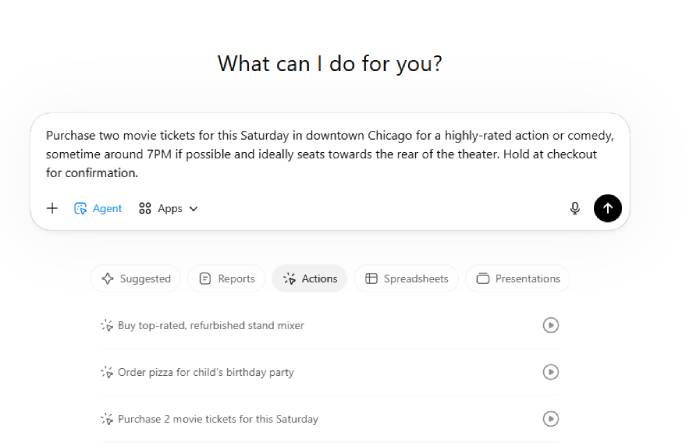
Perplexity Computer and ChatGPT agent features can plan and carry out multi-step work, such as gathering information, navigating websites, using connected data, and creating files. The supported entry points, credits, and actions differ by plan and change frequently.
Keep a human in the loop for purchases, bookings, messages, account changes, and any task involving private data. Review the final state rather than trusting a success message. Websites can block automation, pages can contain malicious instructions, and an agent may select the wrong option.
Pricing and limits
Both services have a free tier and several paid plans. Perplexity currently lists Pro at US$20 per month and Max at US$200 per month, with annual options. ChatGPT pricing, included models, usage levels, and regional plans can differ and change over time. Compare the live checkout page for your account rather than relying on an old table.
Pay attention to the limiting resource: searches, premium-model use, file uploads, deep-research runs, agent credits, image or video generation, storage, and connector access may be counted separately.
Which one should you use?
- Choose Perplexity when you want quick, current answers with visible sources; need to refine web research through follow-up questions; or frequently search academic, financial, patent, or other source-specific material.
- Choose ChatGPT when you need one workspace for research, writing, file analysis, spreadsheets, code, images, projects, and connected apps.
- Use both for important research: discover sources in Perplexity, then ask ChatGPT to analyze a verified source set or produce the deliverable. This does not replace opening and checking the sources yourself.
Review Perplexity’s current plan guide and the official ChatGPT pricing page before subscribing. Model names and allowances change too quickly to make a static checklist reliable.
Related Articles
 Is Perplexity Pro Worth the Money?9 minutes read
 Which Is Better: Perplexity or ChatGPT?12 minutes read
 What Is Perplexity Assistant? Complete Guide6 minutes read
 Is Chatgpt Plus or Perplexity the Better AI Chatbot?9 minutes read
 What Makes Chatgpt's Search Feature Superior to Perplexity?6 minutes read
 Comparing the Prices of Paid AI Chatbot Packages10 minutes read
Reader Comments 0
Sign in with email or Google to join the discussion.