Table of Contents
OpenAI's 2025 Codex launch expanded the coding agent beyond individual chat requests, adding Slack-based task delegation, an SDK for custom workflows, and controls for organizational use. The practical change was easier integration into existing engineering work—not the removal of code review or release responsibility.
Historical context: this article covers the 2025 announcement. Product names, Slack entry points, models, plan eligibility, and administration settings have changed since then; use current official documentation when setting up a workflow.
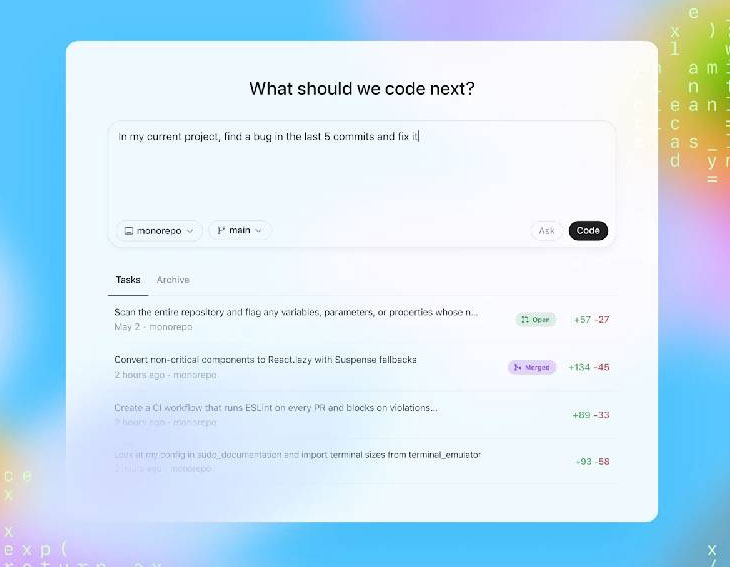
Slack brought coding tasks into team conversations
The announced integration let teams delegate repository work from Slack instead of moving the entire request into a separate interface. A useful request identifies the repository, the problem, the expected behavior, and the checks needed to evaluate a change.
Starting work from a conversation does not mean an agent has access to every repository or message. Environment access and permissions still matter. Teams should review the proposed diff, tests, and unresolved issues before accepting code.
For a current deployment, consult OpenAI's Slack documentation. It now describes requests through @ChatGPT and delegation to eligible shared Codex Cloud environments, including guidance for users moving from @Codex. The old mention syntax should not be presented as the only current route.
The Codex SDK supports programmatic workflows
The SDK gives developers a way to run coding-agent tasks from internal tools and automation. Examples include preparing a repository change or investigating a failed build within a controlled workflow.
The current Codex SDK guide documents a server-side TypeScript library for starting, continuing, and resuming local Codex threads. The SDK and a hosted cloud task are different execution surfaces, so confirm where the code runs, which credentials it uses, and what permissions apply before integrating it into CI.
A structured result is easier to process, but it is not proof that a patch is correct. Define validation, time and cost limits, and human review for consequential changes.
Organization controls matter as usage expands
The announcement also emphasized administration and visibility for teams. Before enabling a coding workflow, an administrator should establish who can use it, which repositories and environments are accessible, and how activity is reviewed.
- Use approved environments and scope access to the work required.
- Keep secrets out of task text and review how the environment provides credentials.
- Define who checks changes and who may merge or release them.
- Review usage and failed tasks alongside successful outputs.
Do not assume that an old plan list or screenshot describes today's entitlements. Verify the controls available in the actual workspace.
What the launch meant for developers
Codex became easier to fit into team communication and custom engineering processes. Its usefulness still depends on a clear task, appropriate access, a working test environment, and reviewable results. Begin with a bounded task whose outcome you can verify, then evaluate the quality and total review effort before expanding automation.
For the broader relationship between the CLI, SDK, and agent harness, see Codex as a platform.
Related Articles
 OpenAI Codex User Guide with 3 Real-World Examples
 OpenAI Launches GPT-5-Codex: Upgrading Codex with Dynamic Thinking, Enabling More Powerful AI Programming
 5 Practical Projects for Learning OpenAI Codex
 What Are ChatGPT Workspace Agents? Build and Govern Them
 Useful tips for mastering Slack
 How to Use OpenAI Codex with Google Chrome
Reader Comments 0
Sign in with email or Google to join the discussion.