Table of Contents
Iran's cyber capabilities are best understood through documented campaigns, not an assumed single “cyber warfare machine.” Security researchers track several distinct activity groups suspected of operating from Iran. Their reported targets and methods vary, and attribution to a particular government body requires evidence.
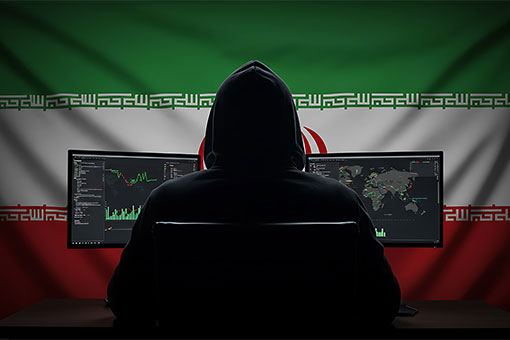
Why Stuxnet matters to the story
Stuxnet, discovered in 2010, targeted industrial control systems associated with Iran's Natanz nuclear facility. It showed how malicious code could affect physical equipment. The attack is often discussed as a turning point in Iran's cyber strategy, but it does not by itself prove the size, budget, or structure of later Iranian operations.
What researchers have documented
MITRE ATT&CK describes APT33 as a suspected Iranian group active since at least 2013, with reported interest in aviation and energy. OilRig is another suspected Iranian group that has targeted several sectors, including government and energy. These are analyst labels for observed activity clusters; names and attributions can differ between investigators.
Public CISA advisories have described activity by actors affiliated with Iran's Islamic Revolutionary Guard Corps against exposed industrial controllers. Other advisories document credential access and exploitation of vulnerable systems. Such evidence supports a picture of varied operations rather than a single tactic or a claim that every pro-Iranian hacktivist acts under state direction.
What the risk means for defenders
For an organization, the useful question is whether its systems expose the routes described in advisories. Inventory internet-facing services, install relevant security updates, restrict remote access, use phishing-resistant multifactor authentication where possible, and monitor unusual sign-ins and changes to industrial control systems. CISA's advisory contains specific mitigations for the affected controllers. Learn how password guessing attacks work, and review common phishing warning signs for individual accounts.
Cyber operations can serve espionage, disruption, or political signaling. For a current threat assessment, check dated government advisories and incident reports rather than treating a broad country profile as a live warning.
Related Articles
 The 'Terrifying' Impact of AI in Modern Warfare: Explained8 minutes read
 The 'Terrifying' Influence of AI in Modern Conflict7 minutes read
 The Us Was Prosecuted After the Virus Attack on Iran3 minutes read
 COD Modern Warfare 2 Campaign Remastered - A Worthwhile8 minutes read
 Hackers Attacked Hundreds of Universities to Gain Access to7 minutes read
 minutes read
Reader Comments 0
Sign in with email or Google to join the discussion.