Table of Contents
This practical guide explains how to set up basic parameters for a computer with clear steps and useful context. It also covers common requirements, potential problems, and the details that can help you get better results.
Access to the Computer Configuration Parameter Setting Table - BIOS Setup
Correctly setting the parameters in the BIOS will help the computer work correctly and efficiently. Normally, you can access the BIOS settings (BIOS Setup) by pressing the Delete ( DEL ) key when the first screen appears immediately after turning on the machine, some machines use the F1 , F2 keys, F10 , Esc , Ctrl + Esc , Alt + Esc , Ctrl + Alt + Esc , Ctrl + Alt + Enter , Ins .
 Access to the computer configuration parameter setting table - BIOS Setup
The BIOS Setup screen appears with menus categorized for setting up different parameters.
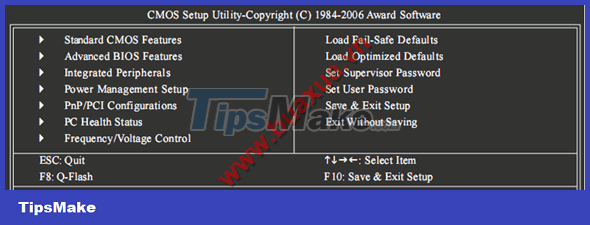 BIOS Setup screen
Basic Settings in BIOS Setup
Set Time
This setting makes the system time correct with the current time. In the BIOS Setup Utility screen select Standard CMOS Features , change the parameters in the items: day, month, day, year and hour, minute, second. After editing, press the Esc key to return to the BIOS Setup Utility .
 Set time
Parameter Setting for Drives
Normally these settings are automatically (Auto) however in some special cases it is necessary to set these parameters manually. In the BIOS Setup Utility screen select Standard CMOS Features, change the parameters in the IDE Channel entries, each IDE Channel corresponds to a hard drive or CD-ROM.
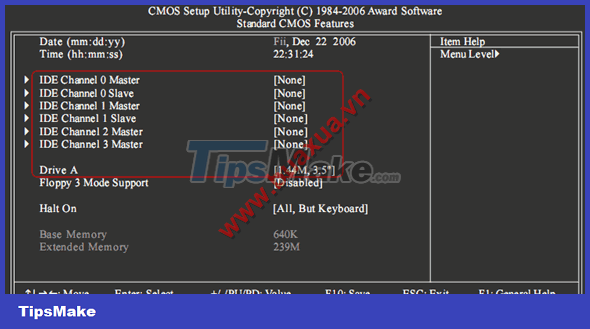 Parameter setting for drives
- Auto : BIOS automatically finds and checks to set the parameters for the drive when booting.
- None : Do not use the drive on this IDE Channell, the BIOS will skip the check, so it will reduce the boot time. This is also a way to lock, not allow the use of a certain drive.
- Manual : The user manually sets the parameters for the drive.
If the system is not equipped with a floppy drive, select Drive A as None , BIOS will skip the check, so it will reduce boot time.
Set Up Memory for the Graphics Device
If the system has a graphics device (VGA Card) integrated on the mainboard (Mainboard), this VGA shares memory (RAM) with the system and can increase or decrease this memory capacity. In the BIOS Setup Utility screen select Advanced BIOS Features , change the parameter in the On-Chip Frame Buffer Size section.
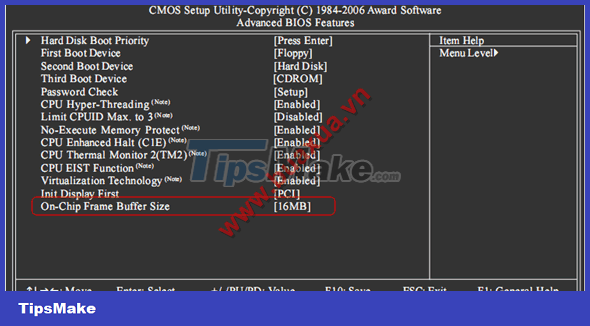 Set up memory for the graphics device
Set Up Password Protection
If you want to prevent others from using your computer, you can set up a password, which will block it from the beginning, so it's very safe. In the BIOS Setup Utility screen, select Advanced BIOS Features , change the parameters in the Password Check section:
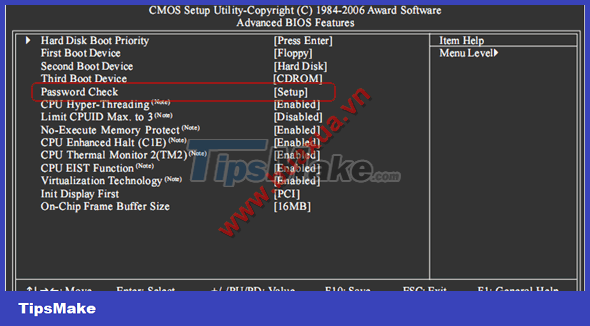
- Setup : Only prevents access to the BIOS Setup program.
- System : Prevents using the system and accessing the BIOS Setup program.
Select System and press the Esc key to return to the BIOS Setup Utility screen.
Select Set Supervisor Password and press Enter key, enter the password and press Enter key, continue to re-enter the same password as before to confirm and press Enter key. This is the password that allows to use the system and access to edit parameters in the BIOS Setup program.
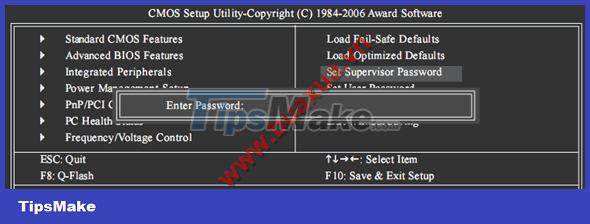 Set password protection
In addition, you can choose to add Set User Password , this password only allows using the system but cannot edit the parameters in the BIOS Setup program.
To change or delete the password just select Set Supervisor Password or Set User Password , enter a new password to change or leave it blank and press Enter twice to remove the password.
Set Back to Default State
This setting returns all modified parameters to the state set by the manufacturer, which for the average user and in most cases is the best setting. In the BIOS Setup Utility screen, select Load Optimized Defaults and press Y (Yes) to agree.
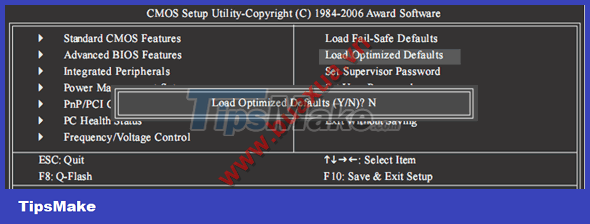 Set back to default state
Safe Setting
This setting reduces the operation of the devices in the system, is used when the system is malfunctioning, unstable or for diagnosing system failures. In the BIOS Setup Utility screen select Load Fail-Safe Defaults and press Y (Yes) to agree.
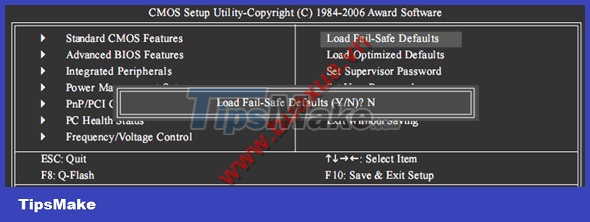 Safe setting
Note:
- Use arrow keys to move, key + / - or Page-Up / Page-Down to change parameters, Enter key to select, F7 key to return to default parameters, Esc key to rotate. return to the previous screen or exit the program.
 Use arrow keys to select
- After completing the parameter changes in BIOS Setup, press F10 or select Save & Exit Seup , Press Y (Yes) key to agree to save the changes and exit the BIOS Setup program.
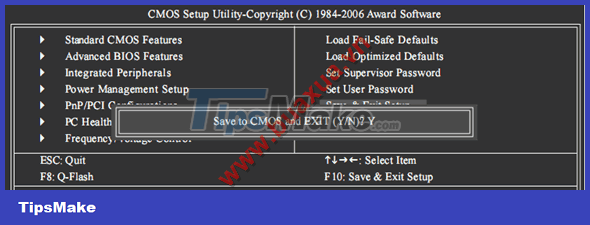 Save the changes and exit the BIOS Setup program
- If you do not want to save the changes and exit the BIOS Setup program, select Exit Without Saving and press the Y (Yes) key to agree.
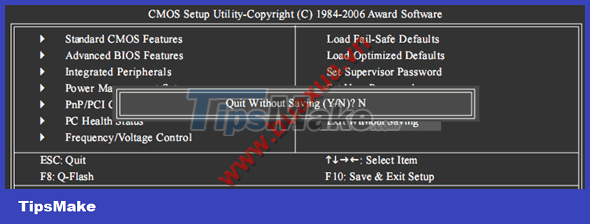 Do not save changes and exit the BIOS Setup program
Conclusion
Understanding BIOS makes it easier to compare options, avoid common mistakes, and apply the information in this guide more effectively. Review the relevant requirements before making changes or choosing a solution.
FAQ
How do you set up basic parameters for a computer?
Follow the steps in this guide in order, confirm the required settings or tools, and verify the result before making additional changes.
Is it safe to set up basic parameters for a computer?
It is generally safe when you follow the recommended instructions, use trusted tools, and avoid changing settings you do not understand.
What should you do if the process does not work?
Recheck the requirements, restart the device or application when appropriate, and review each step for missed settings or compatibility issues.
Related Articles
 Set the Basic Parameters for the Computer6 minutes read
 Instructions for Setting Basic Parameters on the Camera6 minutes read
 Set the Basic Parameters for the Color Printer5 minutes read
 Which Game Screen Parameters Do You Need to Care About?12 minutes read
 Software Display Parameters and Monitor PC Hardware When5 minutes read
 Little Known 5 Parameters Can Slow Down Your Computer9 minutes read
Reader Comments 0
Sign in with email or Google to join the discussion.