Table of Contents
This practical guide walks through how to make a connection to SQL server through SSMS, explains the main requirements, and highlights common issues that may appear along the way.
And to continue the content of the previous post, in this next article, I will join you in connecting to SQL Server via SSMS. Ok, let's get started now!
#first. Launch SQL Server Management Studio
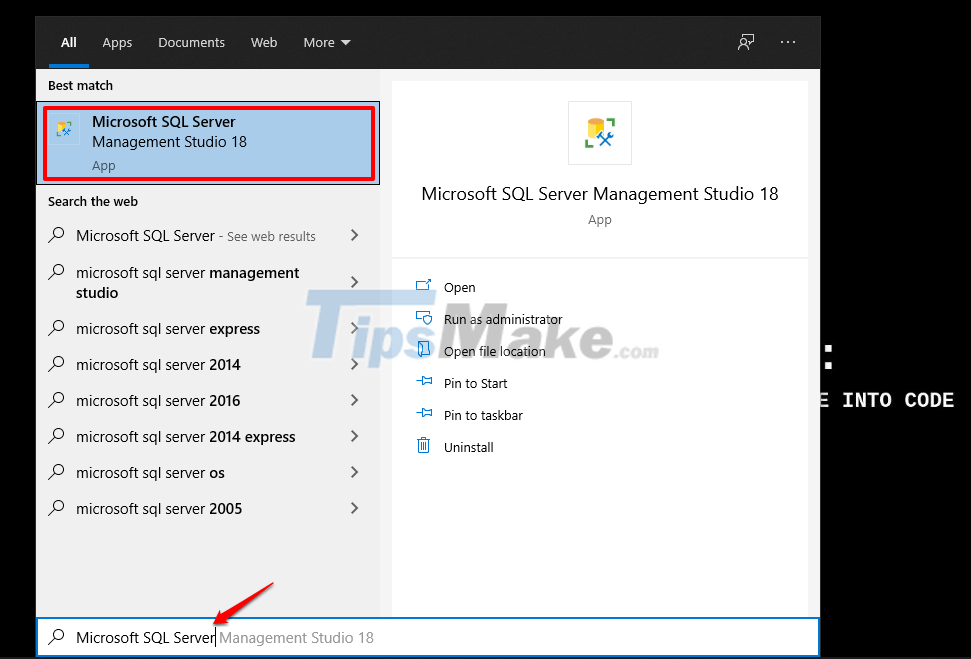
+ Step 1: First you open SSMS, there are many ways to open. You can search on the Taskbar or create a shortcut on the desktop.
Here I use the simplest way and press the Windows + S combination to open Windows Search => and search with the keyword Microsoft SQL Server as shown below.
+ Step 2: You wait a moment for SQL Server Management Studio to start.

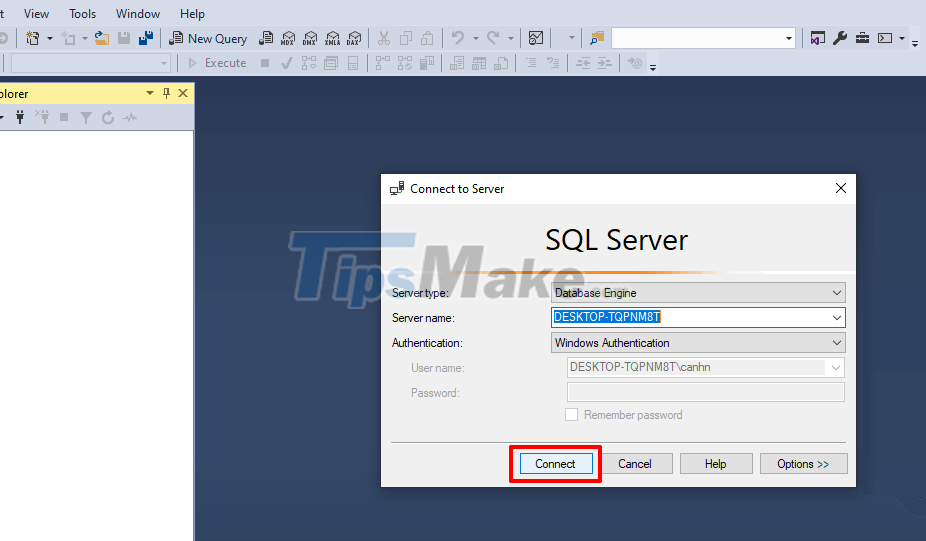
+ Step 3: This is the initial interface when you initialize SSMS. You can click Connect as shown below to connect to SQL Server through the operating system's authentication (set up during the installation process).
#2. Create a new connection
+ Step 1: Yes, after you have the connection, you can click the Connect tab as shown below => then select Database Engine.

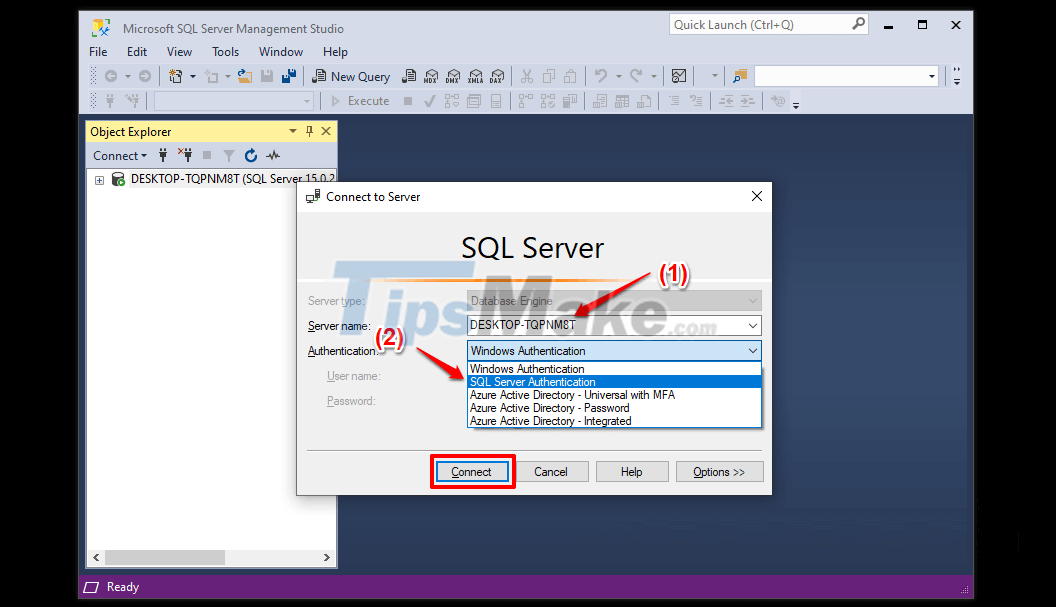
+ Step 2: Here you click on the Server name selection box, there will be a drop-down => You choose SQL Server Authentication.
=> Then click Connect to establish a connection through Server's authentication.
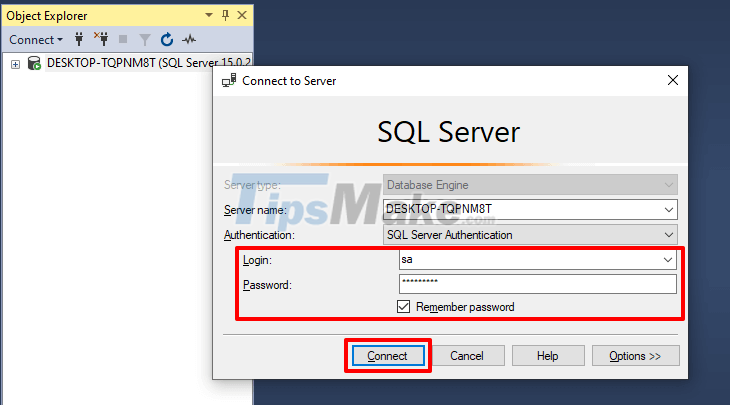
Step 3: You will have to enter your password and username.
The username you can enter, and the password, you set according to the basic security rules - about 8 characters, including uppercase, lowercase, digits and special characters.
=> If the password is difficult to remember, you can check the Remember password box so that you do not need to re-enter the password in the next time.
+ Step 4: So we have a new connection to SQL Server through Server authentication.
A connection (connection) after creation will have a few components such as: Database, Security, Server Objects. We will mainly work with Databases.

You can also check the connection and see the version of SQL Server by creating a new query (right-click Connection => New Query or click New Query on the SSMS taskbar).
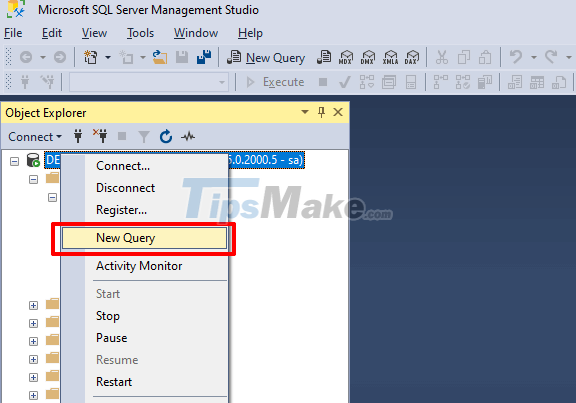
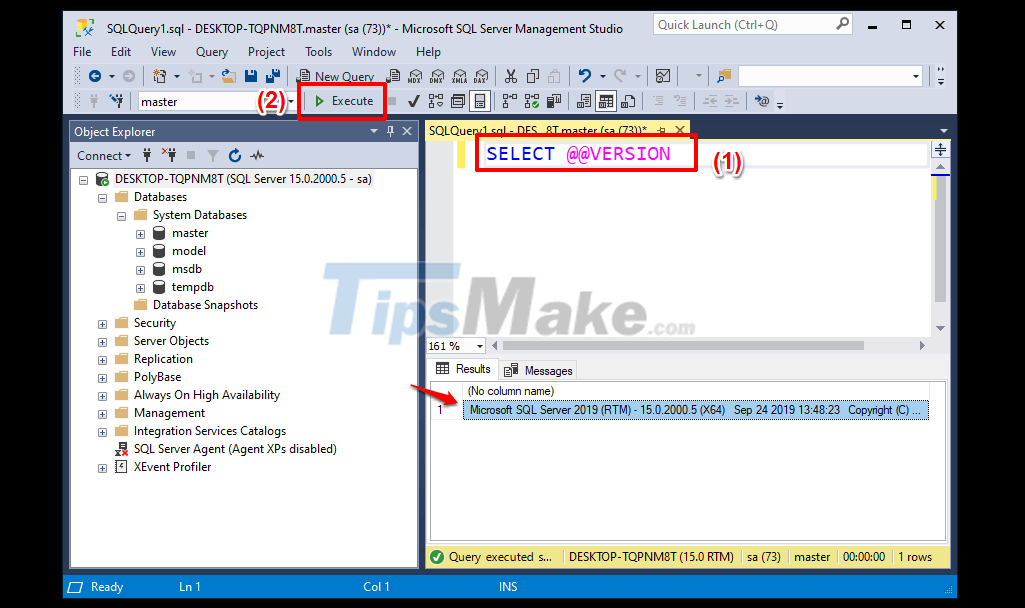
+ Step 5: You enter the query SELECT @@VERSION => and then click Execute to run the query.
The results will be displayed in the Result tab as shown below with information about the version of SQL Server you are installing.
#3. Conclude
That said, creating a connection to SQL Server via SSMS is relatively simple. You just need to note that you have to install both on your computer before you can work.
Many cases you don't know, just install SSMS without installing SQL Server, you can't connect.
In the next article, I will learn with you about the steps to create a new database. How to add and delete data through tables.
Key Takeaways
Use the information above as a practical reference for how to make a connection to SQL server through SSMS. Review each step carefully, confirm any requirements, and choose the option that best fits your situation.
FAQ
What does this guide explain about Make a Connection to SQL Server Through SSMS?
It explains the main concepts, practical considerations, and useful steps related to make a connection to SQL server through SSMS without requiring advanced knowledge.
Who can benefit from learning about Make a Connection to SQL Server Through SSMS?
This information is useful for readers who want a clear overview, practical guidance, and reliable steps related to make a connection to SQL server through SSMS.
What should I check before applying this information?
Review the requirements, confirm that your device, software, or situation matches the instructions, and back up important data before making major changes.
Related Articles
 How to Back up and Restore a Microsoft SQL Server Database Using SSMS5 minutes read
 8 Ways to Secure SSH Server Connections on Linux9 minutes read
 Steps to Install Microsoft SQL Server on Windows 106 minutes read
 How to Connect to an FTP Server from Windows Explorer?4 minutes read
 What's New in SQL Server Management Studio 18.7?5 minutes read
 How to Connect Proxy Servers on Windows 10 to Secure Internet4 minutes read
Reader Comments 0
Sign in with email or Google to join the discussion.