Table of Contents
This updated guide explains how to Learn Aerobatics through clear steps, practical examples, and important checks that help prevent common errors.
Loop
-
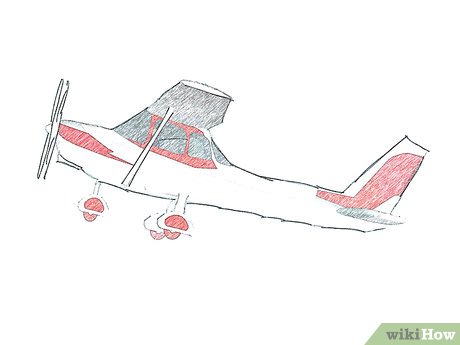 Start off flying straight and level with no change of altitude or roll.
 -
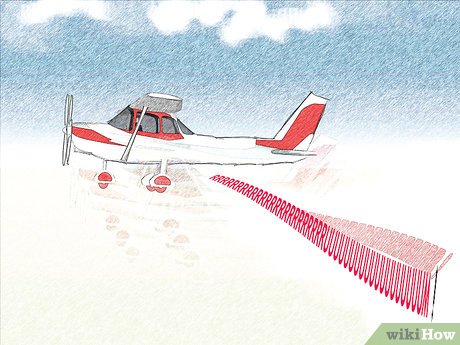 Push the throttle up to full and pitch slightly down. By doing this you are building up the speed to get you "over the top".
 -
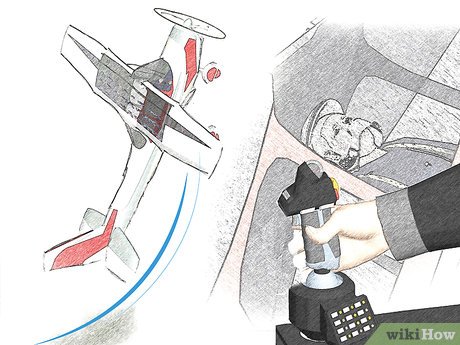 At about 120 knots, pull back hard on the stick. G-Force will push you into your seat but don't worry about it; just keep pulling back.
 -
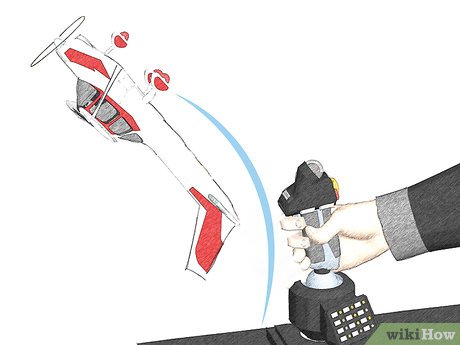 At the invert, gradually relax the pressure and pull back on the stick.
 -
 Carry on pulling back until you are once again straight and level. That is the procedure for a basic loop.
Cuban Eight
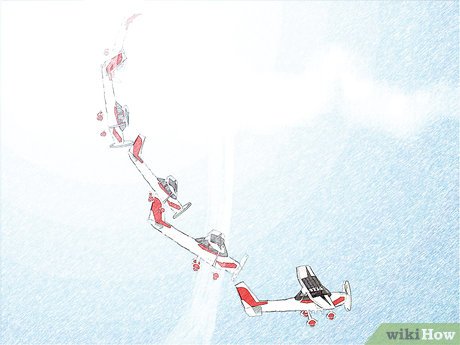
Stall Turn
-
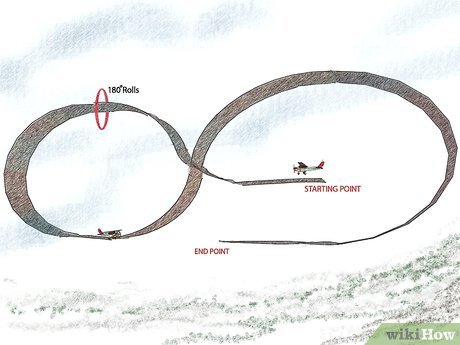 Fly straight and level. Push the throttle up to full and pitch slightly down. By doing this you are building up the speed to get you up into the vertical.
 -
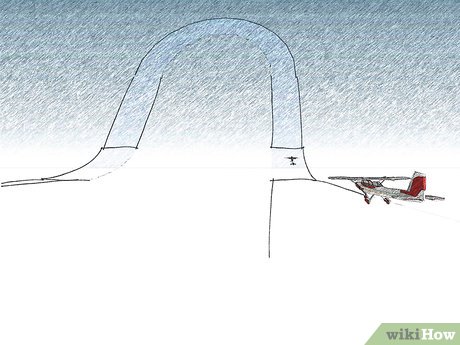 At about 120 knots, pull back on the stick until you are going vertically upwards. Keep the plane heading up. When you are near to falling backwards, push the rudder either left or right.
 -
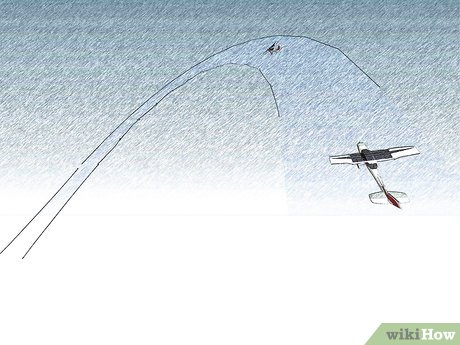 The plane will fall backwards and tilt to the way your rudder is. It will twist round and start to descend vertically.
 -
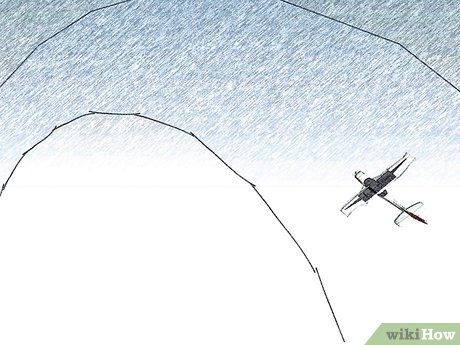 Pull out until straight and level again. That is the procedure for a stall turn.
Knife Edge
-
 Fly straight and level, go to 3/4 throttle
 -
 Roll your wings to quarter roll,
 -
 Input opposite rudder to the roll and hold
 -
 For exit level your wings and take the rudder out
Four Point Roll
This is best done with low wings. A four point roll depends on your airspeed, a four point roll is a roll in four parts a roll to quarter, a roll to inverted, another roll to quarter, roll to leveled. For this guide we will be doing a right roll:
-
 Make your throttle 1/2 to 3/4 throttle
 -
 Roll right to first quarter, add left rudder to steady the plane
 -
 Roll right another quarter to inverted, add down elevator to keep the nose up
 -
 Roll right another quarter, add right rudder to steady the plane
 -
 Roll right another quarter to level.
 -
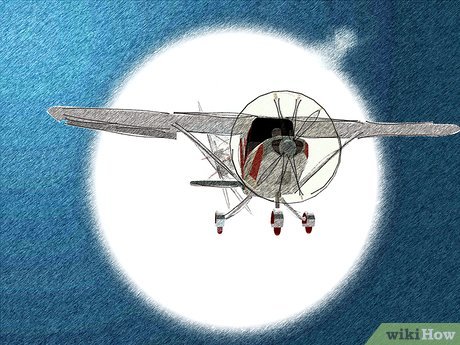 Fast four point rolls do not require as much rudder and elevator, slow 4 point rolls require a lot.
FAQ
What is the easiest way to Learn Aerobatics?
Start with the requirements in this guide, then follow each step in order. Check the result after every major change so problems are easier to identify.
Can beginners follow these instructions?
Yes. The process is organized into practical steps, and you can repeat any step before moving forward.
What should I check if the method does not work?
Confirm your software or device version, permissions, settings, file format, and internet connection when the task depends on online services.
Related Articles
 7 Simple Tips to Help You Learn New Languages in Just One Week8 minutes read
 Stop Copying and Pasting Content from AI8 minutes read
 The Secret to Effective Language Learning from a 35-year-old Man17 minutes read
 How to Learn English for Free with Vndoc, from Basic to Advanced6 minutes read
 How to Use Learn Step by Step in Perplexity11 minutes read
 7 Best Websites to Help Kids Learn About AI and Machine Learning9 minutes read
Reader Comments 0
Sign in with email or Google to join the discussion.