Table of Contents
Learn how to enhance learning with school technology (and still keep it real) with practical instructions, useful tips, and troubleshooting guidance…
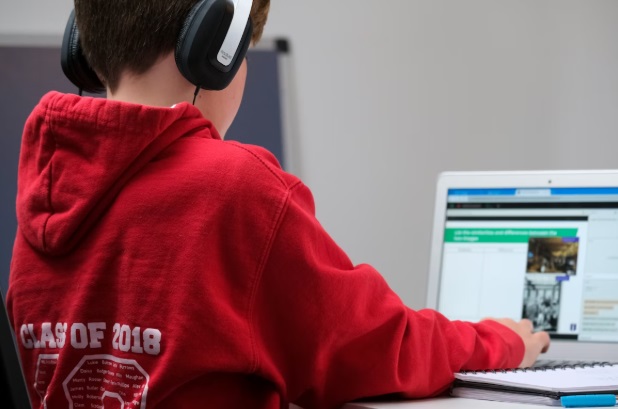
Walk into a modern classroom and you will feel it.
Not just see it.
A mix of quiet focus and digital noise. Screens glowing. Tabs open. A teacher trying to hold attention while notifications quietly compete in the background.
It's not simple anymore.
And maybe it never was.
Technology has changed learning. No question. But whether it improves it or complicates it... that part depends on how it's used.
So instead of chasing every new tool, maybe it's better to slow down and ask what actually works.
Start with a Problem, Not a Platform
Here's where things often go wrong.
A school adopts new tech. Everyone gets excited. Then a few weeks later, it just becomes another thing to manage.
Another login. Another distraction.
Because there was no real reason behind it.
The best classrooms do the opposite. They start with friction.
Students not engaging? Find a tool that pulls them in.Concepts too abstract? Use something visual.Different learning speeds? Adjust the delivery.
Technology should feel like a solution. Not an add-on.
When it solves something real, students notice. And they respond.
Make Learning Feel Less Like Sitting Still
Let's be honest.
Sitting quietly and listening for long periods? It doesn't work for everyone.
Maybe not even for most.
This is where technology can shift the energy.
A quick interactive quiz. A simulation that lets students test ideas. A short video that explains something in a way a textbook never quite could.
Suddenly, the room feels different.
More movement. More reaction. A bit more curiosity.
It's not about making lessons louder. It's about making them harder to ignore.
Let Students Breathe at Their Own Pace
Here's something we don't talk about enough.
Learning can feel rushed.
Some students are still processing while others are already moving ahead. And that gap? It grows quietly.
Technology can soften that.
Replay a lesson. Pause. Try again. No pressure. No eyes watching.
At the same time, students who are ready to move forward can do exactly that.
No waiting. No frustration.
It creates this strange balance. Everyone moving, but not in the exact same way.
And somehow, that works better.
Build Quiet Confidence
There's a moment that matters more than we realise.
When a student figures something out on their own.
No prompt. No answer given. Just... a click.
Technology can help create more of those moments.
Researching a topic. Testing an idea. Going down a small rabbit hole of curiosity.
It's not always neat. Sometimes it's messy. Distracted, even.
But within that, something builds.
Confidence.
The kind that doesn't come from being told you're right, but from discovering it yourself.
Pull Back When It Gets Too Much
Now here's the part people avoid.
Too much tech can ruin the whole thing.
Screens all day. Constant input. No pause.
It drains attention. Flattens energy. Makes everything feel the same.
Sometimes the best move is the simplest one.
Close the laptops. Put the devices away. Let the room breathe again.
A conversation. A handwritten note. A moment to think without a screen.
Technology should step in when needed. And step back when it's not.
That balance? That's where the magic sits.
Don't Forget the Teacher
It's easy to focus on students when talking about tech.
But teachers carry most of the weight.
If they're unsure, overwhelmed, or unsupported, even the best tools fall apart.
Confidence matters here too.
Training helps. Time helps. Space to experiment without pressure helps.
Because when a teacher knows how to use technology properly, it stops feeling like a burden.
It becomes part of the flow.
Environment Still Wins
At the end of all this, one thing stays constant.
Environment matters more than tools.
A classroom where students feel safe to speak, question, and get things wrong will always outperform one filled with the latest devices but no real connection.
Technology can support that environment. Strengthen it.
But it cannot replace it.
Some schools manage to find that balance. Not perfectly, but intentionally. Blending strong academic foundations with modern tools in a way that feels natural. If you want to see how that looks in practice, you can explore a forward-thinking school that blends tradition with modern learning .
It gives you a clearer sense of how both sides can work together without one overpowering the other.
Focus on What Lasts
Here's the thing.
Tools will change. Platforms will evolve. What feels advanced now might feel outdated in a few years.
But thinking skills? Curiosity? The ability to solve problems?
Those stay.
If technology helps build those, it's doing its job.
If it distracts from them, then something needs adjusting.
One Small Shift
You don't need a complete overhaul.
Sometimes it's just one lesson that feels different. One student who suddenly gets it. One moment where something finally clicks.
That's where technology proves its worth.
Not in how impressive it looks.
But in how quietly, almost unexpectedly, it makes learning feel... possible again.
FAQ
What is the best way to enhance learning with school technology (and still keep it real)?
Learn how to enhance learning with school technology (and still keep it real) with practical instructions, useful tips, and troubleshooting guidance...
What should you prepare before you enhance learning with school technology (and still keep it real)?
Key takeaway: Learn how to enhance learning with school technology (and still keep it real) with practical instructions, useful tips, and troubleshooting guidance...
What common mistakes should you avoid?
A teacher trying to hold attention while notifications quietly compete in the background.
Related Articles
 Learning Literature with 3D Technology, 'Scanning' Books Out of Knowledge at FPT High School5 minutes read
 How Gamification Can Enhance Learning: Key Facts8 minutes read
 Perfect STEM Activities for Middle School Students12 minutes read
 20 New Technological Words Anyone Should Know: Technology Vocabulary6 minutes read
 Ways to Enhance Learning on Windows: Main Insights7 minutes read
 Does Translation Earpiece Technology Make Foreign Language: Key Facts5 minutes read
Reader Comments 0
Sign in with email or Google to join the discussion.