Table of Contents
ReFS, or Resilient File System, is designed for data integrity and large storage volumes. Windows 10 does not offer ReFS formatting on every edition. Microsoft restricted creation to certain editions, including Enterprise and Pro for Workstations, on later Windows 10 releases. Use NTFS for the Windows 10 system volume.
Check what your PC supports
- Open Settings > System > About and check your Windows edition and build.
- Check the format options for a supported data volume in the Windows storage interface your edition provides. Creating a ReFS volume, accessing one, and using ReFS with Storage Spaces are different capabilities.
- If ReFS is absent, check the edition and configuration first. Microsoft’s Windows 10 Storage Spaces discussion documents the edition restriction behind a missing option.
When to choose ReFS or NTFS
ReFS can suit a supported data-volume workload where integrity checking and resiliency features matter. Some repair capabilities depend on the underlying storage configuration and available redundant copies. NTFS is the general-purpose choice for Windows 10 disks and applications that expect typical Windows file-system features. See Microsoft’s ReFS feature comparison, bearing in mind that Windows Server scenarios differ from Windows 10.
Before creating any new volume, back up the data and verify the copy. Formatting erases the selected volume. For a Windows 11 developer workload, read about creating a Dev Drive, which is a separate supported ReFS feature.
Why the old Registry tweak is unreliable
Older screenshots show Registry values proposed as a way to expose ReFS formatting. A last-access setting does not enable or disable the file system, and forcing a format option does not establish support for the resulting volume. If the GUI does not offer ReFS for the configuration, choose a supported alternative. For removable storage, see how to select a USB file system that works with your devices.
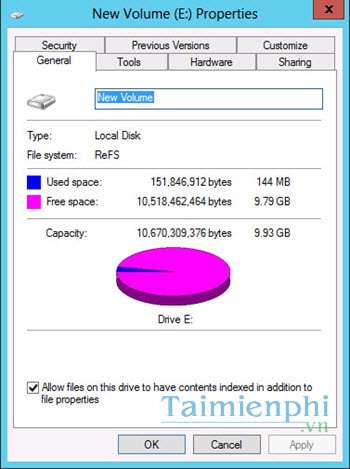
Older Windows 10 screenshots for reference


Related Articles
 Enable / disable ReFS (Resilient File System) on Windows 10
 Here's how to use Resilient File System (ReFS) on Windows 10
 How to format a drive with ReFS in Windows 10
 Why ReFS is not commonly used on Windows 10?
 How to enable / disable TRIM support for SSDs in Windows 10
 How to enable / disable TLS 1.3 in Windows 10
Reader Comments 0
Sign in with email or Google to join the discussion.