Table of Contents
This updated guide explains how to Become ABA Certified through clear steps, practical examples, and important checks that help prevent common errors.
Part 1 of 3:
Getting the Right Education
-
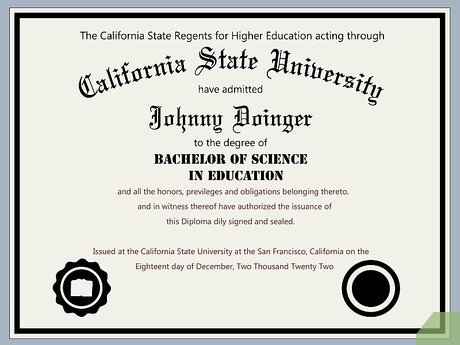 Obtain a bachelor's degree in the field of your choice. Because you must have a master's degree in behavioral analysis to become an ABA, you will need a bachelor's degree first. While you are able to complete the degree in the field of your choice, it makes sense to major in a related field, like education, psychology, or social work.[1]XResearch source
 -
 Complete graduate-level classroom hours for each ABA content area. Depending on the college or university you attend, the number of required classroom hours per content area will vary. Generally, expect to take a certain number of hours in the following areas:[2]XResearch source
- Ethical considerations
- Measurement of behavior and displaying and interpreting behavioral data
- Experimental evaluation of interventions
- Behavioral assessment and selecting intervention outcomes and strategies
- Behavior change procedures and systems support
- Definitions, characteristics, principles, processes, and concepts
- Discretionary behavior-analytic content
-
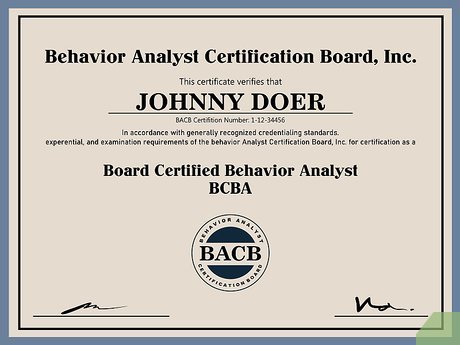 Achieve a master's degree in behavior analysis or a related field. The next step on your journey to becoming an ABA is to obtain a master's degree. While it's recommended that the degree be in behavioral analysis, you could choose another field approved by the Behavior Analyst Certification Board (BACB), such as another natural science, engineering, medicine, education, or human services.[3]XResearch source
Part 2 of 3:
Gaining Experience
-
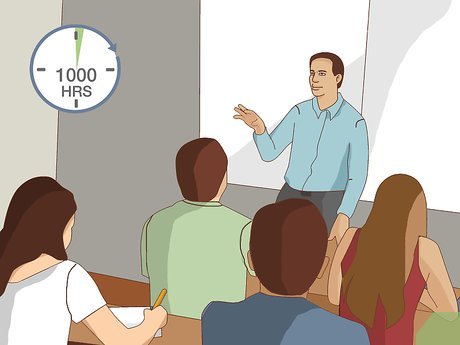 Do 1,000 hours of standard practicum. While you are completing your master's degree, you can enroll in a standard practicum through your college or university. In this practicum, you will get college credit as well as hands-on experience in behavior analysis. A board-certified behavior analyst must oversee 7.5% of the total required practicum hours.
- The practicum may include conducting behavioral assessments and/or analyzing data.
-
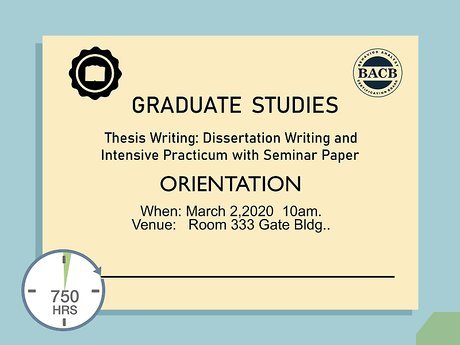 Finish 750 hours of intensive practicum. The intensive practicum will also be overseen by your university, and must be approved by the BACB. An intensive practicum often includes working with children in a special education setting. A board-certified behavior analyst must oversee 10% of the total required hours.
- You may be required to write and revise behavior-analytic treatment plans and/or oversee the implementation of treatment plans during the intensive practicum.
-
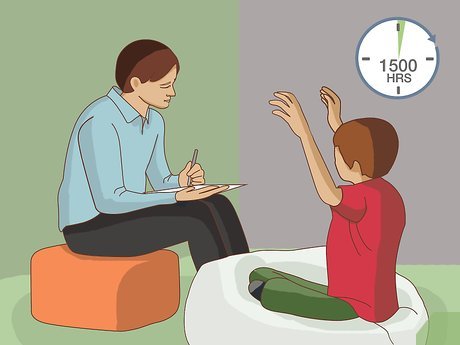 Complete 1,500 hours of independent fieldwork. This fieldwork will give you experience in behavior analysis and give you an idea of what a job in the field will be like. You can arrange to intern or work with a behavior analysis company to complete these hours. A board-certified behavior analyst must oversee at least 5% of the total required hours.
- During this fieldwork, you might oversee the implementation of behavior-analytic programs and/or design, implement, and monitor behavioral systems.
Part 3 of 3:
Getting Certified
-
 Check your state's certification and licensing requirements. The certification requirements for becoming an ABA vary by state, as there is no national certification program. Contact the Behavior Analyst Certification Board for your state to find out the specific requirements in your area. Some states may require licensing in addition to certification.[4]XResearch source
- In addition, some states will let you substitute relevant work experience for practicum.
-
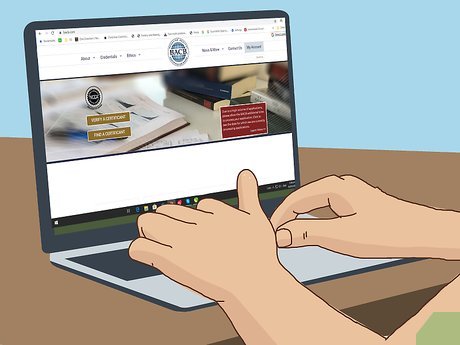 Take the online experience training module through the BACB. Before you can take the board-certified behavioral analyst (BCBA) exam, you must first pass an online, competency-based training module. This 8-hour module is available through the gateway on the BACB website: https://www. bacb. com/.
 -
 Pass the BCBA exam. In order to become certified as an ABA, you must pass the board-certified behavioral analyst (BCBA) exam. Visit the BACB website to find available examination dates as well as information on the content and structure of the exam.[5]XResearch source
- For instance, you'll find that the BCBA exam is comprised of 150 multiple-choice questions and 10 ungraded 'pilot' questions.[6]XResearch source
-
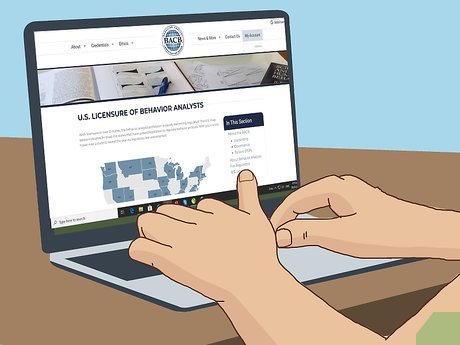 Obtain a license, if required. Some states require ABA licensing in addition to certification. Though requirements vary based on location, to obtain a license you'll generally need to submit a fee, a licensing form, proof of education and experience, and an attestation of moral character.[7]XResearch source
FAQ
What is the easiest way to Become ABA Certified?
Start with the requirements in this guide, then follow each step in order. Check the result after every major change so problems are easier to identify.
Can beginners follow these instructions?
Yes. The process is organized into practical steps, and you can repeat any step before moving forward.
What should I check if the method does not work?
Confirm your software or device version, permissions, settings, file format, and internet connection when the task depends on online services.
Related Articles
 How to Check If Android Phone Has Been Certified by Google4 minutes read
 Quantum Computer Generates First 'Certified' Random Number5 minutes read
 An 'Uncertified' Android Device Explained: How It Works and Key Features6 minutes read
 How to Remove Certified Toolbar, Ilivid Searchnu ... from the3 minutes read
 7 Types of Certificates Significantly Increase Your Income7 minutes read
 Google Will Block Its Services on Non-certified Devices4 minutes read
Reader Comments 0
Sign in with email or Google to join the discussion.