Table of Contents
Check your showerhead during routine bathroom cleaning and descale it when deposits build up or the spray becomes uneven. There is no single deep-cleaning interval that suits every home. Water hardness, frequency of use and the showerhead's design all affect how quickly scale develops.
A useful starting routine is to wipe the exterior during weekly cleaning and inspect the nozzles monthly. Clean more often if buildup returns quickly, and follow any maintenance interval in the manufacturer's instructions. This guide concerns the showerhead, rather than the entire shower enclosure.
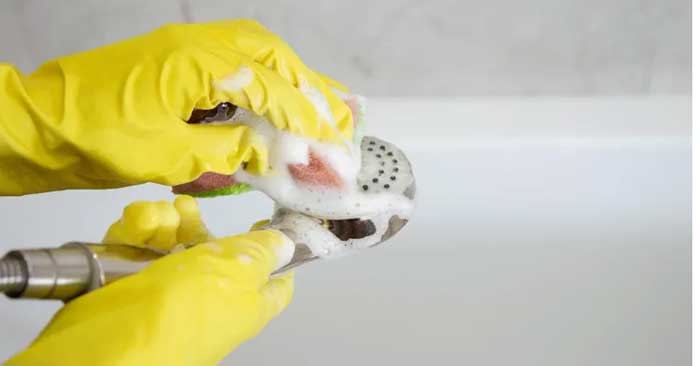
Signs the showerhead needs attention
- White or chalky deposits around the spray holes.
- Jets spraying sideways or an uneven spray pattern.
- Reduced flow isolated to the showerhead.
- Soap residue or visible grime on its exterior.
Cleaning can remove deposits and improve the spray. It does not establish that the household water supply is safe or guarantee that all microbes inside the plumbing have been eliminated. Persistent discoloration, unusual odor or flow problems affecting several taps need separate investigation.
Choose a cleaner for the exact finish
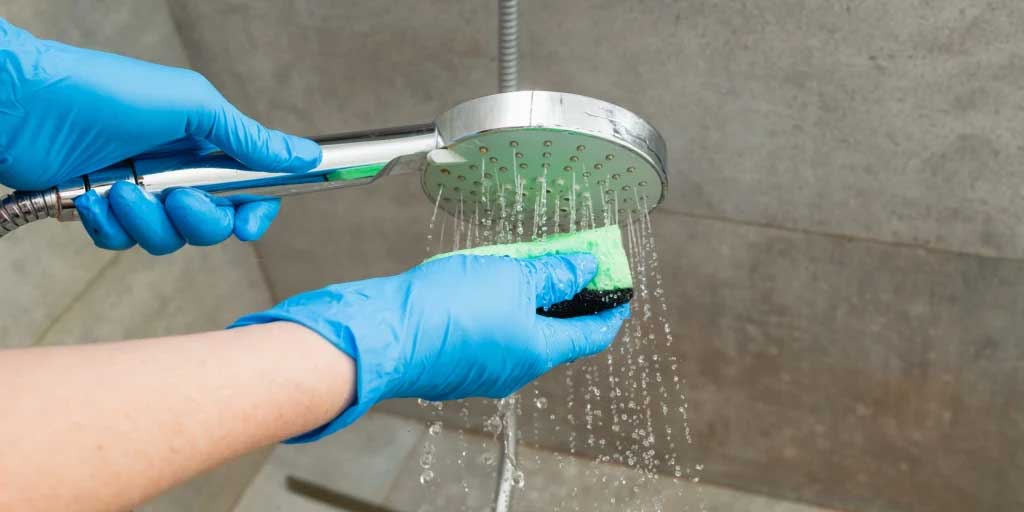
Start with a soft cloth and a mild cleaner approved for the product. For scale, check which descaler, dilution and contact time the manufacturer allows. Natural ingredients can still damage coatings and seals.
For example, hansgrohe's care guidance recommends mild citric-acid cleaners and prohibits acetic acid, the acid in vinegar. In contrast, Moen's guidance for Nebia showerheads permits a diluted white-vinegar solution. Neither recommendation should be applied automatically to a different product.
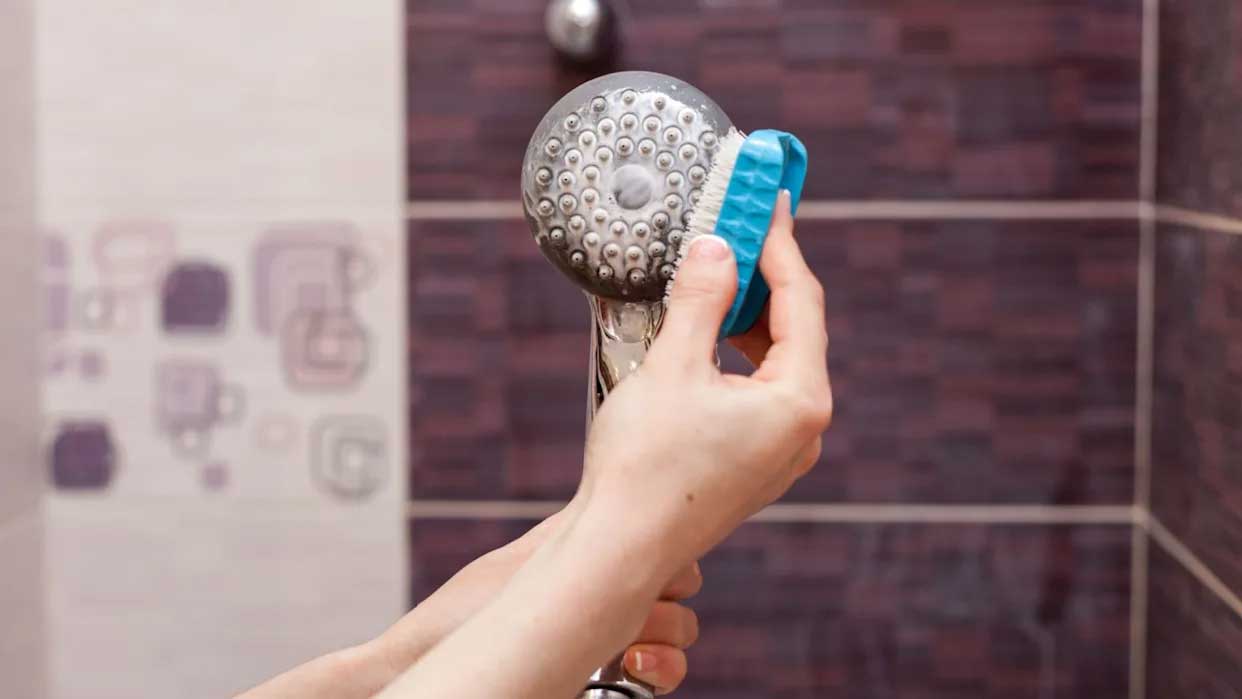
Avoid abrasive powders, metal brushes and scouring pads unless the product's care instructions specifically allow them. Even cloth recommendations vary by finish, so do not assume a microfiber cloth is always suitable.
How to clean a removable showerhead
- Turn off the shower and let hot fittings cool. Read the removal instructions before loosening the head.
- Remove it carefully, keeping washers and any filter screen in order. Protect the finish if an appropriate tool is needed, and do not force a seized connection.
- Wipe loose residue. On models with rub-clean nozzles, gently rub them as the manufacturer directs.
- Apply the approved descaler using the specified method and contact time. Soak only the permitted parts; do not default to immersing the whole assembly overnight.
- Rinse thoroughly with clean water. Clean an accessible filter screen only as instructed, then refit it and the washers.
- Reattach the head, run water through each spray mode and check for leaks and an improved spray.
TipsMake's basic household-tool guide explains common tools, but many showerhead connections are intended to be hand-tightened. Excess force can damage threads or seals.
How to clean a fixed showerhead
Use an approved cleaner on a cloth, or remove a serviceable spray plate if the manual allows it. Some models permit a supported bag containing a cleaning solution around the spray face; others do not.
If that method is approved, use the stated concentration and time, support the bag without straining the fitting, then remove it and rinse thoroughly. Do not substitute an overnight soak for a shorter manufacturer's limit.
Keep cleaning chemicals separate
Never mix bleach or disinfectants with other cleaning products. Vinegar and acidic descalers can react with bleach to release hazardous gas. The CDC's cleaning guidance explains this mixing risk. The concern is not simply that bleach encounters ordinary mineral deposits.
Many showerhead makers prohibit bleach because it can damage materials. Follow the cleaner's ventilation and protective-equipment instructions, and rinse away residue before using the shower.
If cleaning does not restore flow
Check the manufacturer's troubleshooting instructions for a blocked inlet screen or another serviceable part. If several fixtures have weak flow, ask a plumber to assess the supply rather than repeatedly descaling one showerhead.
A different spray head may change how the water feels without increasing supply pressure. See the distinction between a “booster” showerhead and a pressure problem before replacing equipment.
Related Articles
 Do not miss the opportunity to admire the largest meteor shower of the year tonight, can be observed with the naked eye
 4 simple steps to clean the shower
 Vietnam can observe the Orionid meteor shower tonight and tomorrow morning
 Orionid Meteor Shower 2025: Everything You Need to Know
 4 rules to keep towels fragrant and clean
 Tonight there will be meteor shower Leonids, and in Vietnam it can be observed
Reader Comments 0
Sign in with email or Google to join the discussion.