Table of Contents
China Shows Off Engine That Accelerates Aircraft to 20,000km/h Using. Kerosene is easier to approach with a clear overview and reliable steps. This guide organizes the essential information, highlights practical details, and explains what to check along the way.
Key Takeaways
- Follow the recommended steps in order to avoid common mistakes with china shows off engine that accelerates aircraft to 20,000km/h using. Kerosene.
- Review compatibility, settings, or requirements before making changes.
- Use the troubleshooting notes to confirm the final result.
China is trying to realize hypersonic aircraft - Source: Grok 3.
A similar engine was previously developed at the University of Central Florida (USA) with the ability to operate continuously for 3 seconds using a mixture of hydrogen and oxygen fuel. However, China's ODEW engine has gone further by proving that it can operate effectively even with kerosene. This brings greater safety, simplicity and reliability, which could become a breakthrough in hypersonic propulsion technology.
In experiments at the JF-12 wind tunnel in Beijing, called Hyperdragon, researchers from the Chinese Academy of Sciences (CAS) achieved stable oblique blast wave regimes using RP-3 jet fuel. The research results showed that the combustion velocity in the ODEW engine is 1,000 times higher than that of a traditional jet engine, with the ability to operate stably at speeds from Mach 6 to Mach 16.
Although the ODEW engine only maintained continuous operation for 50 milliseconds, equivalent to about 150 meters of flight at Mach 9, this was enough time for researchers to collect important data on the ignition process and shock waves. In particular, the combustion chamber design is 85% shorter than a ramjet engine, reducing the aircraft's weight and increasing its range.
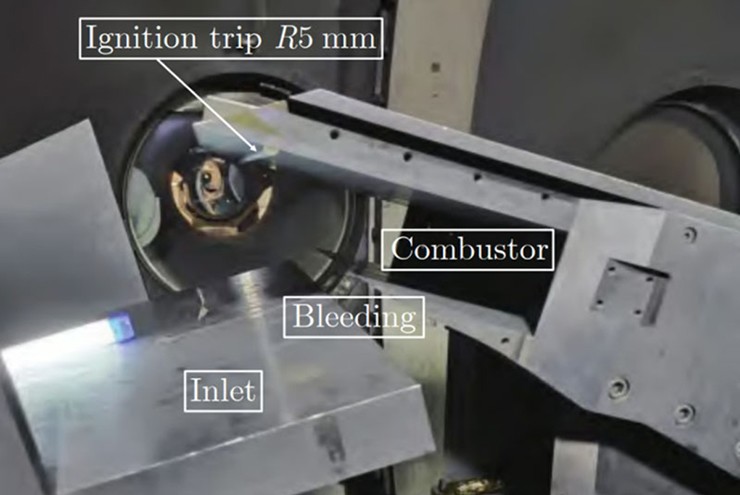
Prototype combustion chamber of the ODEW engine - Source: Chinese Academy of Sciences.
The project is part of China's ambitious plan to develop an aircraft capable of flying anywhere in the world within an hour, such as from Shanghai to Los Angeles in just one hour. The technology could also support reusable spacecraft in the atmosphere and orbit. Despite the many technological challenges, scientists have pledged to begin flight testing of the prototype before the end of 2025.
Final Thoughts
The most reliable way to handle china shows off engine that accelerates aircraft to 20,000km/h using. Kerosene is to follow the process in order, verify each important setting, and test the result before moving on. Use the guidance above as a practical reference, then adjust the details for your device, software version, or specific goal.
FAQ
What should I know first about China Shows Off Engine That Accelerates Aircraft to 20,000km/h Using. Kerosene?
They have successfully built the world's first internal combustion engine using conventional kerosene, a common fuel for aircraft.
How do I get the best results with China Shows Off Engine That Accelerates Aircraft to 20,000km/h Using. Kerosene?
Use current software or equipment, follow the steps in order, review the recommended settings, and test one change at a time so you can identify what improves the result.
What should I do if China Shows Off Engine That Accelerates Aircraft to 20,000km/h Using. Kerosene doesn't work as expected?
Check compatibility, permissions, connectivity, and version-specific settings. Restart the relevant device or app, then repeat the process carefully before trying a more advanced fix.
Related Articles
 Special Engine Helps Supersonic Aircraft Reach Speed of 11,113 Km/h4 minutes read
 No Engine but This Model Plane Can Fly Up to 881km/h!4 minutes read
 The World's Largest Jet Engine GE9X Made the First Flight4 minutes read
 AI: Complete Guide3 minutes read
 Special Cable, Only a Few Countries in the World Can Produce It Explained5 minutes read
 Sliding Cars with Soviet Aircraft Engines -- Like Fiction That3 minutes read
Reader Comments 0
Sign in with email or Google to join the discussion.