Table of Contents
Behavioral biometrics uses patterns in how a person interacts with a device or service—such as typing rhythm, touch gestures, mouse movement, navigation, and device handling—to estimate whether a session resembles that user's normal behavior.
Unlike a password or one-time face scan, these signals can be evaluated throughout a session. The system does not need to declare that a person is definitively genuine; it can assign risk and request another check when several changes appear at an important moment.
How behavioral biometrics works
A participating application collects permitted interaction signals, converts them into measurements, and compares the current session with a previously learned profile or population-level risk model. The output is normally one input to a broader fraud or authentication engine.
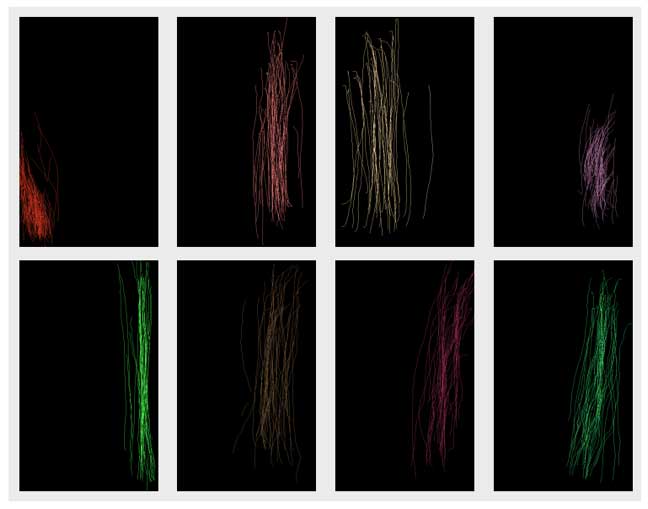
Possible signals include:
- Timing between keystrokes and how long keys are held
- Swipe direction, acceleration, duration, and curvature
- Mouse speed, pauses, and changes of direction
- Pressure or touch area where the device supports it
- Typical navigation path and time spent on familiar tasks
- Device orientation, motion, and changes in how it is held
- Copy-and-paste behavior and form-completion timing
One signal is rarely decisive. Fast typing may reflect a password manager, pasted text, assistive technology, or an experienced user rather than a bot. A useful system combines signals with context such as the device, transaction, session history, and existing account protections.
From research signal to production control
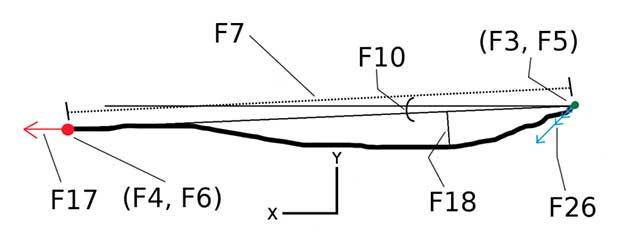
Academic projects have shown that touch and typing behavior can contain identifying information. For example, the Touchalytics research examined scroll and touch features from a small participant group. Such studies support the feasibility of the approach, but their reported results should not be treated as a guaranteed accuracy rate for every device, population, or real-world attack.
A production system has additional challenges: new users have little history, behavior changes over time, devices differ, attackers adapt, and legitimate customers use accessibility tools or receive help from another person. Performance must therefore be measured on the organization's own traffic and reviewed across relevant user groups.
Continuous and risk-based authentication
Traditional login verifies a credential at one point. Continuous authentication can continue evaluating risk after login—for example, when a user changes payment details, adds a recipient, or starts a high-value transfer.
If behavior and other context remain consistent, the application may avoid an unnecessary challenge. If risk rises, it can apply a proportionate response:
- Allow the low-risk action and continue monitoring
- Request a fresh authentication factor
- Limit a sensitive capability temporarily
- Send the event for fraud review
- Block the transaction when multiple strong indicators justify it
The response should reflect the action's impact. An unusual scroll should not lock an account by itself, while a new device, abnormal control pattern, and risky money transfer together may warrant stronger verification.
How it can help against account takeover
Passwords, session tokens, one-time codes, and devices can be stolen or remotely controlled. Behavioral monitoring may notice that the person operating the session navigates, types, or moves the pointer differently from the account's established pattern.
Remote-access fraud can be particularly difficult because a transaction may originate from the customer's genuine device after login. Behavioral and transaction signals can provide additional context, but no single technology is “the only reliable factor” once a device is compromised. Endpoint security, transaction controls, out-of-band verification, fraud operations, recovery procedures, and customer education remain necessary.
Advantages
- Passive monitoring: many signals can be collected without interrupting every user action.
- Session-wide coverage: risk can be reassessed after the initial login.
- Harder to steal directly: behavior is not a static secret that can simply be copied from a password database.
- Additional fraud context: the score can supplement device, network, credential, and transaction information.
- Adaptive friction: stronger checks can be reserved for higher-risk sessions and actions.
Limitations and risks
Behavior is not permanent
Injury, stress, age, a new keyboard, a changed device, travel, or a different working environment can alter normal interaction. Systems need profile updating and a safe way to recover from false rejection.
It is probabilistic
A behavioral score expresses similarity or risk, not identity with certainty. Both false acceptance and false rejection must be measured at thresholds that match the use case.
Accessibility must be designed in
Assistive input, tremors, one-handed use, voice control, switch devices, and shared assistance can produce different patterns. An inaccessible fraud system can exclude legitimate users or repeatedly subject them to extra challenges.
Behavioral data is sensitive
Fine-grained interaction telemetry can reveal more than authentication risk. Organizations should limit collection to a documented purpose, minimize retention, restrict access, protect data in transit and at rest, and explain the practice clearly. Applicable consent and biometric or privacy rules vary by jurisdiction.
Attackers can adapt
Automation can add human-like variation, and a determined attacker may observe or imitate aspects of a user's behavior. Models and rules require monitoring, red-team testing, and updates rather than being deployed once and assumed to remain effective.
Deployment checklist
- Define the fraud problem and action the score will inform.
- Document each signal, legal basis, retention period, and access rule.
- Test accuracy on representative devices, accessibility modes, and user groups.
- Combine the result with other independent risk and authentication controls.
- Set graduated responses and avoid irreversible action from a weak signal.
- Provide an understandable recovery and appeal path for legitimate users.
- Monitor drift, false positives, fraud loss, challenge rate, and customer impact.
- Reassess vendors, models, and data flows as attacks and regulations change.
Behavioral biometrics is best understood as an additional risk signal, not a new password or proof of identity. Used carefully, it can help detect unusual activity and reduce needless login friction. Used without transparency, testing, and alternatives, it can create privacy and accessibility problems of its own.
Related Articles
 What Kind of SSL Certificate Does Your Website Need?13 minutes read
 Secure the Installation of Ispconfig 3 with Certificate Class1 SSL13 minutes read
 What Is a Certificate Authority? What Is CA?5 minutes read
 From Today, Owning Linux LPI Certificate Will Be Easier!4 minutes read
 Apache 2 Supports Ssl // Tls: Step-by-step Instructions10 minutes read
 Configure Windows Server 2008 to Remotely Access Ssl VPN Server8 minutes read
Reader Comments 0
Sign in with email or Google to join the discussion.