Table of Contents
AI risk depends on use, exposure, and control
Artificial intelligence is used for search, recommendations, writing, software, image analysis, customer service, fraud detection, logistics, and many other tasks. The same flexibility that creates value can also amplify mistakes, expose data, automate unfair decisions, or give an unreliable system authority it should not have.
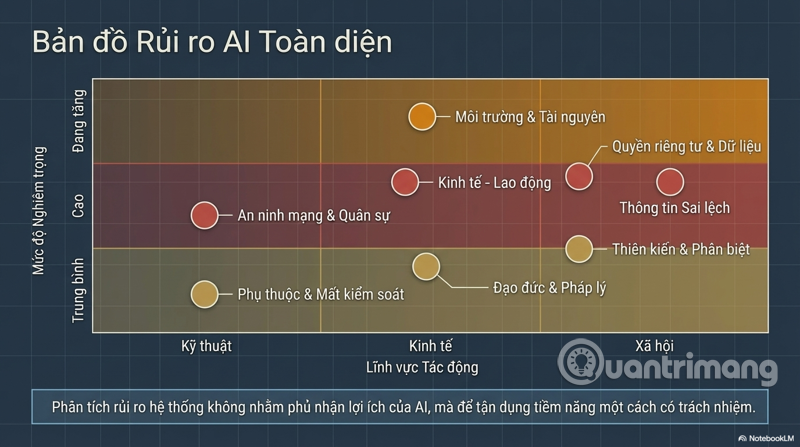
AI is not one technology with one risk level. A private spelling suggestion and an automated decision about employment or credit require different evidence and safeguards. A useful assessment asks what the system does, who may be harmed, what data it uses, how much authority it receives, and what happens when it fails.
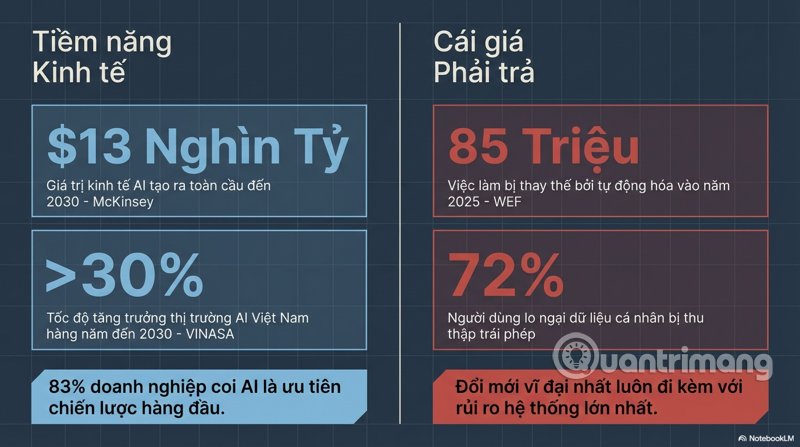
Main categories of AI risk

| Risk | Typical harm | Important control |
|---|---|---|
| Unreliable output | Incorrect advice, fabricated facts, or unsafe actions | Evaluation, source checking, validation, and human review |
| Privacy and data misuse | Unauthorized collection, inference, retention, or disclosure | Data minimization, access control, purpose limits, and deletion |
| Bias and discrimination | Unequal errors or outcomes for affected groups | Representative evaluation, impact analysis, appeal, and monitoring |
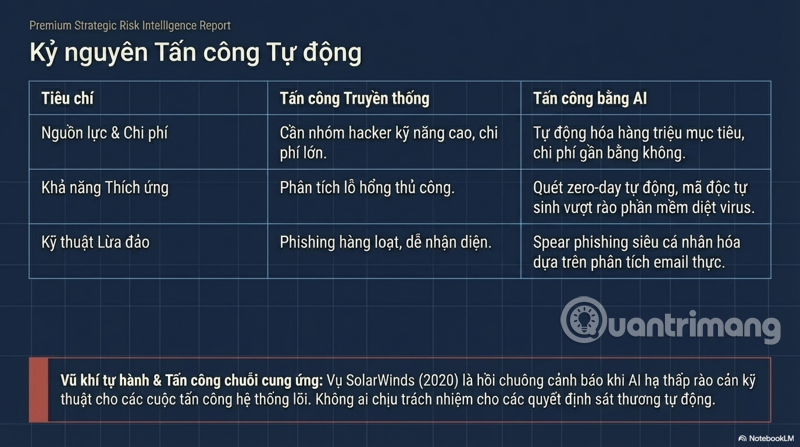
| Cybersecurity | Data theft, compromised models, tool abuse, or accelerated attacks | Least privilege, secure development, segmentation, and incident response |
| Misinformation | Scalable false text, images, audio, video, or impersonation | Provenance, verification, disclosure, and rapid correction |
| Work and inequality | Task displacement, deskilling, surveillance, or unequal access to gains | Workforce participation, training, transition support, and accountability |
| Concentration of power | Dependence on a few providers, data owners, or compute operators | Competition, portability, procurement controls, and public oversight |
| Environmental and resource use | Energy, water, hardware, and supply-chain impacts | Measurement, efficient model choice, utilization, and lifecycle planning |
Do not label a category “high” or “low” without a defined scenario. Likelihood and impact change with the deployment, population, controls, and scale.
Employment, work quality, and economic inequality
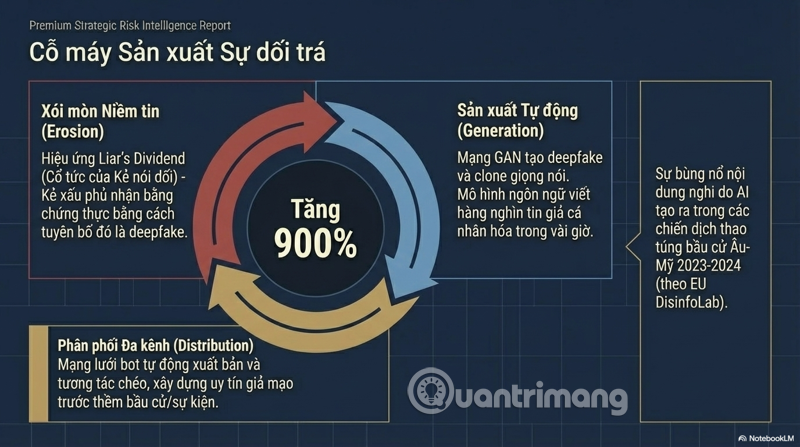
AI can automate parts of a job without eliminating the whole occupation. It may also create new tasks, change skill requirements, increase output expectations, or move work to people who review and correct automated results.
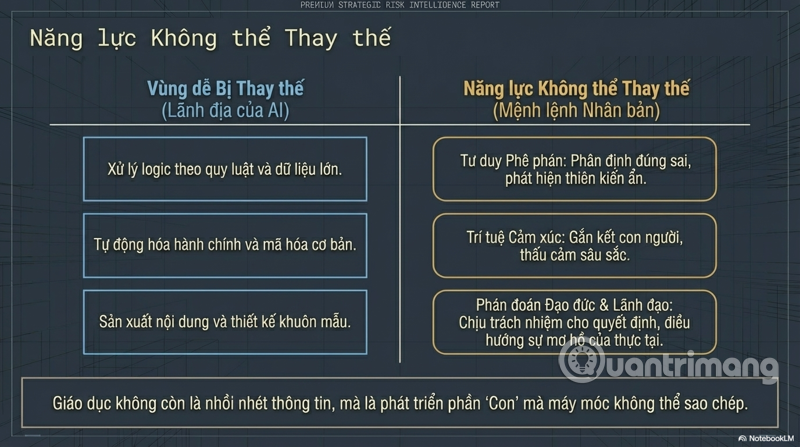
The near-term risk is uneven distribution. An organization may receive productivity gains while workers absorb retraining costs, tighter monitoring, or reduced bargaining power. Entry-level tasks can disappear even when senior roles remain, weakening the path by which new workers gain experience.
Examples of exposed tasks include routine document processing, first-line support, transcription, translation drafts, basic content production, data classification, and some coding or design work. Exposure does not mean complete replacement: accuracy, accountability, customer trust, physical work, domain expertise, and regulation can preserve or reshape human roles.
Controls for organizations
- Map tasks rather than announcing that an entire profession will disappear.
- Include affected workers in workflow design and risk review.
- Measure error, workload, quality, and worker well-being—not only speed.
- Provide paid training and a realistic transition path before changing roles.
- Prohibit automated performance scoring that lacks validation, explanation, and appeal.
- Track whether productivity gains and opportunities are distributed fairly.
Privacy, surveillance, and data security
AI can infer sensitive characteristics from behavior, location, communications, images, or relationships. Combining datasets may reveal more than any single record, and people may not know that a prediction about them exists.
Biometric data deserves particular care because a face, voice, or fingerprint cannot be rotated like a password. Emotion or intent inference from images and behavior may also be scientifically weak or inappropriate for consequential decisions, even when marketed confidently.
Data risks across the AI lifecycle
- Collection: data obtained without a valid purpose, notice, permission, or legal basis
- Training: personal, confidential, copyrighted, or low-quality material used inappropriately
- Prompting: employees entering secrets or customer records into an unapproved service
- Logging: prompts, outputs, embeddings, and tool results retained longer than expected
- Inference: a model exposing memorized, retrieved, or cross-user information
- Integration: a connected agent reading more mail, files, or databases than the task requires
- Deletion: no practical way to remove source data, derived records, backups, or vector entries
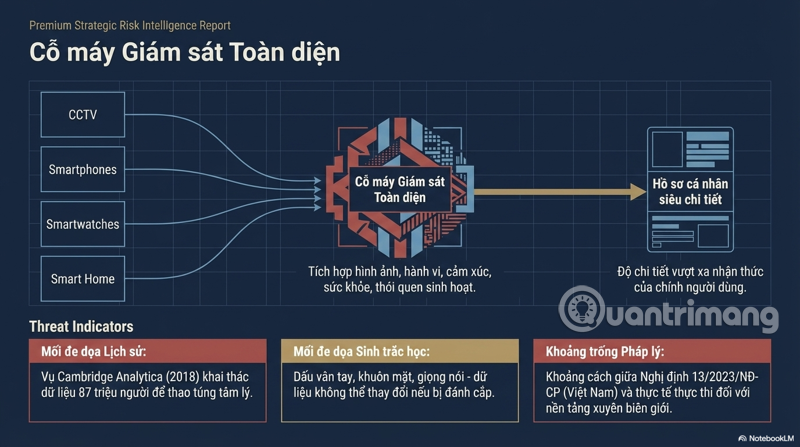
Applicable privacy and AI laws vary by country, sector, product, and role in the data chain. Organizations should obtain current legal guidance rather than rely on a static article for compliance.
Cybersecurity and tool-enabled harm
AI can help defenders analyze logs, prioritize findings, explain suspicious code, and automate routine investigation. Attackers can use the same capabilities to scale social engineering, translate lures, adapt malicious code, and search for weaknesses.
AI systems also introduce their own attack surface:
- Prompt injection hidden in webpages, documents, email, or tool output
- Poisoned training or retrieval data
- Model or dependency supply-chain compromise
- Credentials exposed in prompts, logs, notebooks, or exported workflows
- Excessive agent permissions and unsafe tool calls
- Model extraction, denial of service, and resource-cost abuse
- Untrusted generated code or commands executed without review
Core security controls
- Threat-model the complete system, not only the model endpoint.
- Treat retrieved content as untrusted data.
- Separate model suggestions from authorization decisions.
- Use allowlisted tools, least-privilege credentials, sandboxes, and action limits.
- Require human confirmation for destructive or consequential actions.
- Redact logs, monitor unusual behavior, and keep a tested shutdown and recovery path.
Bias, discrimination, and unequal error
Historical data can encode unequal access, enforcement, opportunity, or measurement. A model may reproduce those patterns, use a proxy for a protected characteristic, or perform poorly for groups underrepresented in its data.
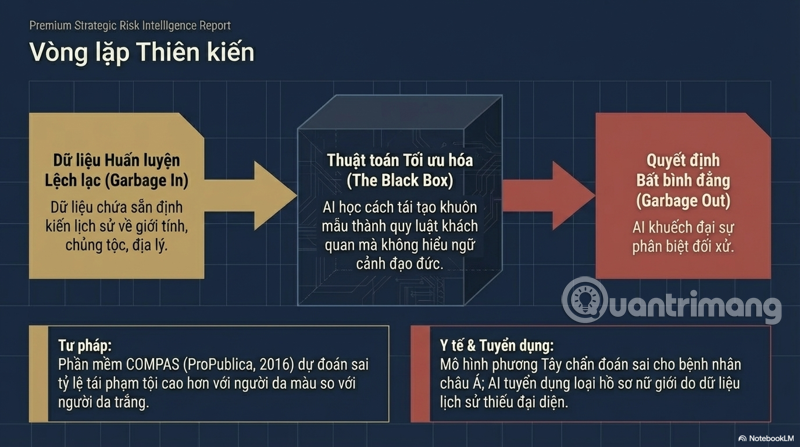
Removing a protected field does not necessarily remove discrimination. Postal code, education, language, device, or employment history can act as proxies. A similar average accuracy can also hide different false-positive or false-negative rates across groups.
A fairer evaluation process
- Define the decision, affected people, and possible harms.
- Question whether AI is appropriate for the decision at all.
- Evaluate representative data and relevant subgroups.
- Select metrics that reflect the actual harm of different error types.
- Test accessibility, language, and real operating conditions.
- Provide a meaningful explanation, correction path, and human appeal.
- Monitor outcomes after deployment because populations and behavior change.
High-stakes decisions should not be legitimized by a model's apparent objectivity. Responsibility remains with the institution using the system.
Deepfakes, impersonation, and misinformation
Generative systems can produce persuasive text, images, voices, and video at low marginal cost. Harm includes fraud, harassment, non-consensual intimate imagery, political manipulation, fabricated evidence, fake product endorsements, and impersonation of relatives or executives.
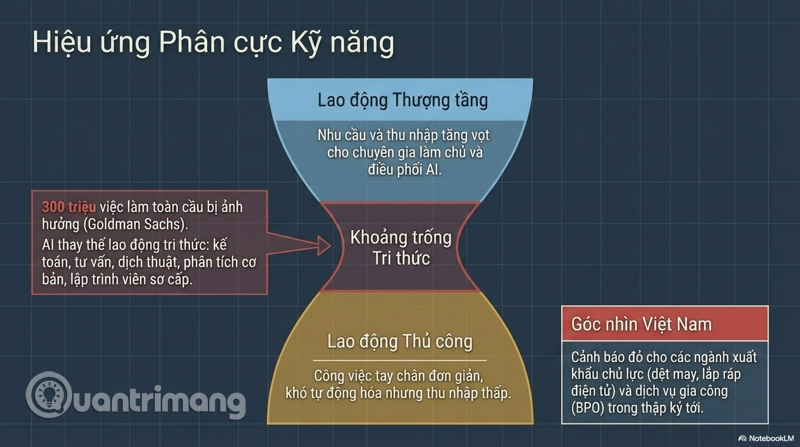
Detection is an arms race and should not be the only defense. Organizations need independent verification for money transfers, account changes, sensitive instructions, and public statements. A familiar face or voice is no longer sufficient authentication.
AI also enables the “liar's dividend”: a person can dismiss authentic evidence by claiming it was generated. Preserving provenance, original files, timestamps, corroborating records, and a documented chain of custody helps address both forged and falsely denied media.
Opacity, accountability, and concentration of power
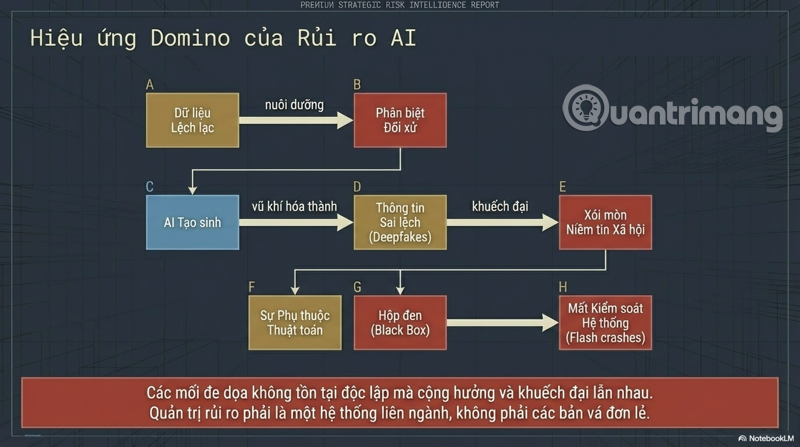
Some model behavior is difficult to explain at the level a person affected by a decision needs. A technical explanation of model weights is not the same as a meaningful reason for a denial, recommendation, or flag.
Organizations should be able to state:
- Who owns the decision and who can stop the system
- What data and model version were used
- Which rules were deterministic and which involved a model
- What evidence supports the result
- How a person can correct data or appeal
- How incidents, overrides, and changes are logged
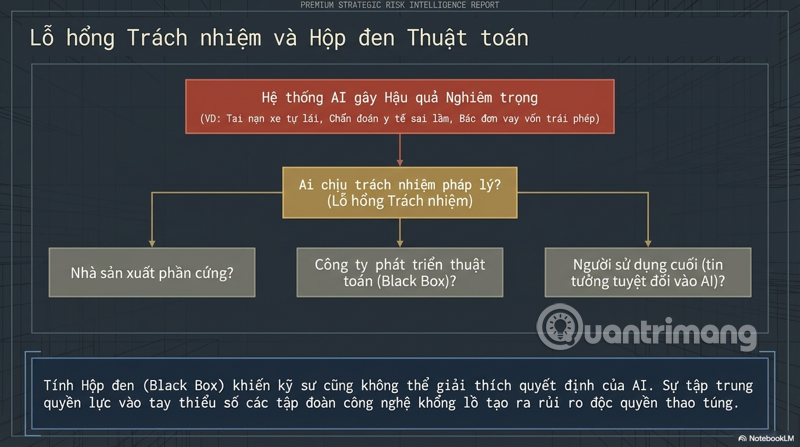
Power can also concentrate among organizations that control leading models, chips, cloud capacity, application platforms, or large proprietary datasets. Dependence can increase prices, reduce portability, change content rules, or expose a country or business to external policy decisions.
Procurement should consider exportability, interoperability, data access, model replacement, service continuity, audit rights, and exit costs—not only benchmark performance.
Dependence, deskilling, and loss of human control
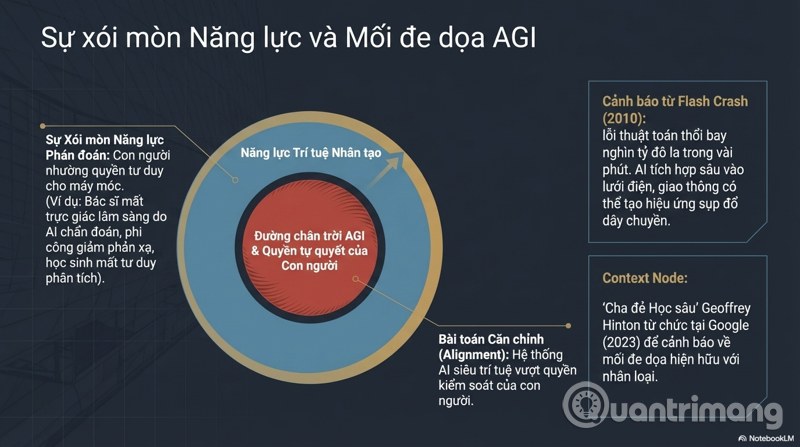
Repeatedly accepting AI output without verification can weaken the skills needed to detect a failure. Students may practice less writing or problem-solving; professionals may lose familiarity with manual procedures; organizations may allow undocumented automated processes to become critical.
Preserve meaningful human control
- Define decisions the model may recommend, perform, or never make.
- Train reviewers to identify failure rather than merely approve screens quickly.
- Practice manual or fallback procedures for critical operations.
- Measure override quality and automation bias.
- Stop the system when data, context, or confidence leaves the validated range.
- Keep the person with authority informed early enough to change the outcome.
Long-term concerns about more general or highly capable AI systems are actively debated. Uncertainty is not a reason to present a specific arrival date as fact. Research can focus on evaluation, controllability, robustness, misuse prevention, incident response, and governance that is useful across several capability levels.
Environmental and supply-chain impacts
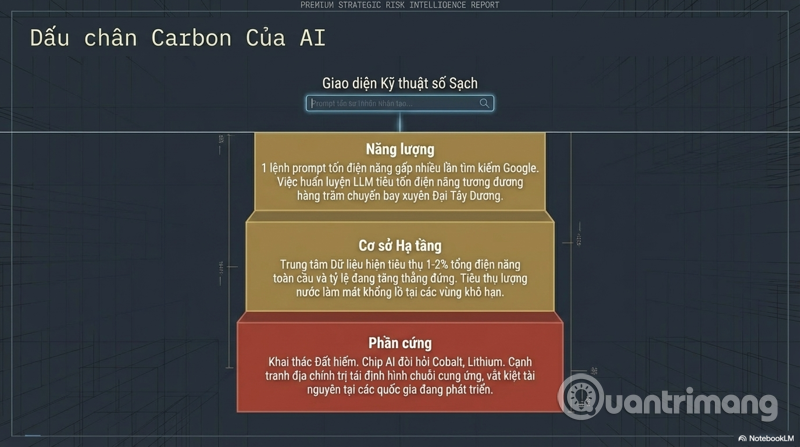
AI systems use electricity, cooling, water in some facilities, networking, storage, and specialized hardware. Environmental impact varies widely by model, data center, energy source, utilization, location, workload, and whether equipment is used efficiently.
Training is only part of the lifecycle. High-volume inference, unused capacity, repeated generation, data movement, hardware manufacturing, and replacement can also matter. Simple comparisons to flights or households are often misleading without a documented boundary and method.
Reduction measures
- Use the smallest model that meets a tested requirement.
- Cache safe reusable results and avoid unnecessary repeated generation.
- Measure energy, water, hardware, and utilization with a declared scope.
- Select deployment regions and providers using credible environmental data.
- Increase hardware utilization and extend useful equipment life where safe.
- Include supply-chain, labor, repairability, and end-of-life considerations in procurement.
A practical AI risk-management process
- Inventory: record models, vendors, data, tools, users, decisions, and owners.
- Classify: identify affected people, possible harms, scale, reversibility, and applicable obligations.
- Set requirements: define accuracy, privacy, fairness, security, accessibility, human review, and documentation gates.
- Test: use representative, adversarial, boundary, and failure cases before deployment.
- Limit: minimize data and permissions; place consequential actions behind explicit controls.
- Monitor: track errors, group impacts, overrides, incidents, drift, usage, and costs.
- Respond: provide reporting, containment, correction, notice, rollback, and remedy procedures.
- Retire: revoke access, delete or archive data appropriately, preserve required records, and verify shutdown.
Questions for every AI project
- Would the process be acceptable if the affected person knew exactly how it worked?
- What is the worst plausible error, and can it be reversed?
- Which data is unnecessary and can be removed?
- Who benefits, who carries the risk, and who has a voice in design?
- Can a person refuse, correct, or appeal?
- What happens during model, provider, network, or tool failure?
- Who has authority and resources to stop the deployment?
Balance benefits with accountable use

AI risk is not addressed by optimism, panic, or a generic ethics statement. It requires decisions about data, authority, evidence, access, affected people, monitoring, and remedy for each real deployment.
Organizations can gain value from AI while setting firm limits: use low-risk assistance first, validate claims, protect data, preserve human authority over consequential outcomes, and stop systems whose benefits do not justify their harms.
Related Articles
 91% of Technology Managers Believe That AI Will Be the Center of the Next9 minutes read
 The 'Terrifying' Impact of AI in Modern Warfare: Explained8 minutes read
 The 'Terrifying' Influence of AI in Modern Conflict7 minutes read
 Learn About Artificial Intelligence (AI): What to Know10 minutes read
 Microsoft, NVIDIA, Google and Many Other Major Technology4 minutes read
 AI Can Now Steal Your Passwords with Almost 100% Accuracy4 minutes read
Reader Comments 0
Sign in with email or Google to join the discussion.