Table of Contents
This updated guide examines Malware: Appeared Malicious Software 'Clones' Famous Software and organizes the essential facts, background, and practical takeaways in clear American English.
Responsible-use note: Apply security techniques only to systems you own or are explicitly authorized to test.
The targeted 'bad' software this time is the Office ® 2010 Beta version. Just a week after the counterfeit software test of Windows 7, this time hackers launched a new fake Trojan, Office 2010.
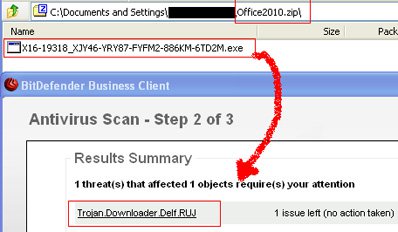
The fake trojan hid under the shadow of Office 2010 is advertised on the Internet with very attractive titles to attract curious users to download. This malicious phishing product also promises to save users' time by attaching a beta version to the message as a compact zip file. This convenience makes many people eager to download and trap.
When extracting this file, security experts obtained an exe file named after the key to activate the Office® 2010 Beta version. BitDefender's global data security analysis identified it as Trojan. Downloader. Delf. RUJ , a malware running on a Windows platform designed to infiltrate a user's computer, secretly opening a path guide. When the 'entrance' is wide open, a large amount of adware and spyware will spill into your computer, creating countless popup ads.
After installation, the Trojan creates a copy of itself and modifies the registry to run the corresponding copies each time Windows starts. Then it tries to connect to an IP address to download other malicious files. Trojan. Downloader. Delf. RUJis becomes an extremely dangerous threat to personal data and financial data.
To ensure safety, BitDefender recommends that users download the software from the official vendor's website, not from unknown sites. Besides, an indispensable operation is to scan attachments with antivirus software strong enough before opening them.
FAQ
What is Malware: Appeared Malicious Software 'Clones' Famous Software about?
It provides a structured overview of Malware, explains the main context, and highlights practical takeaways for readers.
Why does this topic matter?
Understanding the main concepts helps readers evaluate the issue, avoid common mistakes, and make better-informed decisions.
How should readers use this information?
Use the guidance as a practical starting point, confirm details that may have changed, and follow current product, safety, or security recommendations.
Related Articles
 the New Facebook Virus, a Malicious Code That Is Spreading Rapidly Through4 minutes read
 After WannaCry, Petya's 'Extortion' Malicious Code Is Raging, This Is a Remedy to Prevent10 minutes read
 Dirty SEO: Complete Guide3 minutes read
 Appeared Software Can Penetrate Icloud, Google Drive3 minutes read
 Top 10 Most Dangerous Malicious Codes in December 20061 minutes read
 Risk of Ransomware Infection When Downloading Crack Software3 minutes read
Reader Comments 0
Sign in with email or Google to join the discussion.