Table of Contents
Use a charger approved for your laptop, keep its vents clear, and enable a charge limit if the manufacturer provides one and you spend most of the day plugged in. A new lithium-ion laptop battery does not need three long charge-and-discharge cycles before normal use.

Charge during use when you need to
You can use the laptop while it charges. For gaming or editing, use the manufacturer’s recommended adapter so the laptop gets enough power. On USB-C models, check the required USB Power Delivery wattage and the cable’s rating. A charger that fits may still supply too little power.

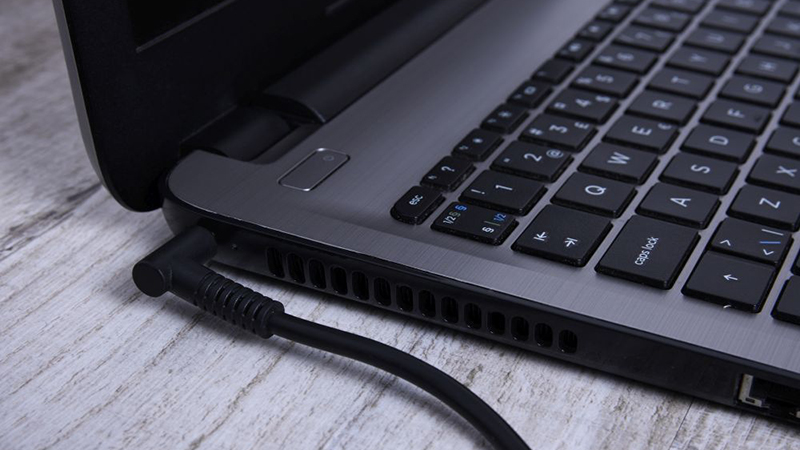
Use a charge limit if the laptop spends most of its time plugged in
Look in the manufacturer’s utility or firmware for battery conservation, Smart charging, or a charge threshold. The laptop may intentionally stop below 100%. See Microsoft’s explanation of Smart charging. If you need maximum runtime for travel, check whether your utility lets you charge to full temporarily.
Avoid heat and unnecessary full discharges
Keep the laptop on a hard surface with room around the vents. Recharge when it is convenient, and avoid deliberately running the battery to shutdown as a routine. If the percentage jumps or the laptop turns off unexpectedly, use the manufacturer’s diagnostic guidance before trying any calibration. Calibration can help the indicator estimate charge. It cannot restore worn battery capacity.

Store it partly charged and check wear over time
For long-term storage, power the laptop off and follow the manufacturer’s instructions. Some, including Apple, recommend storing the battery around half charged in a cool, dry place. If runtime falls noticeably, compare design capacity with full charge capacity in a Windows battery report. If the case or trackpad is bulging, stop using the laptop and contact the manufacturer for battery service.

Related Articles
 We have been charging the wrong way for a long time
 10 notes to properly charge your laptop battery from the beginning
 How to properly charge your laptop battery
 Is it okay to charge the battery while using the laptop? Do you make battery bottles?
 Prevent iPhone battery damage, how to properly charge iPhone and iPad batteries
 Extend the life of Laptop batteries
Reader Comments 0
Sign in with email or Google to join the discussion.