Table of Contents
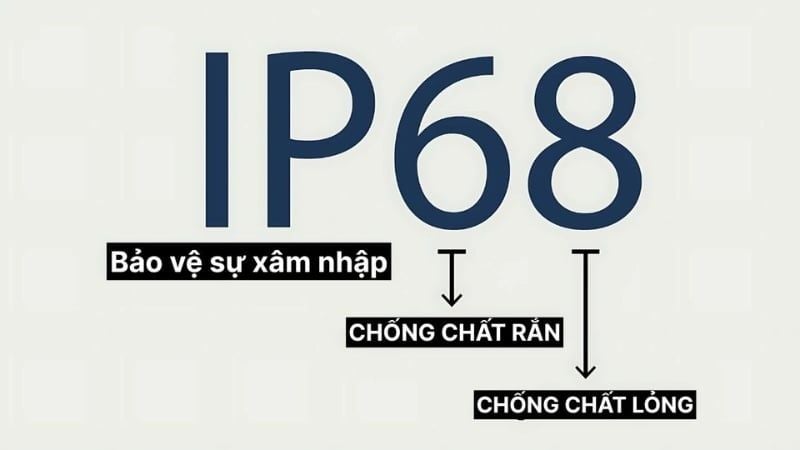
An IP rating tells you how an electrical enclosure was classified against access, solid objects, dust, and water. In a code such as IP68, the first numeral describes solids protection and the second describes water protection. It does not guarantee that a device is safe in every wet or dusty environment.

What does IP stand for?
IP means Ingress Protection. The classification comes from IEC 60529, the International Electrotechnical Commission standard for enclosure protection. It replaces vague terms such as “weatherproof” with defined test categories.
The basic form is:
IP [solids numeral] [water numeral]
An X means that a protection level is not specified for that position. IPX4, for example, declares water protection at level 4 but does not declare a solids level. X does not mean zero protection.
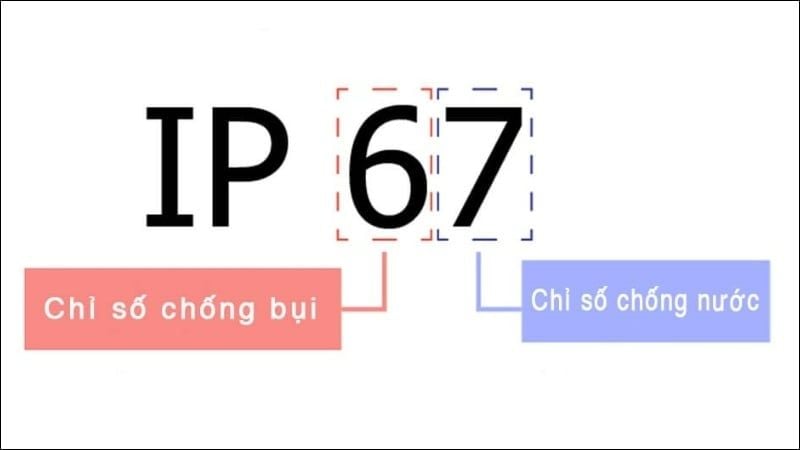
First numeral: access, solid objects, and dust
| Numeral | General meaning |
|---|---|
| 0 | No protection specified. |
| 1 | Protected against solid objects 50mm and larger. |
| 2 | Protected against solid objects 12.5mm and larger. |
| 3 | Protected against solid objects 2.5mm and larger. |
| 4 | Protected against solid objects 1mm and larger. |
| 5 | Dust-protected: limited ingress is permitted, but not enough to interfere with operation or safety. |
| 6 | Dust-tight under the specified test. |
The first numeral also relates to preventing access to hazardous parts with test probes. Consumer summaries often mention only dust, but the standard's enclosure-safety role is broader.
Second numeral: water protection
| Numeral | General meaning |
|---|---|
| 0 | No protection specified. |
| 1 | Vertically falling water drops. |
| 2 | Dripping water while the enclosure is tilted up to 15 degrees. |
| 3 | Spraying water at angles covered by the test. |
| 4 | Splashing water from any direction. |
| 5 | Water jets. |
| 6 | Powerful water jets. |
| 7 | Temporary immersion under standardized conditions. |
| 8 | Continuous immersion under conditions specified by the manufacturer and agreed with the user. |
| 9 | High-pressure, high-temperature water jets. |
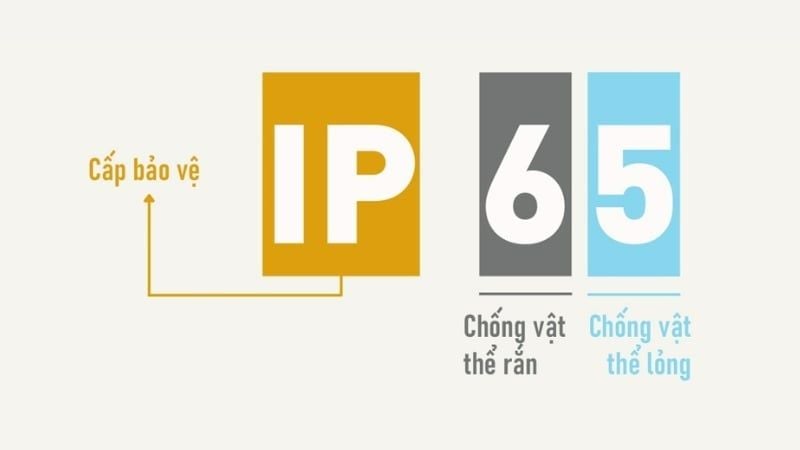
Each level has a defined test method; the numeral is not simply a depth or pressure score. Passing immersion testing does not automatically prove resistance to jets, steam, surf, or moving water unless the product carries the relevant additional rating.
Common ratings in practical terms
IPX4 and IP54
Both declare level-4 splash protection. IP54 additionally declares level-5 dust protection. These ratings suit accidental splashes and ordinary dust but not rinsing, jets, or immersion. See the detailed IP54 explanation for its limits.
IP65
IP65 is dust-tight and tested against water jets. It may suit some outdoor equipment, but the product still needs suitable temperature, UV, corrosion, drainage, cable-gland, and installation specifications. IP65 alone does not mean “safe outdoors forever.”
IP67
IP67 is dust-tight and provides temporary immersion protection under the IPX7 test conditions. Consumer documentation commonly describes up to 1 meter for 30 minutes, but the product manual remains the authority for permitted use.
IP68
IP68 is dust-tight and rated for continuous immersion under conditions declared by the manufacturer. The numeral does not itself specify one universal depth or duration. Two IP68 phones can therefore have different manufacturer-stated limits.

IP67 vs. IP68
The solids level is the same: both are dust-tight. The difference is the water test. IP67 uses the standardized temporary-immersion category; IP68 uses manufacturer-specified continuous-immersion conditions that must be more severe than the IPX7 test.
This does not automatically make an IP68 device suitable for swimming, diving, saltwater, or high-speed water sports. Those uses can add pressure, motion, chemicals, impacts, and temperatures outside the laboratory conditions.
How to choose an IP rating
| Likely exposure | What to verify |
|---|---|
| Sweat and light rain | A suitable splash rating and explicit manufacturer approval for the intended wearable or audio use. |
| Outdoor dust and rain | Dust protection, jet or rain exposure, operating temperature, UV resistance, and correct installation. |
| Temporary accidental immersion | An immersion rating plus the maker's depth, time, and liquid restrictions. |
| Regular underwater use | A product designed for that activity, with depth/pressure specifications—not merely a phone IP code. |
| Industrial washdown | Jet pressure, temperature, chemicals, connectors, seals, and the exact required standard. |
Use the completed product's rating, not the rating of one component. A correctly rated enclosure can lose protection when a port cover is open, a cable gland is wrong, or assembly instructions are ignored.
What IP ratings do not cover
- drop, impact, scratch, or crush resistance;
- saltwater, chlorine, soap, oil, solvents, or other chemicals;
- corrosion, fungus, condensation, UV exposure, or extreme temperatures;
- warranty coverage for liquid damage;
- protection after the enclosure is bent, repaired, or worn.
What to do if a device gets wet
- Remove it from the liquid and disconnect external power.
- Follow the manufacturer's shutdown instructions if it can be done safely.
- Wipe the outside with a soft, lint-free cloth.
- Place ports downward and let the device dry with natural airflow.
- Do not charge it until the maker's recommended drying period has passed.
- Avoid high heat, compressed air, and inserting objects into connectors.
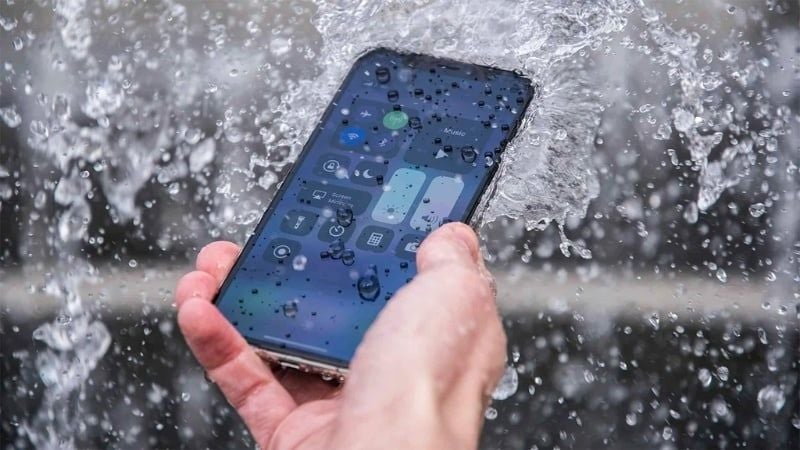
If the liquid was salty, sugary, corrosive, or contaminated, obtain product-specific service advice. Rice is not a reliable repair method and can introduce particles into ports.
Why water damage may not be covered
A rating reports performance of test samples under defined conditions; it is not automatically a warranty against every liquid incident. Wear, impacts, open covers, unsupported liquids, and exposure beyond the test can invalidate assumptions about protection. Read the written warranty rather than inferring coverage from the IP number.
Bottom line
Read both numerals, then check the manufacturer's exact conditions. IP54 handles dust and splashes, IP65 adds jet protection, IP67 covers temporary immersion, and IP68 uses manufacturer-defined continuous-immersion conditions. None of them replaces instructions for the actual product and environment.
Related Articles
 What Is IP54?7 minutes read
 Close-up of the Water and Impact Resistance Test for Apple's3 minutes read
 What Is the Mil-std 810 Durability Standard? Is This an Important4 minutes read
 IP Indicator for Water and Dust on Smartphone Everyone Needs to6 minutes read
 The ThinkPad X1 'Lost Points' Because of Its Ability to Resist Water3 minutes read
 Tips for Finding Effective Information on Google6 minutes read
Reader Comments 0
Sign in with email or Google to join the discussion.