Table of Contents
This updated guide examines What Is a Lunar Eclipse? Lunar Eclipse Occurs When? and organizes the essential facts, background, and practical takeaways in clear American English.
What is a lunar eclipse?
First we need to know that the Moon does not emit light itself. We can see the only natural satellite of this Earth is because the Moon reflects the light of the Sun shining on it.
However, by the time the Moon, Earth, and the Sun align, the light of the Sun that reaches the Moon is blocked by the Earth, which means that the Moon is hidden behind the Earth's shadow so it becomes darker. The moment and phenomenon are called lunar eclipses.

Because the Earth is only partially blocking sunlight, a lunar eclipse can only occur when the Moon passes through certain parts of the Earth's shadow.
Thus, a lunar eclipse can only occur on the occasion of the full moon and when the Moon passes through some areas of the Earth's shadow.
Lunar eclipse classification
Total lunar eclipse
This happens when the Moon enters the shadow region (Umbra) of the Earth. At that time, the Moon will be completely obscured.
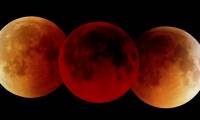
When the total lunar eclipse took place, only the long-wavelength Sun (red, orange) rays hit the Moon, short-wavelength light rays were blocked by the atmosphere at the edge of the Earth. The Moon reflects this red, orange light, when viewed from Earth we will see the Moon as dark red. This phenomenon is called the blood moon.

The total lunar eclipse usually takes up to about 104 minutes (often recurring).
Half-moon lunar eclipse
This happens when the Moon enters the semi-dark region (Penumbra) of the Earth, so the brightness of the planet only decreases slightly. The partial lunar eclipse is difficult to observe with the naked eye.
Partial lunar eclipse
This astronomical phenomenon occurs when the Sun, the Earth and the Moon lie on a near-straight line. At that time, the Moon was partially missing due to only part of the shadow region of the Earth.
- See the last bunch of eclipse photos of the decade in Vietnam and many parts of the world
- Detecting UGC 2885, the giant spiral galaxy, 2.5 times larger than the Milky Way galaxy
FAQ
What is What Is a Lunar Eclipse? Lunar Eclipse Occurs When about?
It provides a structured overview of What is a lunar eclipse, explains the main context, and highlights practical takeaways for readers.
Why does this topic matter?
Understanding the main concepts helps readers evaluate the issue, avoid common mistakes, and make better-informed decisions.
How should readers use this information?
Use the guidance as a practical starting point, confirm details that may have changed, and follow current product, safety, or security recommendations.
Related Articles
 The Strange Object Appeared in the Picture of the Lunar Eclipse in Hanoi3 minutes read
 Why Is the Moon Red Like Blood When the Total Lunar Eclipse Occurs3 minutes read
 What Is a Solar Eclipse? When Does a Solar Eclipse Take Place?3 minutes read
 3 Super Computers Create Eclipse Eclipses That Help You Preview3 minutes read
 How to Download Eclipse3 minutes read
 Phenomenon - the Annular Eclipse Glows in the Sky Today7 minutes read
Reader Comments 0
Sign in with email or Google to join the discussion.