Table of Contents
This updated guide examines Detecting Ugc 2885, a Giant Spiral Galaxy, 2.5 Times Larger Than and organizes the essential facts, background, and practical takeaways in clear American English.
Galaxy UGC 2885 is located in the northern constellation Perseus, about 232 million light-years from Earth. At the center of this galaxy is a supermassive black hole.
The UGC is about 2.5 times wider than our own Milky Way Galaxy. It contains about one trillion stars, 10 times more than the Milky Way.
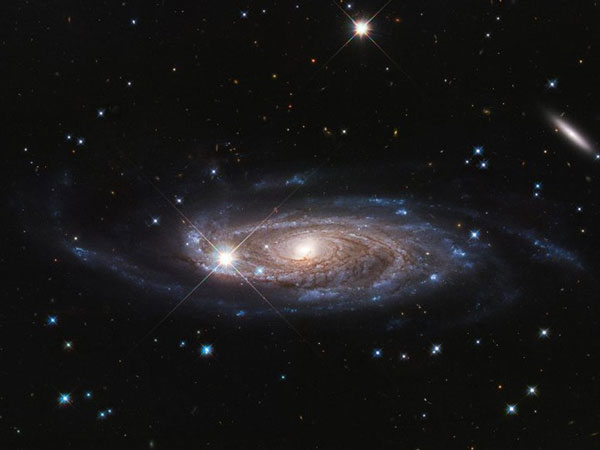
NASA nicknamed UGC 2885 the "Godzilla galaxy" (the monster in the film of the same name). Scientists still don't know why the galaxy UGC 2885 is so large.
Scientists have known UGC 2885 for decades. Since the 1980s, astronomer Vera Rubin has measured its rotation orbit to study dark matter.
On January 5, 2020, scientists presented UGC 2885 research results at the 235th meeting of the American Astronomical Society in Hawaii.
To analyze the central part of the galaxy UGC 2885 as well as the globular cluster population, researchers can use James Webb in the near-field infrared field telescope (WFIRST) in the near future.
- The Earth is losing mass despite receiving 43 tons of dust from other planets every day
- The discovery of a giant black hole, 70 times the mass of the Sun in the Milky Way, challenges every theory
FAQ
What is Detecting Ugc 2885, a Giant Spiral Galaxy, 2.5 Times Larger Than about?
It provides a structured overview of UGC 2885, explains the main context, and highlights practical takeaways for readers.
Why does this topic matter?
Understanding the main concepts helps readers evaluate the issue, avoid common mistakes, and make better-informed decisions.
How should readers use this information?
Use the guidance as a practical starting point, confirm details that may have changed, and follow current product, safety, or security recommendations.
Related Articles
 Discovery of an Ancient Spiral Galaxy Dubbed the 'monster' of the Universe5 minutes read
 It Turns Out This Is How the Galaxy Milky Way Formed 13.5 Billion3 minutes read
 NASA Discovers Second Milky Way Galaxy at the Edge of the Solar System5 minutes read
 The Discovery of a Giant Black Hole, 70 Times the Mass of the Sun3 minutes read
 Admire the Image of Spiral Galaxy NGC 60004 minutes read
 The Mysterious Bubble That Appears in the Center of the Milky Way Galaxy Is4 minutes read
Reader Comments 0
Sign in with email or Google to join the discussion.