The above flight was carried out on August 19 and 20. To change speed and direction in space, the JUICE spacecraft first uses the Moon's gravity and then uses Earth's gravity.
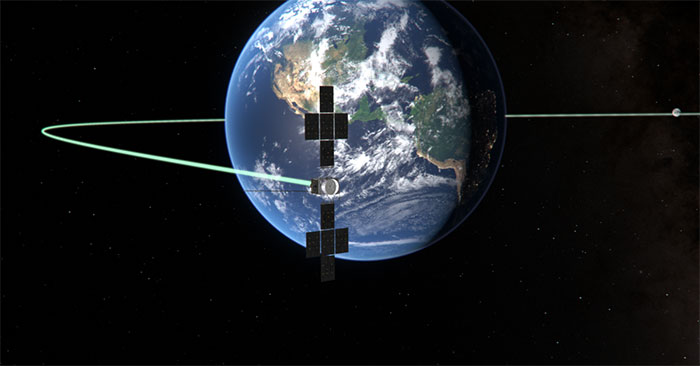
The JUICE spacecraft increased its speed by 0.9km/s by flying past the Moon, faster than flying past the Sun. After that, the spacecraft headed towards and flew past the Earth, causing JUICE to slow down by 4.8km/s compared to the Sun and deflect JUICE's direction by 100 degrees compared to the previous flight path, bringing this spacecraft to the Sun. a new orbit towards Venus.
Jupiter is on average 800 million km from Earth. It would take 60,000kg of propellant on board to send JUICE straight to the giant planet without a huge rocket. This will mean JUICE will need to carry a large amount of propellant to slow the spacecraft down enough to enter orbit around Jupiter when it arrives.
In April 2023, JUICE was launched into orbit by an Ariane 5 rocket from the Kourou spaceport in Guiana, an overseas territory of France.
As expected, JUICE will pass by Earth and Venus to reach Jupiter on an 8-year journey.
This spacecraft will make detailed observations of Jupiter, along with its three giant moons, Ganymede, Callisto and Europa.



Reader Comments 0
Sign in with email or Google to join the discussion.