Table of Contents
This updated guide examines Surgical Cable Charging Iphone Fake Goods and Genuine Goods to and organizes the essential facts, background, and practical takeaways in clear American English.
Let's surgery on two iPhone charger cables, one genuine, cost about 20 USD and a product with the same design but cheap, only 1.5 USD to see how different they are.
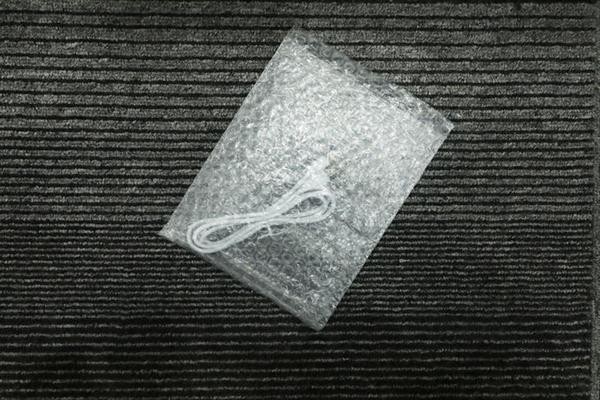
First, the cheap cable is only covered by a layer of plastic bags on the outside instead of in a box like a genuine product.

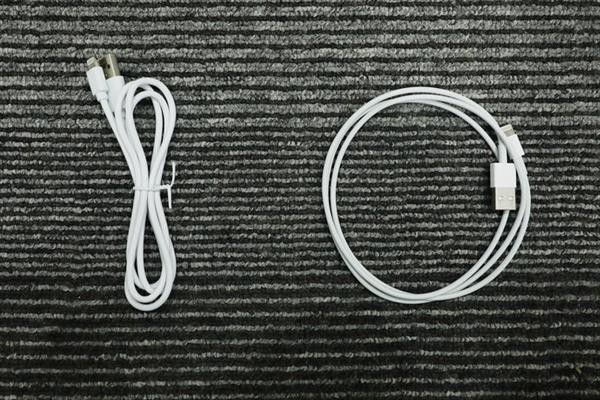
These two types of cables have different softness. In the picture above, on the left is a cheap, soft, weak wire, and when it is dropped on the table, it almost collapses. Meanwhile, genuine wires (right) are still soft enough but no less rugged.
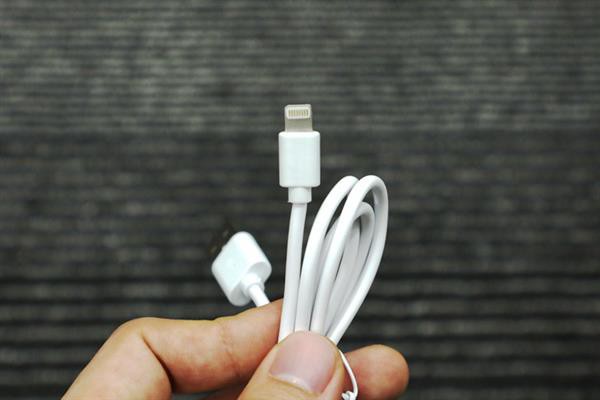
From the outside it can be seen that the plug has a certain inclination to the wire, not completely perpendicular.
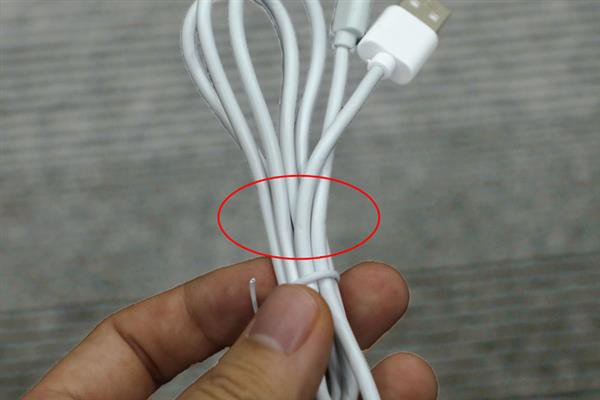
Cables are usually tied with metal-core wire with plastic wrap. When removed, on low-cost wires there will be marks squeezed by this type of lanyard.
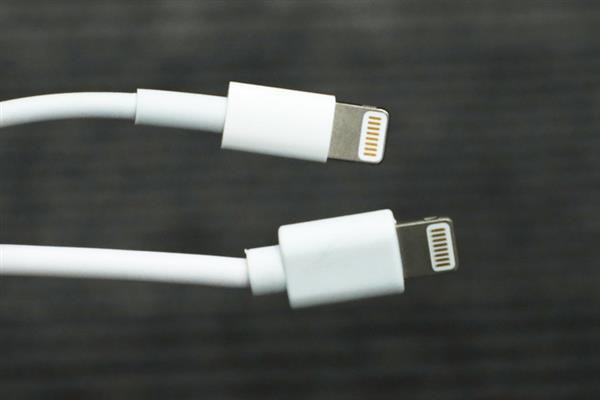
When placing these two cables side by side (the top is genuine, the bottom is the cheap cable), we can see the huge difference comes from the plastic material and the inclination of the plug.
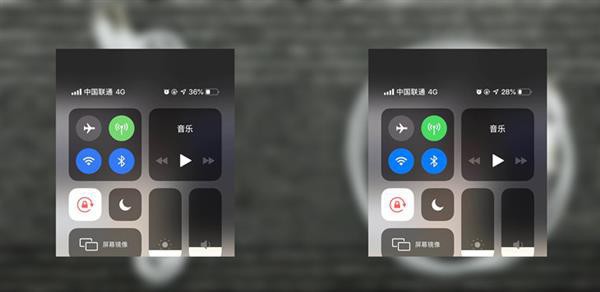
To compare the charging speed of genuine wires and cheap wires, a test was performed on the iPhone X when the battery was at 20%, while playing the game while charging. The results showed that after 30 minutes of playing and charging with genuine charging cable, the battery remained 9% while with cheap charging cable, the battery remained 18%.
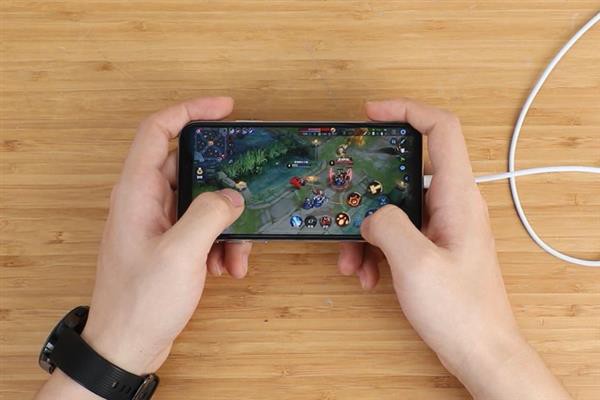
So is a low-cost cable faster than Apple's genuine cable?
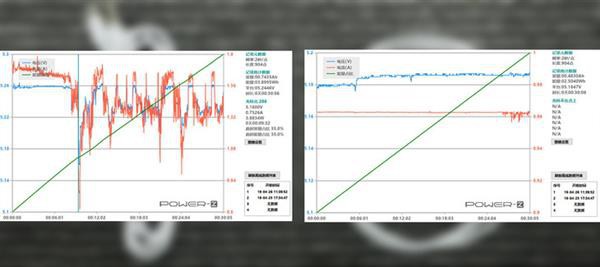
The figure below is a graph that records the voltage and power of two charging wires during the test. The graph of the cheap charging cable is on the left, the curves fluctuate up and down quite a lot. In the first few minutes after plugging in the device, the charging capacity of cheap cable is quite high, at around 9W. After about 8 minutes, it began to fluctuate strongly and could not stabilize again, negatively affecting the battery of the iPhone. Meanwhile, the graph of the genuine iPhone cable on the right shows the curves are quite stable.
The internal structure and material of these two iPhone charging cables.
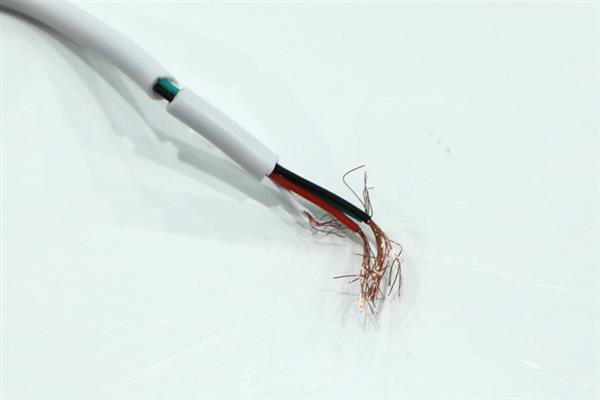
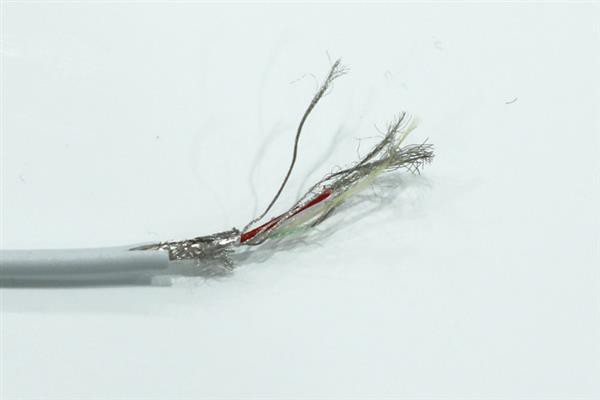
Cheap cable (left) when removing the outer shell will reveal 4 small wires with copper core. Inside Apple's genuine cable, the wires are coated with a metal mesh and tin foil, which improves the overall toughness of the cord and protects the wire from outside interference such as physical collisions, or curiosity of the user's device when he wants to fix the pairing himself.
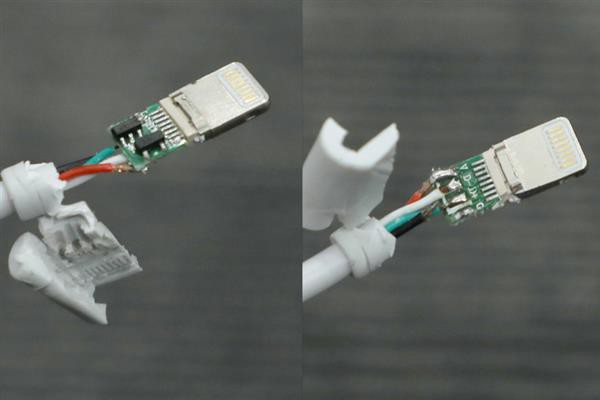
On a low-cost cable, the outer plastic layer of the Lightning plug can be easily removed with a pull, made of a similar soft rubber material in the cord cover. In genuine cable it is difficult to separate this hard plastic layer.
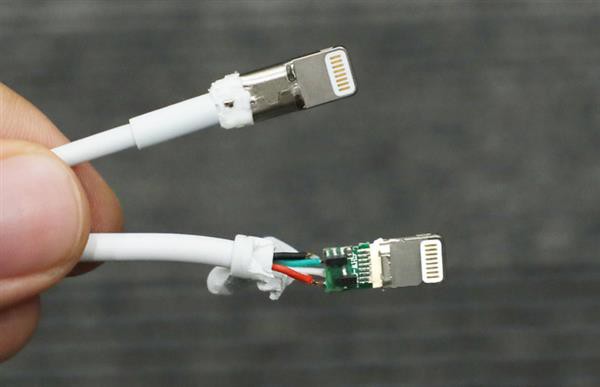
After stripping off, solder chips and solder joints at cheap cables are usually two chips with "3401" code and "HX10N" chips (black) designed to trick the system into MFi certification. And with genuine Apple accessories, to get iOS devices to allow them to connect to this certificate. In genuine cable, an outer metal cover protects the entire circuit board so users are very hard to come in contact with inside details.
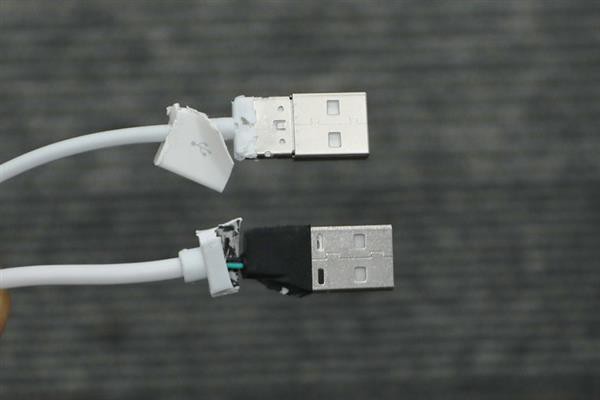
With the USB port, the genuine cable is connected through a sturdy, compact metal layer, while the cheap cable is a black plastic part.
With the above information, we can clearly see the difference of two genuine cables and cheap cables.
How to check the safety cable for your iPhone
FAQ
What is Surgical Cable Charging Iphone Fake Goods and Genuine Goods to about?
It provides a structured overview of iPhone charger cord, explains the main context, and highlights practical takeaways for readers.
Why does this topic matter?
Understanding the main concepts helps readers evaluate the issue, avoid common mistakes, and make better-informed decisions.
How should readers use this information?
Use the guidance as a practical starting point, confirm details that may have changed, and follow current product, safety, or security recommendations.
Related Articles
 Guide to Distinguish Genuine iPhone 7 Plus and Counterfeit Goods8 minutes read
 How to Quickly Identify Counterfeit or Genuine Goods with Qr3 minutes read
 iPhone 'Ship' - Genuine Fake Goods Better Than Real Products?4 minutes read
 How to Recognize Genuine iPhone 65 minutes read
 4 Ways to Distinguish Genuine Louis Vuitton Bags and Fake Goods8 minutes read
 How to Check Genuine iPhone, How to Distinguish Fake iPhone5 minutes read
Reader Comments 0
Sign in with email or Google to join the discussion.