Table of Contents
AI helps remember information better than human-written content, but it can also influence the reader's thinking.
Nowadays, access to information is increasingly dependent on AI. From chatbots to search engines like Google, users are often provided with summaries before they can view the source of the content.
A new study from Yale University shows that AI-generated summaries are not only fast and easy to read, but can also influence how we think.
AI helps with memorization better than content written by humans.
A research team led by Daniel Karell, a sociology lecturer at Yale, compared the learning effectiveness of content written by AI and humans.
Participants were provided with short summaries of historical events, including both human-written and AI-generated content such as ChatGPT. They were then tested on their ability to recall the information. The results showed that those who read the AI-generated summaries answered significantly more questions correctly.
According to the research team, AI's advantage lies in how it presents information. AI-generated content is often more coherent, fluent, and easier to understand, much like a 'rewritten' version of Wikipedia for easier reading.
It is noteworthy that even when participants knew beforehand that the content was written by AI, the memorization efficiency was still higher compared to content written by humans.
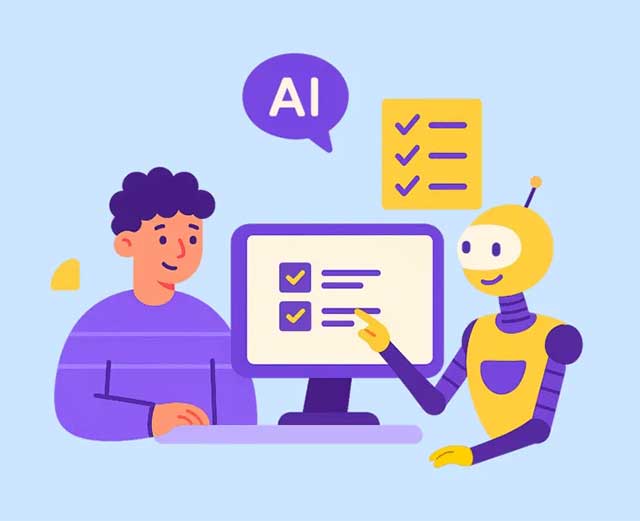
AI can also influence personal opinions.
In a subsequent study published in PNAS Nexus, the authors discovered an even more concerning finding.
Beyond simply helping with learning, AI-powered summaries have the potential to influence readers' political views. If the content leans toward one side, readers are more likely to be influenced by that bias.
The reason is believed to be that AI not only presents information but also 'frames' the content in a logical and persuasive way, making it easier for readers to understand. AI is gradually becoming the primary way many people learn about history and current events. This isn't necessarily negative, as AI simplifies access to information.
However, it's important to consider that the tools you use to learn can subtly influence your thinking.
The risks from misinformation and manipulation.
Furthermore, the phenomenon of 'AI hallucination' remains a major problem. AI-generated summaries, if inaccurate, can easily mislead readers.
A study from the Institute of Information Science at the University of Southern California also indicated that AI could be used to deploy propaganda campaigns with very little human intervention. Combining its high persuasive power with its rapid dissemination speed, AI could become a powerful tool for shaping perceptions and even manipulating public opinion.
AI is making learning faster, easier, and more efficient. But at the same time, it also brings a notable 'side effect': the potential to influence how we think. In the context of AI's increasing prevalence, it's crucial not only to absorb information but also to maintain clarity and the ability to verify it.
Related Articles
 Design Thinking Helps You Solve Problems Like Ceos9 minutes read
 Does ChatGPT Really Make Us 'Lazier' and 'Less Intelligent'?6 minutes read
 Google Research Has Successfully Simulated the Adaptive and Flexible Memory Capabilities of AI5 minutes read
 If AI Can Do Everything, Why Do We Still Need to Learn?7 minutes read
 How to Use ChatGPT to Improve Your Thinking and Find New Ideas6 minutes read
 Top 10 Books That Improve Thinking Ability for Programmers10 minutes read
Reader Comments 0
Sign in with email or Google to join the discussion.