Table of Contents
At the 2025 FIFA Club World Cup, referees wore small cameras so viewers could see selected moments from the official’s perspective. FIFA approved the footage for use in DAZN’s match broadcasts as part of a trial. Stadium screens showing an on-field review and tools that helped officials judge offside were separate parts of the tournament.
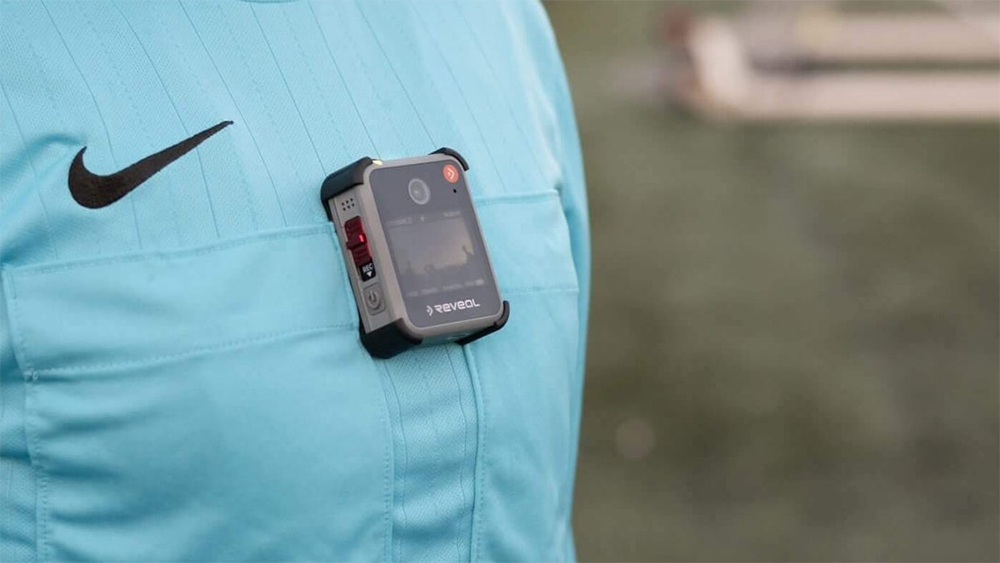
What a referee camera shows
The wearable camera follows the official’s view close to the action. It can give the broadcast a field-level angle on play and interactions with players. FIFA said it wanted to test what this view adds for viewers and use the findings to develop guidelines. See FIFA’s tournament technology announcement for the original trial description.
How it differs from VAR and offside tracking
At the tournament, stadium screens could show what the referee was watching during an on-field review. Advanced semi-automated offside technology used multiple cameras, a ball sensor, and software to help track players and the ball. It could alert officials to clear offside situations. For harder cases, the video assistant referee still checked the system’s information before a decision. See how VAR was used at the 2018 World Cup or how a connected ball helps detect touches.
Why the referee raised a hand for the goalkeeper
The eight-second rule concerns a goalkeeper controlling the ball with their hands or arms inside their penalty area. The referee decides when control starts and visibly counts down the final five seconds. If the goalkeeper still controls the ball after eight seconds, the opposing team is awarded a corner. The rule concerns releasing the ball, which can include throwing it. See IFAB Law 12 for the official wording.






Reader Comments 0
Sign in with email or Google to join the discussion.