Table of Contents
This guide provides a clear overview of malicious code infiltrating microsoft store, including Three Years of Evolution. Use it to understand the topic, compare the available options, and make a more informed decision.
Electron Bot was discovered by network intelligence analysis firm Check Point. It will provide a backdoor that gives its owner complete control over compromised machines, support for remote code execution, and real-time interaction.
The hacker's goal is to take over social media accounts such as Facebook, Google, YouTube and Sound Cloud to serve dirty SEO campaigns or click on ads and likes to generate illicit revenue.
Three Years of Evolution
Electron Bot is not a recent arrival. The first operation of this malicious code took place in late 2018. At that time the first version of Electron Bot was posted to the Microsoft Store as an "Album by Google Photos" application by the fake Google LLC entity.
Since then, the people behind this malicious code have updated a number of new features and tools. In addition, advanced detection avoidance such as dynamic script loading is also added.
Electron Bot is written in Electron language and it can simulate natural web browsing behavior as well as perform actions like a normal person browsing the web.
To do this, it will open a new hidden browser window using Chromium engine in Electron framework, set appropriate HTTP headers, display requested HTML page and finally perform mouse movement, scrolling, click and enter the keyboard.
According to an analysis by researchers at Check Point, the main goals of Electron Bot in the ongoing campaign are:
- SEO poisoning - Creates a malware distribution site that ranks high in Google's search results list.
- Click ads - Connect to websites in the background and click on non-viewable ads.
- Social Media Account Promotion - Drive traffic to specific content on social networks.
- Advertise products online - Increase your store's rating by clicking on its ads.
These functions are provided as a service to those who want to illegally increase their online revenue.
Games containing malicious code still work normally so that the victim does not have any suspicion. Meanwhile, all harmful activities will take place in the background. This leads to users still having positive reviews for those games on the Microsoft Store.
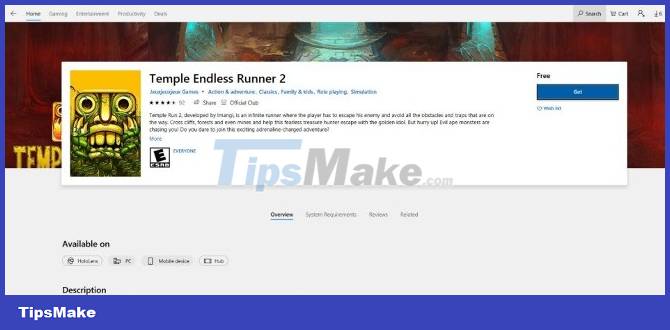
Of course, hackers will constantly refresh their scams and use different games and apps to spread malware.
For now, users should pay attention to the publishers that have been identified as distributing malicious applications below:
- Lupy games
- Crazy 4 games
- Jeuxjeuxkeux games
- Akshi games
- Goo Games
- Bizzon Case
Although Electron Bot does not cause serious damage to infected machines for now, there is no guarantee of this in the future. Hackers can easily modify the code so that Electron Bot downloads and installs RAT or even ransomware onto the victim's machine.
Conclusion
Understanding Malicious Code Infiltrating Microsoft Store makes it easier to compare options, avoid common mistakes, and apply the information in this guide more effectively. Review the relevant requirements before making changes or choosing a solution.
FAQ
What is Malicious Code Infiltrating Microsoft Store?
The hacker's goal is to take over social media accounts such as Facebook, Google, YouTube and Sound Cloud to serve dirty SEO campaigns or click on ads and likes to generate illicit revenue.
Why is Malicious Code Infiltrating Microsoft Store important?
Understanding Malicious Code Infiltrating Microsoft Store helps you evaluate features, compatibility, performance, and potential limitations before you choose a product or follow a procedure.
What should you consider when using or choosing Malicious Code Infiltrating Microsoft Store?
Consider your specific goal, compatibility requirements, available features, cost, security, and the practical recommendations described in this guide.
Related Articles
 How to Play Games on Microsoft Store Without Downloading: Step-by-Step Guide4 minutes read
 14 Games on the App Store Contain Malicious Code, iPhone Users Be Careful4 minutes read
 Fix Microsoft Store Not Downloading Apps and Games: Key Facts17 minutes read
 You Will Soon Be Able to Buy Both Computers and Phones. from the Microsoft Store of Windows 104 minutes read
 Epic Games Store and Amazon Appstore Will Soon Be Integrated3 minutes read
 Microsoft Announces List of Best Microsoft Store Apps and Games3 minutes read
Reader Comments 0
Sign in with email or Google to join the discussion.