Table of Contents
This updated guide examines How to Remove an Underscore at the End of a Chrome URL and organizes the essential facts, background, and practical takeaways in clear American English.
- Instructions on how to delete auto-suggestion URLs on Chrome browser
- How to turn off suggestion photos in the Chrome search bar
- 9 Chrome Flags you should enable for a better browsing experience
Why is this happening?
While the exact reason for this problem is unknown, it may be because Chrome adds an underline to some URLs that use custom search or keywords to query the site.
One theory is that when adding a custom search engine, it will be duplicated and instead of an error, Chrome appends the keyword with an underscore and continues as if nothing happened.
The main problem is that the keyword looks very much like a properly generated URL with an underscore at the end. When typing the URL in the address bar, Chrome suggests the URL contains the underscore, and then you can press Tab or Enter to complete the address.
If you choose to press Tab , you can enter search terms to query websites. However, if you press Enter , Chrome will search for the IP address of the site, and when DNS cannot find anything, it will say This site can't be reached .

This error only occurs with certain ULRs and this is how to fix it.
How to remove the underscore at the end of a URL in Chrome
Although, you only need to use Chrome'sShift+Deletekeyboard command to delete a specific item from the search bar suggestion, this method only deletes the item in the browser history. You need to find specific search engine keyword in Chrome's Search Engine settings.
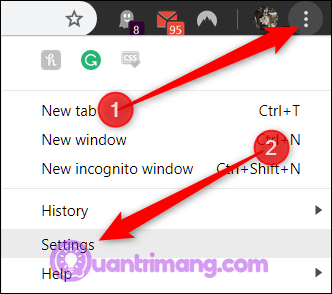
Open Chrome, click the three dot button in the upper right corner and then select Settings .
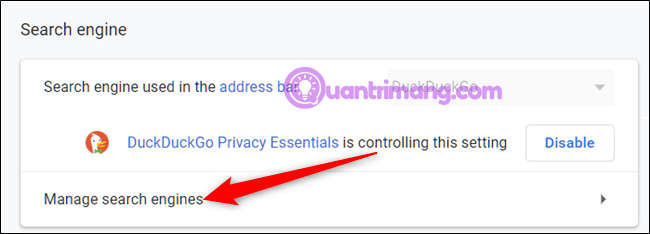
Scroll down until the Search Engine section and click on Manage Search Engines .
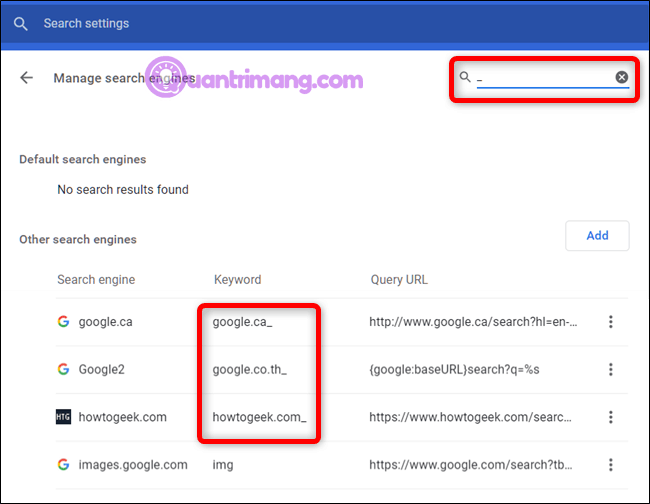
If you don't know the exact URL, you can scroll down the list or type an underscore (_) in the search bar at the top of the window. It will display query URLs containing underscores, pay attention to the keywords of each item.
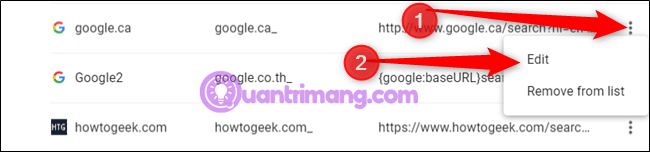
Next, click the three dot button next to the problematic search engine. If you want to remove it completely, click Remove from List . If you want to keep it and just delete the underscore, click on Edit .
Now, delete the underscore in the keyword or enter a new name and click on Save .
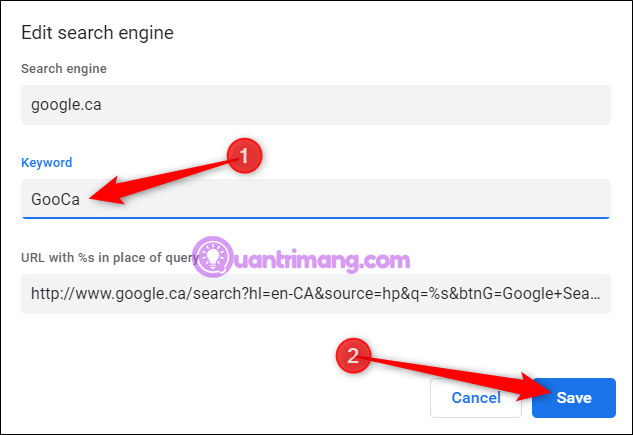
If there are multiple URLs with underscores, repeat this process for each URL in the Manage Search Engines settings page.
While this error may not affect everyone, this quick and simple workaround can underscore and correct a custom search engine keyword string. You can now enter the URL without a page error in Chrome.
I wish you successful implementation!
FAQ
What is How to Remove an Underscore at the End of a Chrome URL about?
It provides a structured overview of remove underscores in chrome url, explains the main context, and highlights practical takeaways for readers.
Why does this topic matter?
Understanding the main concepts helps readers evaluate the issue, avoid common mistakes, and make better-informed decisions.
How should readers use this information?
Use the guidance as a practical starting point, confirm details that may have changed, and follow current product, safety, or security recommendations.
Related Articles
 How to Underline Text in Canva3 minutes read
 5 Ways to Underline in Word: Features, Uses, and Practical Tips5 minutes read
 How to Easily and Effectively Remove Red Underlines in Word4 minutes read
 How to Remove Underline Hyperlinks in PowerPoint3 minutes read
 How to Remove Red Underline in Word, Turn Off Red Underline Spell4 minutes read
 How to Change the Underline Color of Word Spell Check: Step-by-Step Guide3 minutes read
Reader Comments 0
Sign in with email or Google to join the discussion.