Table of Contents
This updated guide examines How to Play Minesweeper and organizes the essential facts, background, and practical takeaways in clear American English.
Part 1
Learning Minesweeper Mechanics
 Understand the principles behind Minesweeper. Each Minesweeper game starts out with a grid of unmarked squares. After clicking one of these squares, some of the squares will disappear, some will remain blank, and some will have numbers on them. It's your job to use the numbers to figure out which of the blank squares have mines and which are safe to click.
- Minesweeper is similar to a Sudoku puzzle in that your success is largely contingent on being able to eliminate possible answers until only one answer remains.
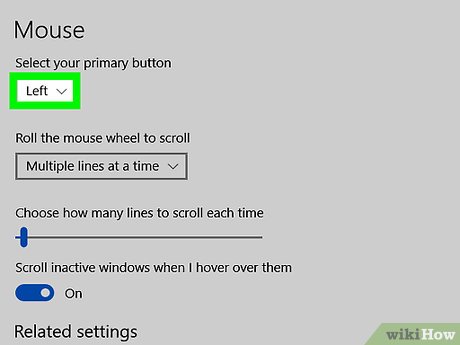 Use the mouse's left and right buttons. The mouse is the only tool that you'll need to play Minesweeper. The left mouse button is used to click squares that don't contain mines, while the right mouse button is used to flag squares that contain mines.
- On higher difficulties, you'll need to mark squares that you suspect contain mines until you can verify that they do contain mines.
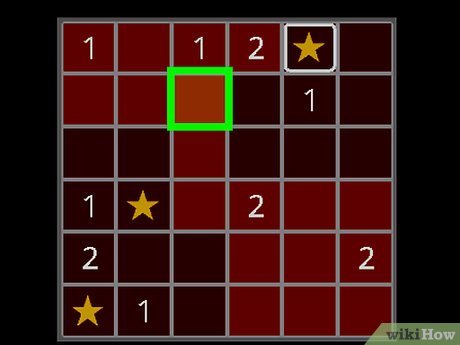 Don't worry about your first click. The first square that you click will never have a mine beneath it;[1]clicking a square will clear off some of the board while numbering other squares.
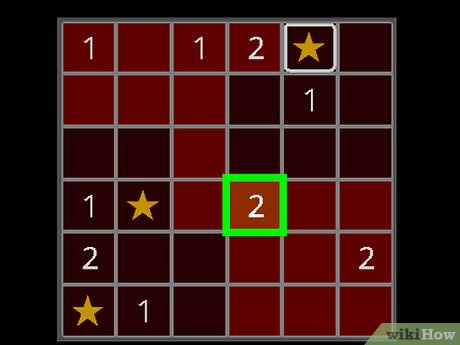 Know what the numbers mean. A number on a square refers to the number of mines that are currently touching that square. For example, if there are two squares touching each other and one of the squares has "1" on it, you know that the square next to it has a mine beneath it.
Part 2
Downloading Minesweeper
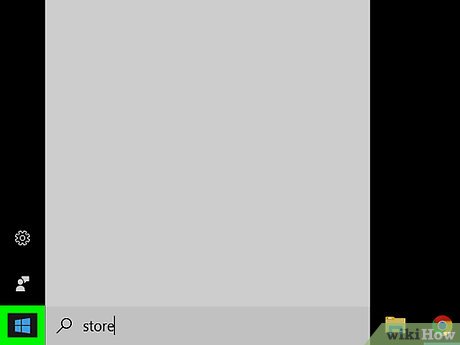 Open Start
 . Click the Windows logo in the bottom-left corner of the screen.
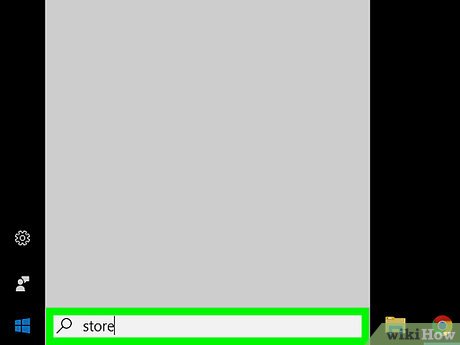 Typestoreinto Start. Doing so will search your computer for the Store app.
 Open the
 Microsoft Store. Click the Microsoft Store search result near the top of the Start window.
 Click the "Search" bar. It's in the top-right corner of the Microsoft Store window.
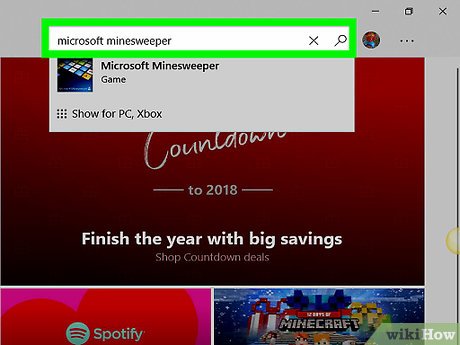 Search for Minesweeper. Typemicrosoft minesweeperinto the "Search" bar, then wait for a drop-down menu to appear below the bar.[2]
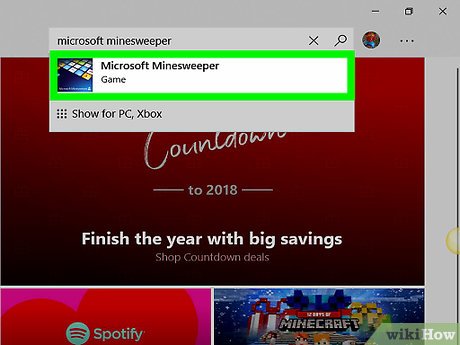 ClickMicrosoft Minesweeper. It should be below the search bar in the drop-down menu.
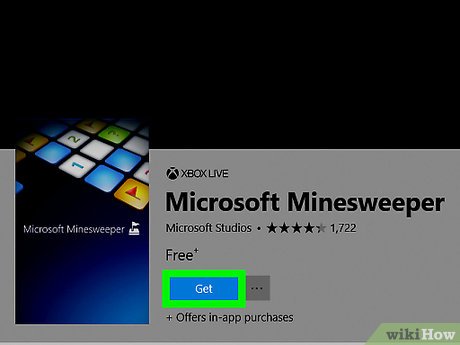 ClickGet. It's a blue button below the "Microsoft Minesweeper" title. Doing so will install Minesweeper on your computer.
Part 3
Playing Minesweeper
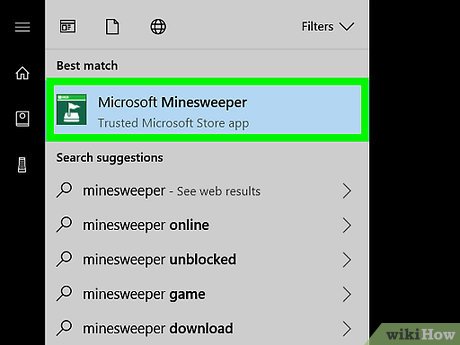 Open Minesweeper. Click Launch when prompted after Minesweeper finishes installing, or open Start
  , type inminesweeper, and click the green Microsoft Minesweeper app.
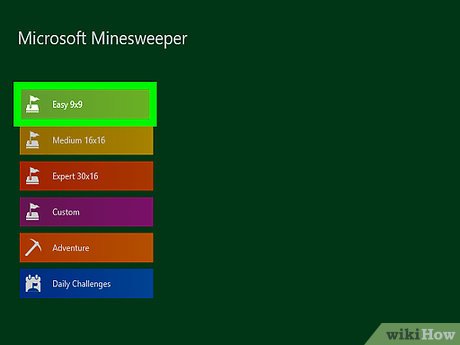 Select a difficulty level. In the upper-left side of the window, launch your first game by clicking one of the following difficulty settings:[3]
- Easy 9x9 - A nine-by-nine grid with 10 mines.
- Medium 16x16 - A sixteen-by-sixteen grid with 40 mines.
- Expert 30x16 - A thirty-by-sixteen grid with 99 mines.
- Custom - Set your own game parameters, including the grid size, number of mines, and so on.
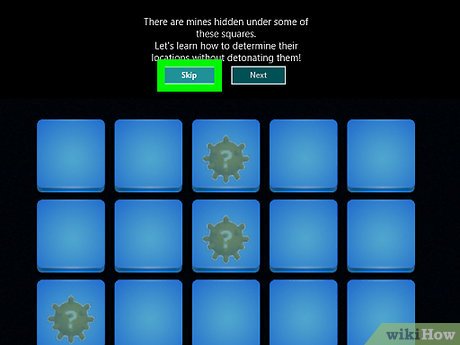 Navigate the tutorial if you like. If this is your first game in Microsoft Minesweeper, you'll be prompted to start a tutorial that will help you practice the Minesweeper basics.
- If you don't want to play through the tutorial, click Skip at the top of the window instead.
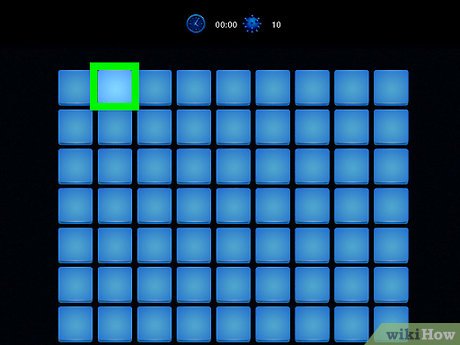 Click any square on the grid. Doing so will start the Minesweeper game.
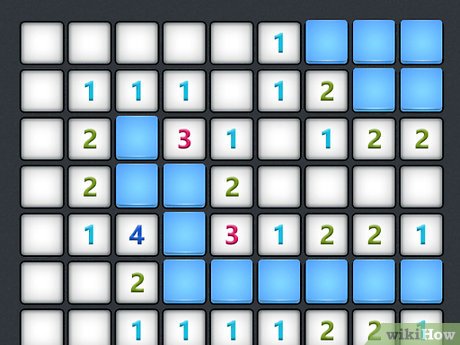 Review the numbers. Any number on the board refers to the number of mines currently touching that number's square.
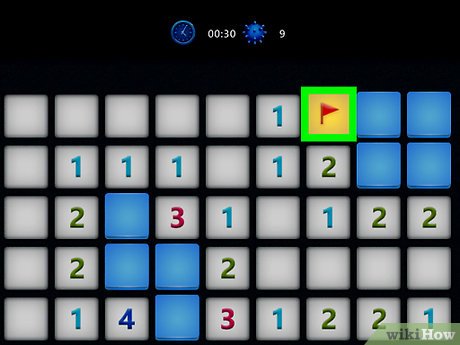 Right-click any squares that you think contain mines. This will put a flag on the square. It's best to start with squares that absolutely have to contain mines (e.g., a solitary square next to a "1" on the board) to help with the process of elimination later.
- Make sure that you don't flag more squares than the number of mines on the board.
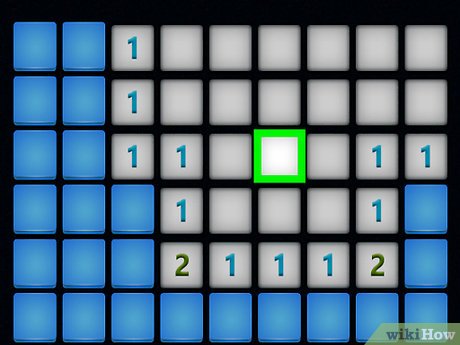 Double-right-click any squares that are uncertain. Doing so will place a question mark over the square, indicating that you want to leave the square alone until you've ruled out other squares.
- This is a safe strategy for boards on which you've found all but two or three of the mines.
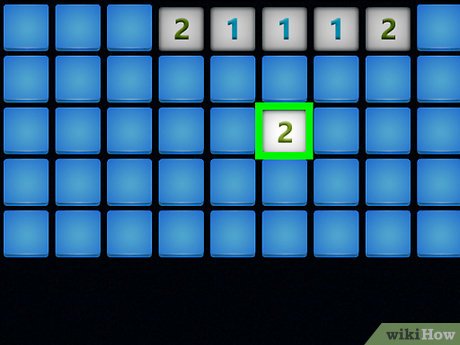 Click any squares that don't contain mines. This will clear the squares in question.
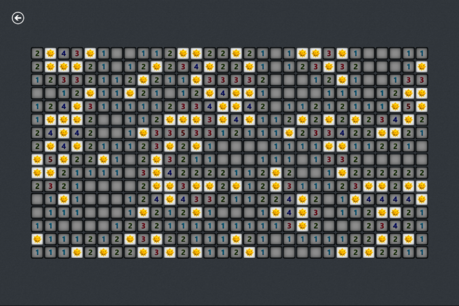 Clear the board. To win a round of Minesweeper, you must click on the board every square that doesn't have a mine under it. Once you've done so, the game will be over.
- If you accidentally click a square that has a mine beneath it, the game will be over. You'll have the option of starting a new game or redoing the one you just played.
FAQ
What is How to Play Minesweeper about?
It provides a structured overview of minesweeper, explains the main context, and highlights practical takeaways for readers.
Why does this topic matter?
Understanding the main concepts helps readers evaluate the issue, avoid common mistakes, and make better-informed decisions.
How should readers use this information?
Use the guidance as a practical starting point, confirm details that may have changed, and follow current product, safety, or security recommendations.
Related Articles
 How to Play Minesweeper: Clear Instructions8 minutes read
 How to Play Minesweeper Mine Detection Game on Windows 103 minutes read
 How to Play Classic Windows 7 Games on Win 10: Minesweeper, Solitaire, Hearts4 minutes read
 Play the Classic Game of Windows XP on Windows 74 minutes read
 5 Legendary Games on This PC Can Be Downloaded on Both Android and iOS, Completely Free4 minutes read
 Legendary 'Mine Sweeper' Game Revived: Better Graphics, New Game3 minutes read
Reader Comments 0
Sign in with email or Google to join the discussion.