Table of Contents
This updated guide examines How to Install Phpmailer and organizes the essential facts, background, and practical takeaways in clear American English.
Using Composer (Windows)
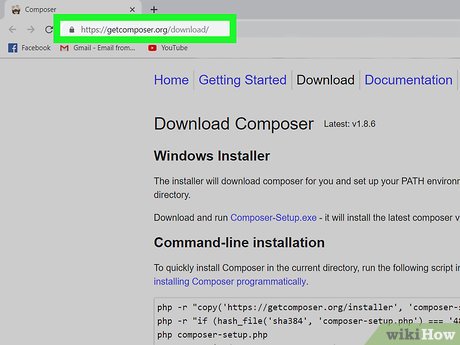 Go tohttps://getcomposer.org/download/. Composer is a dependency manager for PHP, which means it manages everything your PHP code needs, including libraries and extensions. This is also the easiest method of installing and managing PHPMailer. You'll need to have XAMPP or WAMP installed to use the PHPMailer in a coding environment.
- You'll find the link to download under the 'Windows Installer' header.
 Click the downloaded file to start the installation process. Follow the instructions on-screen to install Composer.
- Choose a PHP executable when prompted to 'choose the command-line PHP you want to use.' All executables will end in.exe.
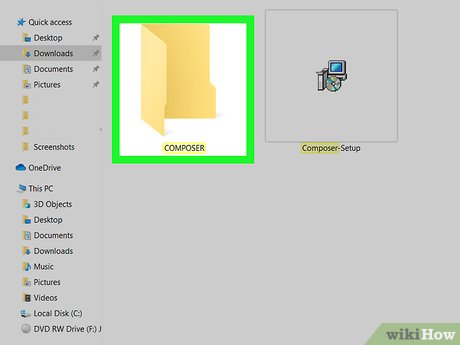 Create a new 'Composer' folder. You'll want to navigate in file browser to the location you will eventually install Composer.
- Navigate to and double-click the Xampp partition in your file browser, right-click and choose to 'Add a New Folder' and name it 'Composer.'
 Search for and open 'Command Prompt' in your Start Menu. You can also access the search window by pressing⊞Win+S. A command-line terminal will load.
 Navigate to the directory where you want to install PHPMailer. For example, typecd C:/xampp/composer.
- The terminal will confirm it's in that folder.
 Type "composer require phpmailer/phpmailer" and press↵Enter. Terminal will display a wall of text as it installs Composer.
 Composer is installed with an 'autoload.php' file you can use.
- For example, you can type the following code in your PHP to include PHPMailer:
Go tohttps://github.com/PHPMailer/PHPMailer. Here you can download the PHPMailer source files directly.  ClickClone or downloadon the right side of the page. You won't need XAMPP, WAMP, or any other PHP environment.
 Unzip the installed file where you want to install PHPMailer. When you double-click the installed file, you are prompted for the unzipped files location.
 Add the following code into your PHP to include PHPMailer:
phpusePHPMailerPHPMailerPHPMailer;usePHPMailerPHPMailerException;/* Exception class. */require'C:PHPMailersrcException.php';/* The main PHPMailer class. */require'C:PHPMailersrcPHPMailer.php';/* SMTP class, needed if you want to use SMTP. */require'C:PHPMailersrcSMTP.php';$email=newPHPMailer(TRUE);
- PHPMailer is installed and ready to go on your PHP script.
- For example, you can type the following code in your PHP to include PHPMailer:
FAQ
What is How to Install Phpmailer about?
It provides a structured overview of phpmailer, explains the main context, and highlights practical takeaways for readers.
Why does this topic matter?
Understanding the main concepts helps readers evaluate the issue, avoid common mistakes, and make better-informed decisions.
How should readers use this information?
Use the guidance as a practical starting point, confirm details that may have changed, and follow current product, safety, or security recommendations.
Related Articles
 10 Useful and Interesting PHP Libraries for Developers4 minutes read
 How to Install an SSD for PC: Step-by-Step Guide5 minutes read
 How to Install Windows 8.1 from USB7 minutes read
 Install Win Xp from Usb: Install Windows XP from a USB Flash6 minutes read
 How to Install Windows 10 from USB with ISO File8 minutes read
 Things You Need to Know About How to Install Windows Today7 minutes read
Reader Comments 0
Sign in with email or Google to join the discussion.