Table of Contents
This updated guide examines Click: How to Burn Iso Files to Dvd and organizes the essential facts, background, and practical takeaways in clear American English.
Method 1of 2:
On Windows
 Make sure that your computer has a disc drive that can burn. You will need a DVD drive to burn your ISO file onto a blank DVD. Most modern Windows computers have a DVD drive.
- If your CD tray has "DVD" engraved on it or near it, you can burn DVDs.
- If you can't burn DVDs, you will need to buy an external DVD drive for your computer.
 Insert a blank DVD into your computer. If you want to use this DVD for installing an operating system or running a game, make sure that the DVD has never been used before.
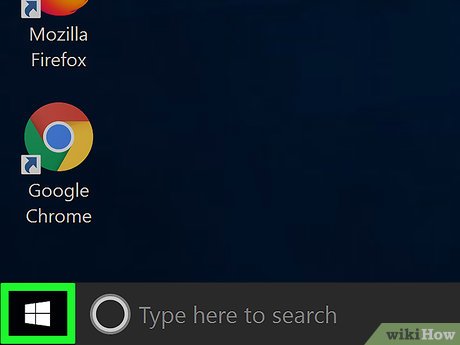 Open Start
 . Click the Windows logo in the bottom-left corner of the screen.
 Open File Explorer
 . Click the folder-shaped icon in the lower-left side of the Start window.
 Go to your ISO's folder. Click the folder in which your ISO file is stored on the left side of the File Explorer window.
- For example, if you have the ISO file on your computer's desktop, you would click Desktop .
 Select your ISO file. Click the ISO file to select it.
 ClickShare. This tab is in the upper-left side of the File Explorer window. Doing so prompts a toolbar to appear at the top of the File Explorer window.
 ClickBurn to disc. It's in the toolbar. A pop-up window will appear.
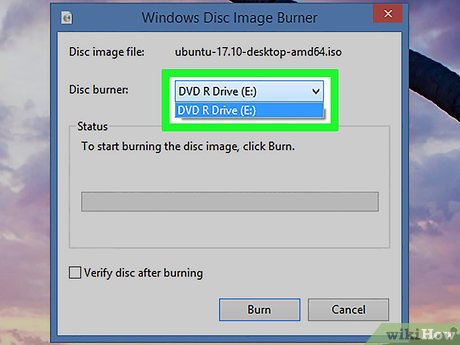 Make sure your DVD drive is selected as the burner. If you have more than one disc drive for your computer, click the "Disc burner" drop-down box and then click the DVD option in the drop-down menu.
 ClickBurn. It's at the bottom of the pop-up window. Doing so will prompt your computer to begin burning the ISO file onto your DVD. Once the process is complete, you can eject the DVD.
- The burn process can take anywhere from a few minutes to a few hours depending on the ISO file's size.
Method 2of 2:
On Mac
 Insert a blank DVD into your Mac's CD slot. Since most Macs don't come with a built-in disc slot, you will likely need an external DVD reader to do this.
- You can buy an external disk reader from Apple for less than $90.
- To attach an external DVD reader to your Mac, connect the DVD reader's cable to your Mac's USB port (on the left side of a Mac laptop or on the back of an iMac desktop monitor).
 Make sure you know where your ISO file is. The burning process is simplest when the ISO file is somewhere easy to access, such as your Mac's desktop.
 Open Spotlight
 . Click the magnifying glass icon in the top-right corner of the screen. A search bar will appear.
 Typedisk utilityinto Spotlight. This will search your Mac for the Disk Utility app, which is what you'll use to burn the ISO file.
 ClickDisk Utility. It's a grey hard drive icon with a stethoscope on top of it. You should see it at the top of the Spotlight search results.
 ClickBurn. This radioactive symbol-shaped icon is at the top of the window. A pop-up Finder window will appear.
 Select your ISO file. Click on the ISO file's location folder (e.g., Desktop ) on the left side of the Finder window, then click the ISO file to select it.
 ClickBurn. It's in the bottom-right corner of the window. This will close the Finder window.
 ClickBurnwhen prompted. This option is in the drop-down window at the top of the Disk Utility window. Clicking it prompts the burning process to begin.
- Depending on the size of the ISO, burning can take anywhere from a few minutes to a few hours.
 ClickOKwhen prompted. You'll see this in the lower-right corner of the completion window. Doing so concludes the burn process.
FAQ
What is Click: How to Burn Iso Files to Dvd about?
It provides a structured overview of click, explains the main context, and highlights practical takeaways for readers.
Why does this topic matter?
Understanding the main concepts helps readers evaluate the issue, avoid common mistakes, and make better-informed decisions.
How should readers use this information?
Use the guidance as a practical starting point, confirm details that may have changed, and follow current product, safety, or security recommendations.
Related Articles
 Drive: How to Burn Songs on to a Cd13 minutes read
 How to Burn MP4 to DVD: Complete Guide13 minutes read
 How to Burn a Cd Using Mac Os X8 minutes read
 How to Burn a CD on Mac OS X: Step-by-Step Guide8 minutes read
 Click: How to Burn a Cd11 minutes read
 How to Burn a CD from Amazon Downloads: Step-by-Step Guide9 minutes read
Reader Comments 0
Sign in with email or Google to join the discussion.