Table of Contents
Explore prices of dram and nand flash have skyrocketed, including the key concepts, practical examples, important considerations, and useful guidance.
Not only DRAM, but NAND Flash has also become significantly more expensive. According to a market research firm, the price of LPDDR RAM for mobile devices has increased by more than 70% , while storage memory costs have risen by up to 100% . With many manufacturers preparing to launch 2nm chipsets later this year, smartphones using the new SoCs along with current generation DRAM and NAND Flash are predicted to significantly impact consumers' wallets.
DRAM currently accounts for over 20% of smartphone manufacturing costs
An independent analysis shows that no company can escape the DRAM crisis. Samsung's co-CEO once admitted that no company can avoid this shortage . Even Apple – a trillion-dollar corporation – is said to have had to take drastic measures, including sending executives abroad for extended stays to negotiate directly with DRAM manufacturers like Samsung and SK hynix, demonstrating the severity of the problem.
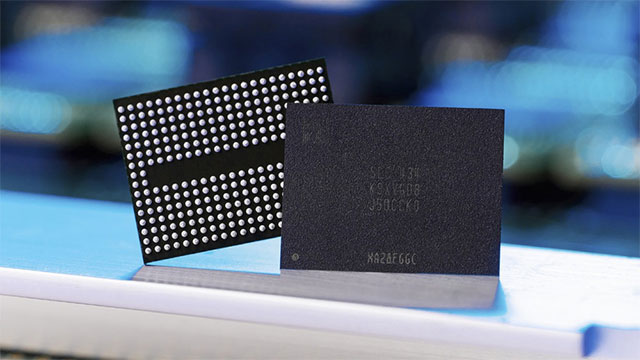
According to Omdia, based on data shared by leaker Ice Universe, smartphone manufacturers will have to accept a 70% surcharge for DRAM and a 100% surcharge for NAND Flash compared to before. Meanwhile, TrendForce reports that memory, which previously accounted for only about 10–15% of smartphone production costs , has now increased to over 20% .
Furthermore, high-end chipsets are becoming increasingly expensive. Chips like the Snapdragon 8 Elite Gen 6 Pro are predicted to cost over $300 , while the Snapdragon 8 Elite Gen 5 is already around $280 per chip . As a result, smartphone manufacturers will be forced to choose between cutting specifications or passing the increased costs on to consumers , which means a risk of declining sales.
This is clearly a slippery slope and almost unavoidable. However, not all companies are affected equally. NVIDIA once stated that it was almost 'immune' to the DRAM crisis because it paid in advance to secure supply , in order to serve the AI wave. Ironically, such actions are considered one of the reasons why the shortage has worsened.
If you're hoping this crisis will end soon, then you should probably prepare yourself: the DRAM shortage is projected to last at least until Q4 2027 .
Final Thoughts
Understanding prices of dram and nand flash have skyrocketed makes it easier to evaluate the information and apply the most relevant recommendations. Focus on the key points above and verify details that may change over time.
FAQ
What is prices of dram and nand flash have skyrocketed?
Explore prices of dram and nand flash have skyrocketed, including the key concepts, practical examples, important considerations, and useful guidance.
What key points does this article cover?
The article focuses on DRAM currently accounts for over 20% of smartphone manufacturing costs, with practical explanations and examples.
How can you use this information in practice?
Use the explanations to compare options, verify important details, and make a more informed decision. Apply the recommendations that best match your goals and situation.
Related Articles
 Western Digital Launches the World's First 2Tb 3D QLC NAND Flash4 minutes read
 Intel and Micron Cooperated to Release QLC NAND Memory to Increase Storage Density4 minutes read
 Intel Announces New SSD with Optane Memory and NAND Flash3 minutes read
 Skyrocketing RAM Prices Are Just the Beginning –– 3 Other PC Components Are About to Enter a 'Price Storm' Period8 minutes read
 LPDDR5 8GB DRAM Memory Chip First for Smartphones with a Speed of 6,400 Mb/s3 minutes read
 The New MacBook Air Will Have 'Super' Speed4 minutes read
Reader Comments 0
Sign in with email or Google to join the discussion.