Table of Contents
Autrace - Tool to Check, Count and Monitor Linux Processes is easier to approach with a clear overview and reliable steps. This guide organizes the essential information, highlights practical details, and explains what to check along the way.
Key Takeaways
- Understand what is autrace.
- Explore syntax for using autrace.
- Follow the recommended steps in order to avoid common mistakes with autrace - tool to check, count and monitor linux processes.
What Is Autrace?
Autrace is a utility that allows running a process and saving the process's audit information in the file /var/www/audit/audit.log by adding audit rules.
To work, you first need to delete all existing audit rules.
Syntax for Using Autrace
# autrace -r program program-args
Autrace will show errors, for instance: if you have any audit rules.
On CentOS
# autrace /usr/bin/df
On Debian:
# autrace /bin/df

First you need to delete all audit rules using the following command:
# auditctl –D
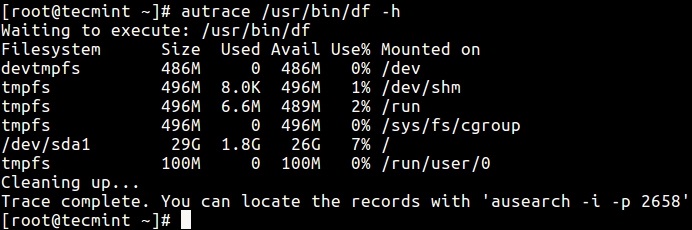
The system will then run autrace with the program you want. In the example here, we are watching how the df command executes, showing the filesystem usage status.
On CentOS:
# autrace /usr/bin/df -h
On Debian:
# autrace /bin/df -h
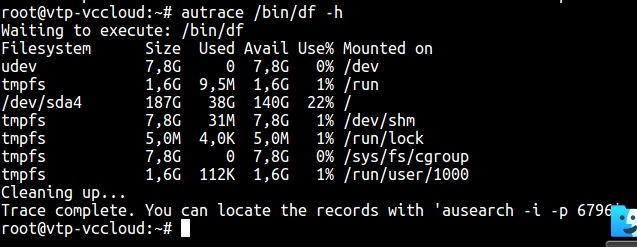
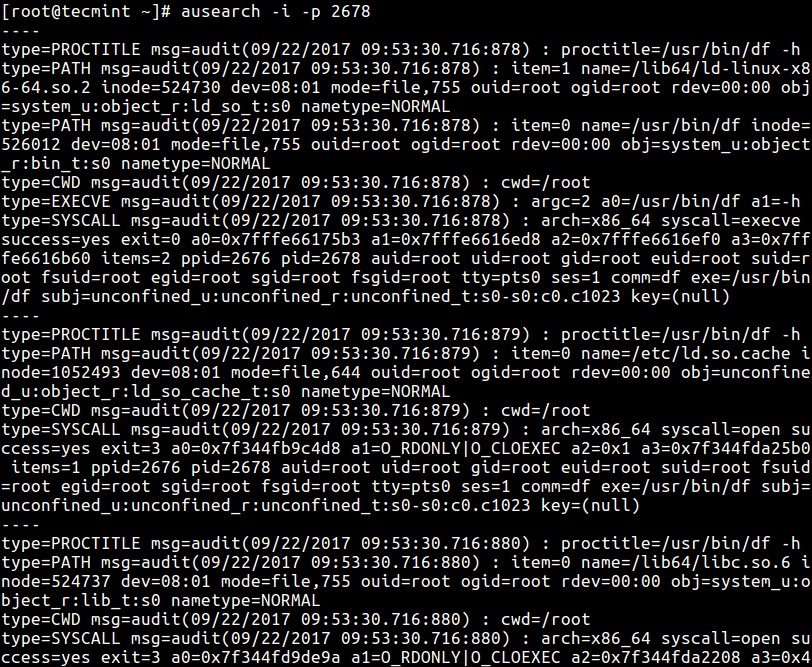
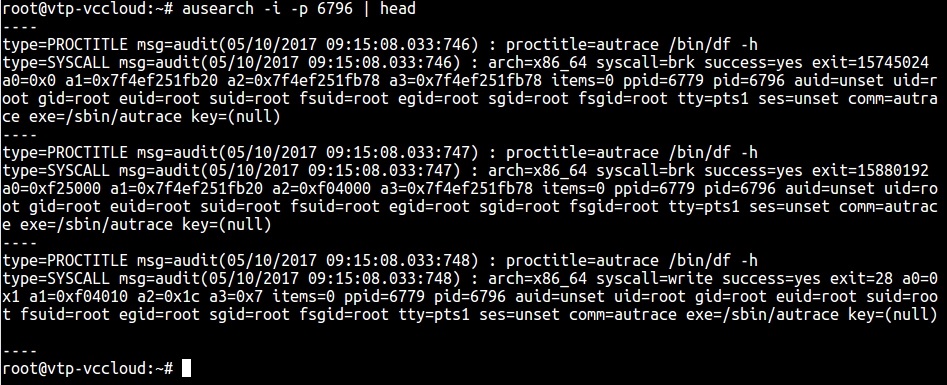
From the screenshot above, you can find all the log entries to play around with, explore from the log file using the ausearch function as follows.
On Centos:
# ausearch -i -p 2658
In there:
-i: Enables interpretation of numeric values into text.
-p: Enter the process ID to search.
On Debian:
# ausearch -i -p 6796
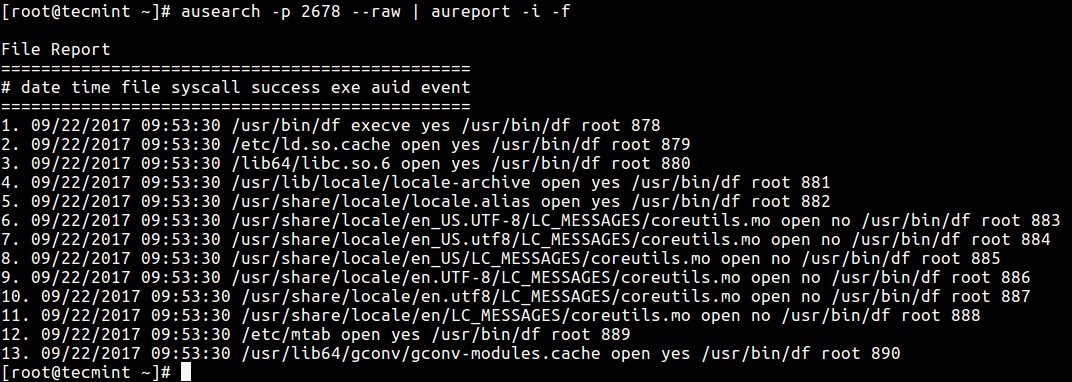
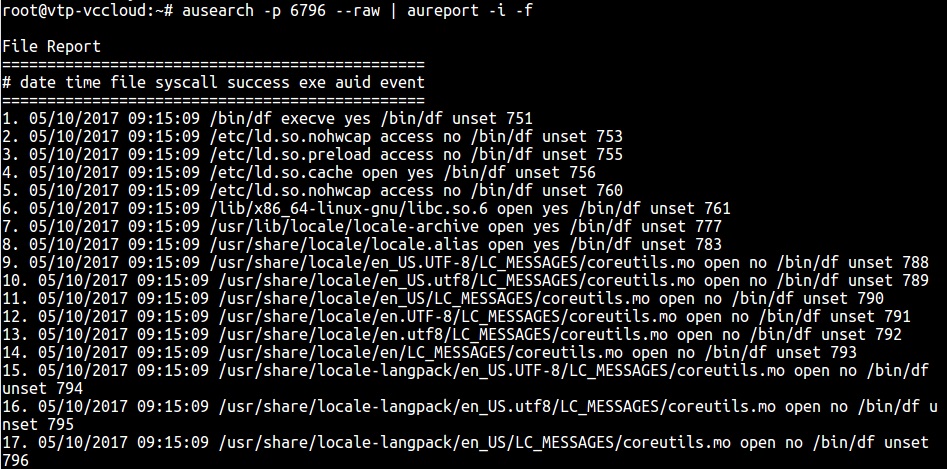
You can build a command that combines ausearch and aureport as follows. This helps you output a detailed report.
On Centos
# ausearch -p 2678 --raw | aureport -i –f
In there:
--raw: Tell ausearch to send all raw input to aureport.
-f: Allows reporting on files as well as af_unix sockets.
-i: Enables interpretation of numeric values into text.
On Debian
# ausearch -p 6796 --raw | aureport -i –f
And you can also use the following command to limit the syscalls to be grouped together, which is necessary for analyzing the resource usage of the df process.
On Centos
# autrace -r /usr/bin/df -h
On Debian
# autrace -r /bin/df -h
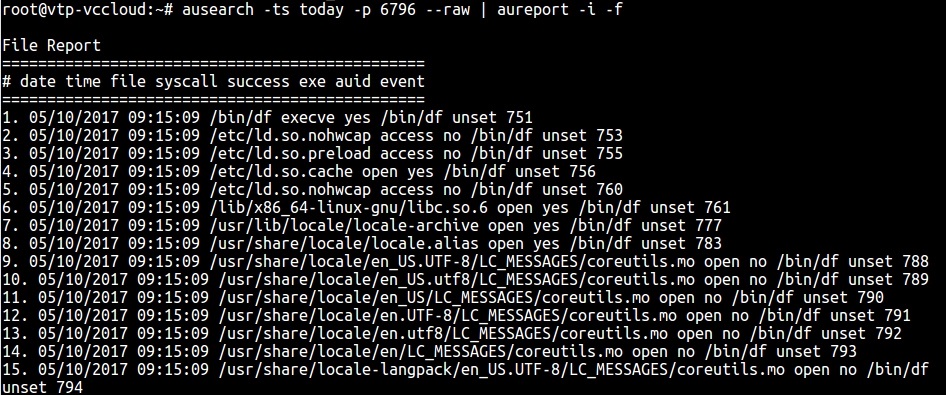
That means there's many information going into the audit logs if you've ausearched a program in the past week. You can use ausearch's -ts flag to specify the exact time to start searching for information: This helps you generate a report that only records events that happened today.
On Centos
# ausearch -ts today -p 2768 --raw | aureport -i –f
On Debian
# ausearch -ts today -p 6796 --raw | aureport -i -f
That's all the basics you can use to control, monitor and track a Linux process using autrace. For more details, you can read the man pages.
Final Thoughts
The most reliable way to handle autrace - tool to check, count and monitor linux processes is to follow the process in order, verify each important setting, and test the result before moving on. Use the guidance above as a practical reference, then adjust the details for your device, software version, or specific goal.
FAQ
What should I know first about Autrace - Tool to Check, Count and Monitor Linux Processes?
Many people still don't know what Autrace is?
How do I get the best results with Autrace - Tool to Check, Count and Monitor Linux Processes?
Use current software or equipment, follow the steps in order, review the recommended settings, and test one change at a time so you can identify what improves the result.
What should I do if Autrace - Tool to Check, Count and Monitor Linux Processes doesn't work as expected?
Check compatibility, permissions, connectivity, and version-specific settings. Restart the relevant device or app, then repeat the process carefully before trying a more advanced fix.
Related Articles
 How to Monitor Network Usage for Linux Processes5 minutes read
 How to Use the Htop Command to Monitor System Processes in Real5 minutes read
 How to Monitor Network Connections in Linux with Pktstat: Step-by-Step Guide5 minutes read
 Steps to Fix Word Count Not Showing Up in Microsoft Word6 minutes read
 How to Use Windows Reliability Monitor to Check Windows Health3 minutes read
 How to Check a Word Count in Microsoft Word7 minutes read
Reader Comments 0
Sign in with email or Google to join the discussion.